Tell the truth. Keep notes.
Six habits a newsroom trains into you - tell the truth, keep notes, think critically, be fair, protect what's private - and why they turn out to be the essence of ethical work.

What journalism taught me about ethical work
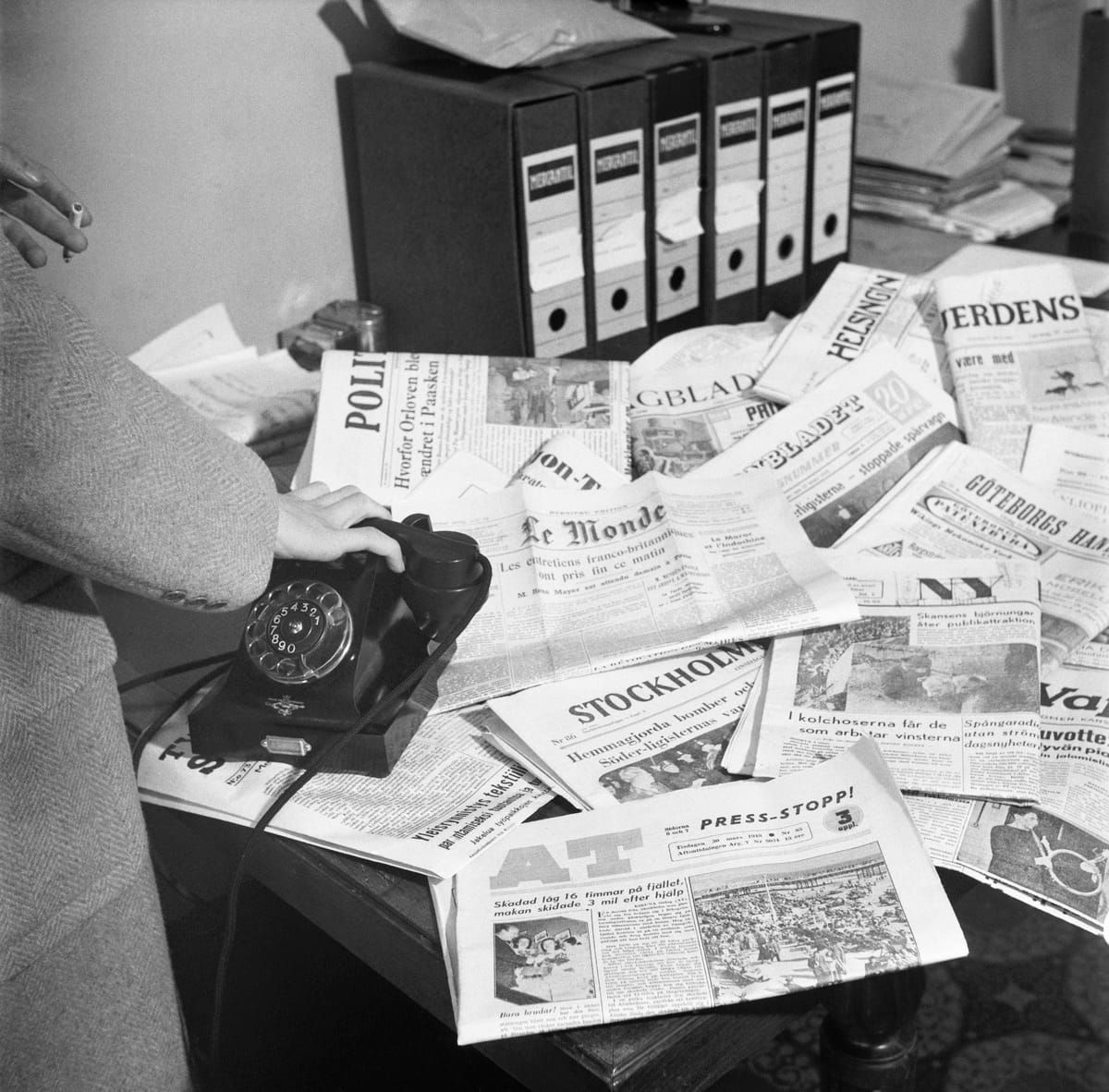
I studied Media Science, worked on a scrappy local paper, served as creative director for a trade magazine, and spent most of my twenties making zines, DIY publications, and small-town reporting projects that almost nobody read. It was not a career path. It was something rather better than one.
What journalism actually gave me was a way of seeing the world – a set of habits that then followed me, into technology, HR, leadership, consulting, and all the messy business of getting work done through other people. The habits are simple to state but, honestly, demanding to keep: tell the truth, write things down, ask the harder question, treat people fairly, protect what's private. None of them are glamorous. All of them turned out to matter far more than anything on my CV.
I was reminded of this recently, going back to Essential Radio Journalism for some podcast research, and finding on nearly every page a habit I'd assumed was mine but had in fact been trained into me twenty-five years ago in a draughty newsroom with bad coffee.
So what follows isn't a checklist. It's an argument: that ethical work has almost nothing to do with values statements on walls or ethics policies in handbooks, and almost everything to do with the small decisions made under pressure, every day, by people who'd potentially benefit from the less honest version. And that folks, is all of us – whoever you are, whatever your work, whether you lead a company or freelance from a spare room. Ethics isn't a management topic. It's a working one.
Truth is the starting point
Journalists learn early that there are always several versions of events: one view, another view, and what actually happened. Those three things are rarely the same, and good reporting is pretty much the discipline of telling them apart – plus the nerve to report what happened rather than what would be most comfortable to report, or more interesting.
Every kind of work needs that same discipline. Things improve when people tell the truth about progress, behaviour, and risk – not the nice to hear version, the accurate one. What shipped versus what value was generated. What was actually observed, not what was assumed or made up. What might break next, not what everyone's wishing and hoping won't. This is exactly why watermelon reporting flourishes wherever cultures go soft on ethics and treating people well – green on the outside, red underneath, reputation management, and avoidance of reprimand, standing in for reality. Truth is usually much harder than comfort. But truth is what keeps the whole business alive; without it, every decision that follows is built on wonky underpinnings.
Notes are an ethical tool
Good journalism runs on good notes, and so does fair and honest work of almost any kind. Facts, observations, dates, decisions – written down, and kept carefully separate from interpretation. What is written is often considered the truth too. Notes protect fairness and anchor our memory, which is far less reliable than any of us likes to believe. And they stop power from rewriting history after the fact, which – left unchecked – it typically tries to do.
When someone's performance dips, notes let you be clear without being cruel. When it improves, they prove it. When a difficult conversation drops into a dispute, they're the difference between a clear account and an unwinnable he-said-she-said. Arguing from memory is arguing from bias, and in a genuinely difficult, or legal, moment the absence of notes is not neutral – it's dangerous, and it tends to be dangerous in favour of whoever already holds the power. I have never once regretted keeping good notes. I have occasionally, and painfully, regretted not keeping better ones.
Critical thinking is a moral act
Journalists triangulate by instinct and training. They cross-check what people say against what the evidence shows. They ask what would disprove their own working theory, not just what would confirm it – a classic form of critical thinking. They separate signal from noise, and they learn to distrust the vivid anecdote that sounds exciting but could hide reality.
Anecdotes feel persuasive precisely because they're vivid, and vividness often has nothing to do with truth. Clarity only comes from holding several perspectives side by side long enough for the real shape to show through. And action taken without a clear view of the actual situation is rarely as wise as the person taking it feels certain it is. Which makes critical thinking more than an intellectual nicety or a box on the skills matrix, it's something to be lived every day. Deciding without troubling to see clearly, when the stakes land on other people, is a form of negligence.
Fairness is not sameness
Fairness does not mean treating everyone identically. It means holding a consistent standard while adapting how you support, coach, and grow different people. Two people can receive different support, different feedback, even different tolerances for a rough patch – and still be treated with complete fairness – provided the expectations are clear, the behaviour is assessed honestly, and the standard itself never moves.
What has to stay constant is not the treatment but the principle. Fairness lives in what's written down, shared, modelled, and actually held to – not in how well-meaning you felt at the time. Good intentions without consistent standards aren't fairness. They're preferential treatment with a clean conscience.
Behaviour is the real policy
Every journalist knows the pull to bend a rule for a good enough scoop. The same pull exists in every job, likely wearing a suit instead: a deadline, a target, a relationship you'd rather not bruise. And here's the thing the newsroom teaches you fast – when someone with influence or high standing cuts a corner and is seen to be rewarded for it, everyone watching learns the real rules, irrelevant of what the handbook says. This is simply congruence in its most obvious form: people believe what you do, never what you claim. Integrity, once traded for speed or a short-term win, or a juicy story, is rarely bought back cheaply – and the trade is almost always more visible than the person making it imagines.
Privacy is boring and sacred
Journalism treats privacy as close to non-negotiable, and honest work should too. People's private matters don't belong in open channels. Disagreements between colleagues don't belong in the general gossip. Sensitive information deserves restraint and real care in the handling, and not announcing in a meeting of people who have business knowing it. Trust is built out of discretion and consistent high behaviours, and demolished by carelessness – and most ethical lapses at work don't happen through bad intent or malice at all. They happen through casual inattention to things that likely deserved more care than anyone gave them.
Why this still matters
Ethics is not a mood, a trend, or a policy initiative you can launch and forget. It's a system of decisions and behaviours made under pressure, every day, usually with nobody watching. Journalism codified these habits into professional norms because the stakes were high – reputations, livelihoods, the truth itself, public trust. But your work has stakes too. People's careers, their wellbeing, their financial security, and their sense of who they are all get shaped, a little at a time, by the everyday ethical choices of the people they work with and for.
Tell the truth. Keep notes. Think critically. Be fair. Protect what's private. And do your work in a way you'd be comfortable seeing reported – because when ethics break down at work, it very rarely stays hidden for good. The behaviours themselves are simple. The practice is daily. The hard work is showing up to do them under pressure. And the compounding effect of doing them consistently – or not – is far larger than most of us appreciate until we're standing at the end of it, looking back at the consequences. And wishing we'd kept better notes.
Where this sits in the Atlas
Orientation·Idea to Value·Communication·Creativity & Climate·Learning