An old photograph and the stories we tell
I don't know where my father took this photograph or who the figures are. But it taught me something important about storytelling, memory and the way we make meaning.

I've got many thousands of digital photos and videos, all catalogued and stored in a neat way, across several hard drives. Which was why it was a little surprising to find a box of my dad's old negatives stored in the bottom of a wardrobe with a box of books squashing them.
But what a joy to dig through. Slide after slide, negative after negative – a fascinating journey through his, and my life, in old photos.
To preserve them more systematically than the old box was, I decided to digitise them. So, one wet Sunday whilst the boys were at football, I set a scanner on the kitchen table, poured a nice pot of tea, and started feeding the prints through one at a time. Each photo resolving on the screen, like a slow walk through the 1950s to the 1980s. Most of it was the pleasant archaeology of a life: birthdays, a caravan, a road somewhere in Europe, me and my sister in Bristol. You go smoothly, one at a time, then one of them stops you in your tracks.
A stunning photograph without a caption is a remarkably fun thing. It asks you to take in the details, wrestle with what you're feeling and gives you almost nothing to work with: no date, no names, no note on the back.
And rather than let it sit there unexplained, some part of you sets about filling in what isn't there. It's the most elegant, and fun, kind of storytelling. You barely notice you're doing it.
This one stopped me.
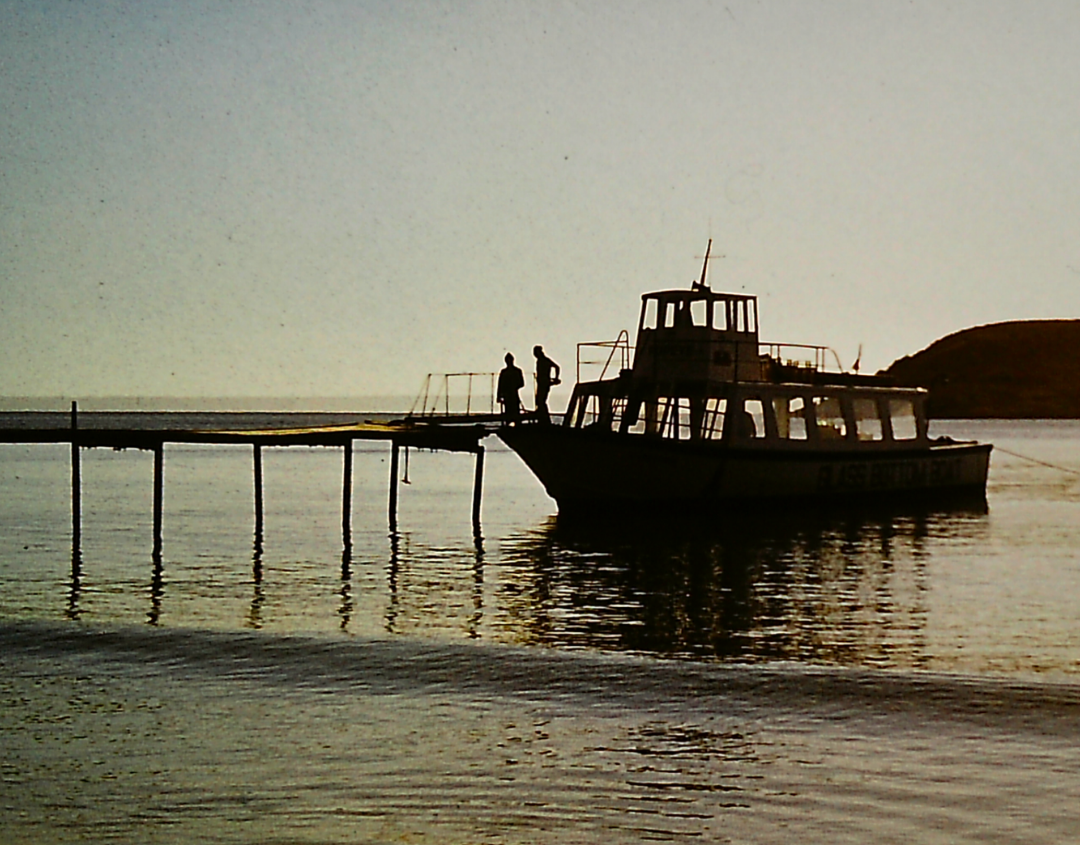
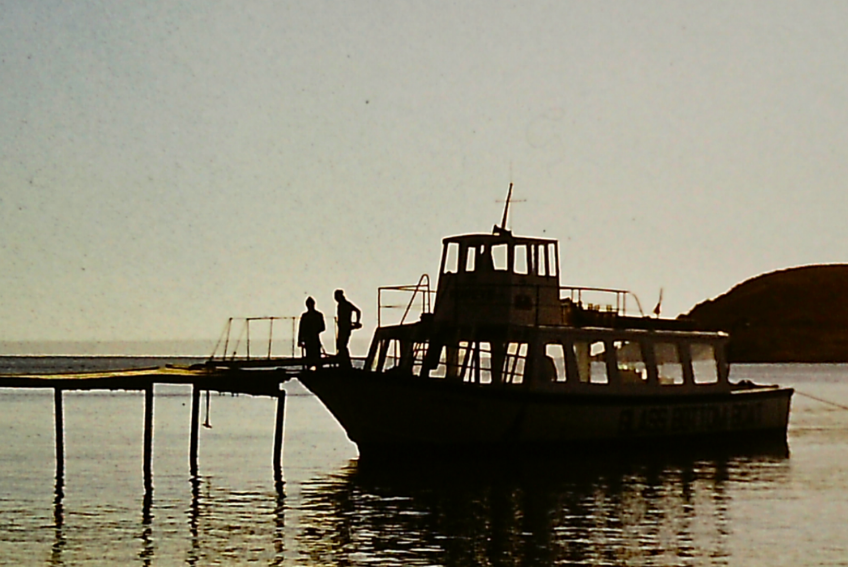
I don't know where this was taken. I don't know when. I don't know who the two figures on the jetty are, or whether they were waiting for the boat or had just arrived.
The boat looks like some kind of tourist sight seeing vessel, it's hard to be sure about that. The way the silhouette ripples on the water at the front and the angle of the sun suggests this is late afternoon or early evening. This could the UK, it could be Europe, it could be anywhere.
I simply don't know.
My dad took this photo. I don't know what he was thinking when he pressed the shutter. I don't know whether he even knew them. I don't know whether they even knew they were being photographed, nor what year this is, nor where it was taken.
I don't know why my dad took this photo, but I'm sure glad he did. He was an amateur photography for years, and this clearly shows his craft was paying off. The texture, age and low resolution makes it even more interesting.
What I do know is that somewhere along the way, probably without either of us noticing, I started doing the same thing. Carrying a camera everywhere I go, squeezing in a photo shoot mid-commute and never visiting a foreign country without the most appropriate camera.
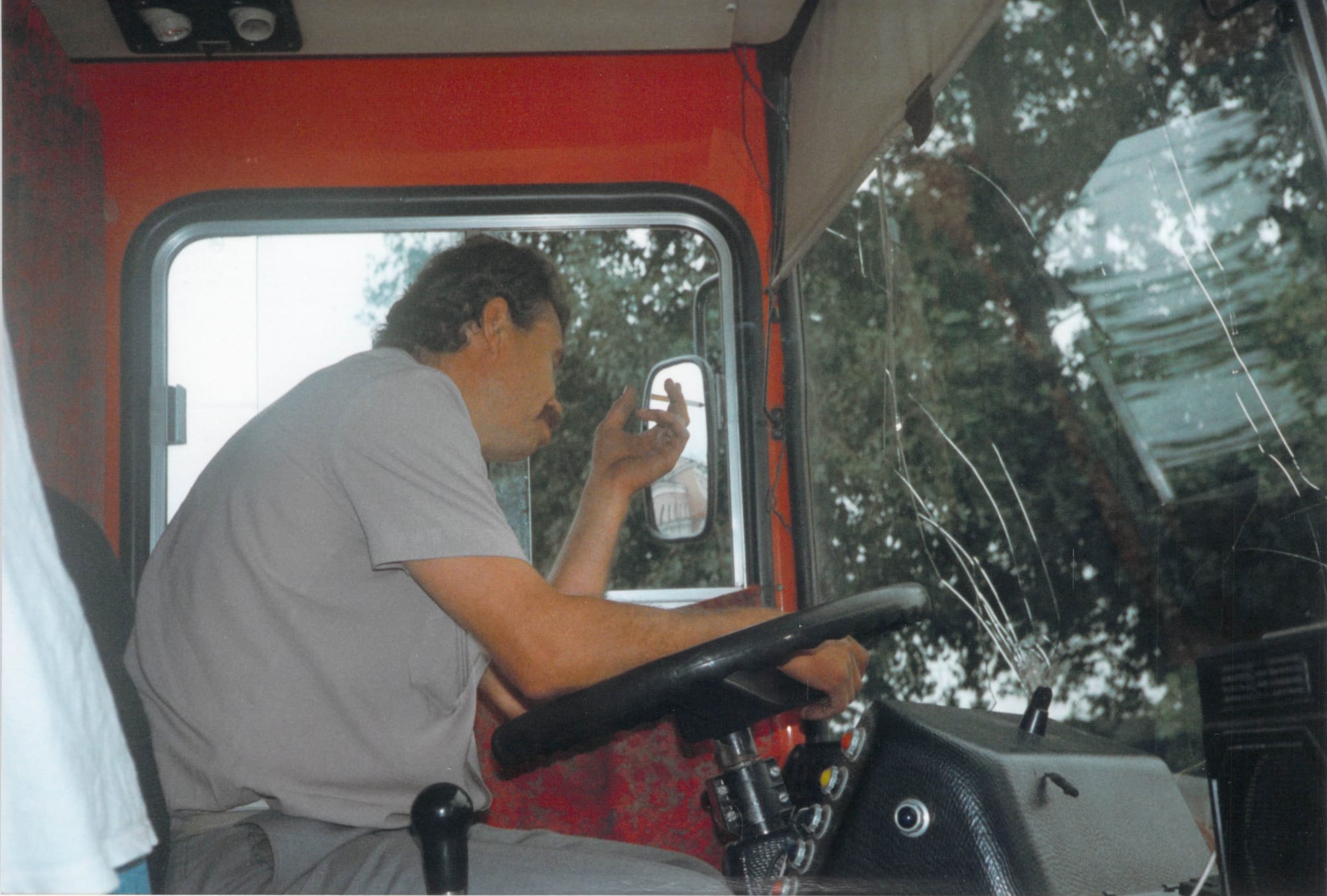
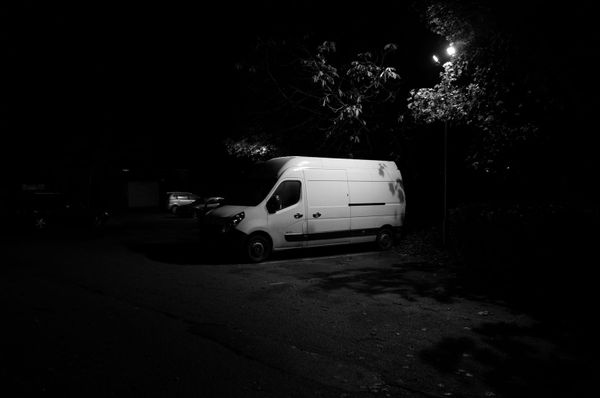
I bought my first film camera when I was 14, from a shady part of town and proceeded to take it everywhere. I was our bands official photographer, I snapped school events and it even travelled to the Ukraine on a foreign exchange (above photo).
Then everything became digital. This photo here is one of my favourite from this digital age.
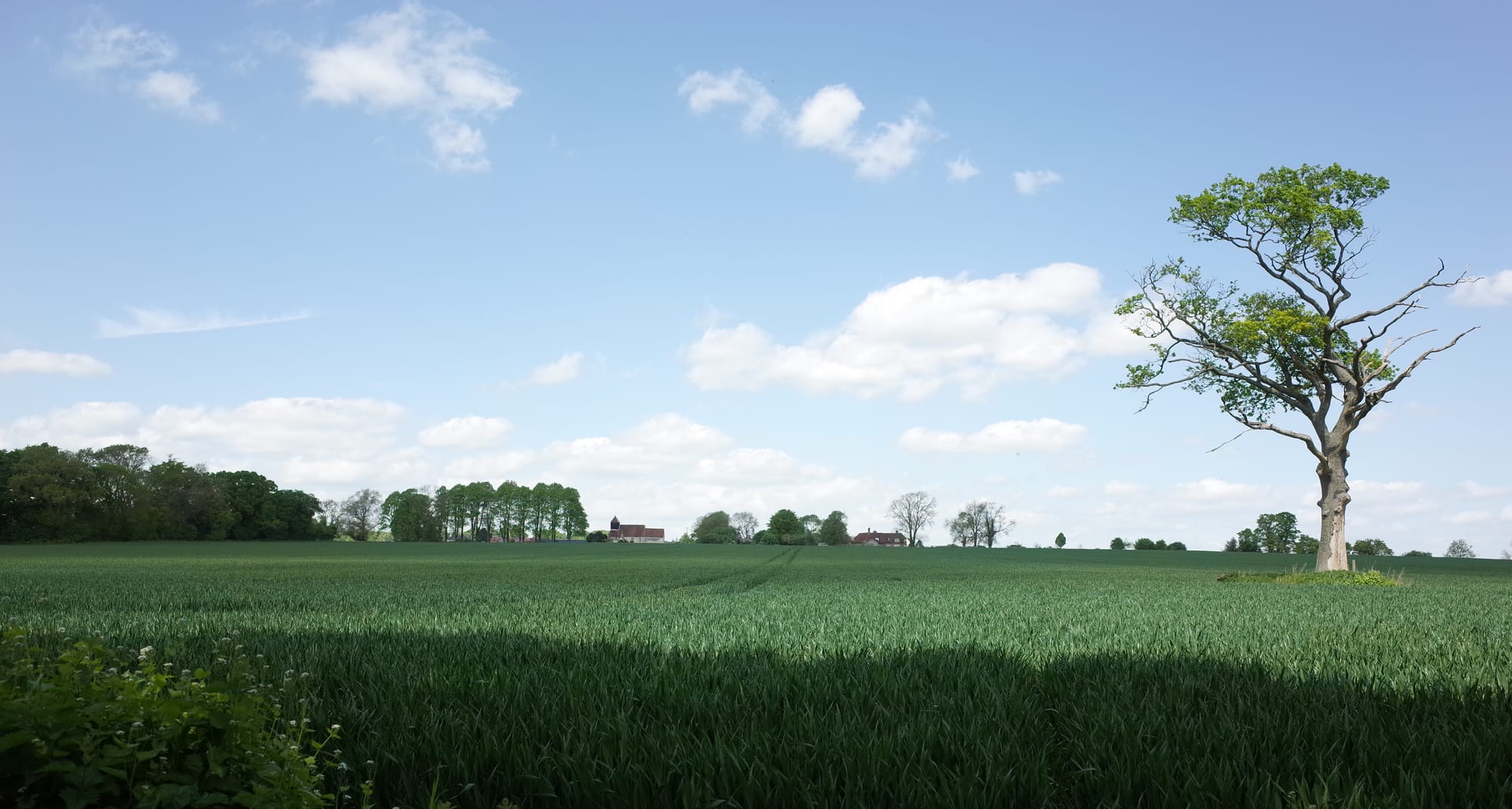
The habit was always there, from the early videos I would make as a teenager, to the photography habit ingrained in me today. Stopping. Looking. Noticing. Taking the photo before going to work, or back to the meeting, or wherever I was supposed to be. Being late to where I was supposed to be because the light was so good.
It turns out that curiosity may be hereditary
The human need for meaning
Human beings are remarkably uncomfortable with ambiguity. We like to fill in the gaps. We gravitate to stories, conspiracy theories, gossip. We listen in to conversations, often feel left out when others are in meetings we're not invited to. And we fill in the gaps when we see a photograph that has no narrative, no description, no story attached to it.
Note: I've written about the power of images without narrative before.
When a photo lacks a description, we tell our own stories about it – we make up the context and the meaning. We can't help it. And it's a powerful process.
In this photo of the boat, I wondered what meaning I should bring to it. What story does it tell?
Maybe they are modern day pirates, loading up the boat ready to sail into the ocean to find loot to plunder. Maybe they are lovers, preparing the boat for a romantic sail around the coast, or to lands afar. Maybe, like I actually think, they are tour guides securing the boat after a long day around the coast, chatting about where they'll go for a quick drink after work. Maybe they are waiting for colleagues, maybe they are returning, maybe they're going nowhere and the boat has been moored for three weeks with a broken engine.
At the end of the day, the photo is the photo. It is we who bring the meaning.
The photograph doesn't care which story we choose.
Daily reality
Our workplaces, no matter how large or small are full of incomplete photographs. Images that people see in their mind and fill in the gaps.
Leadership doesn't care about us, this process is pointless and serves no-one, nobody ever listens to me, this work doesn't matter, I am not good at what I do.
Yes, sometimes, these may be true. But they are stories – they are the narrative and the meaning we are bringing to an incomplete image.
Maybe, there is a chance to pause and to tackle the discomfort we feel in the ambiguity and look at it slightly differently, by asking different questions before we fill in the meaning.
Maybe we could describe clearly what we see, in our mind, or in what we are observing. Write down what we are assuming. What is missing that have we filled in the blanks to cover?
Do we have all the insights and information to form our assumption? Are they assumptions, really, or are they truths? Ask whether our assumptions could be wrong. See if there is information to challenge what you believe. Ask what else might be true.
Is there another story to tell? Is there another narrative to sit alongside the ambiguity we feel?
I still don't know where this photograph was taken. Or who the people are. I really should ask him. 🤓
But I know this: the photograph has been collecting stories for decades. Mine just happens to be the latest.
Where this sits in the Atlas
Orientation·Idea to Value·Communication·Creativity & Climate·Learning