Talks & Keynotes
Story-led keynotes on work, career, and how good ideas travel — from an award-winning international speaker and author of Zero to Keynote. Practical, warm, useful the same day. Available for events and companies worldwide.
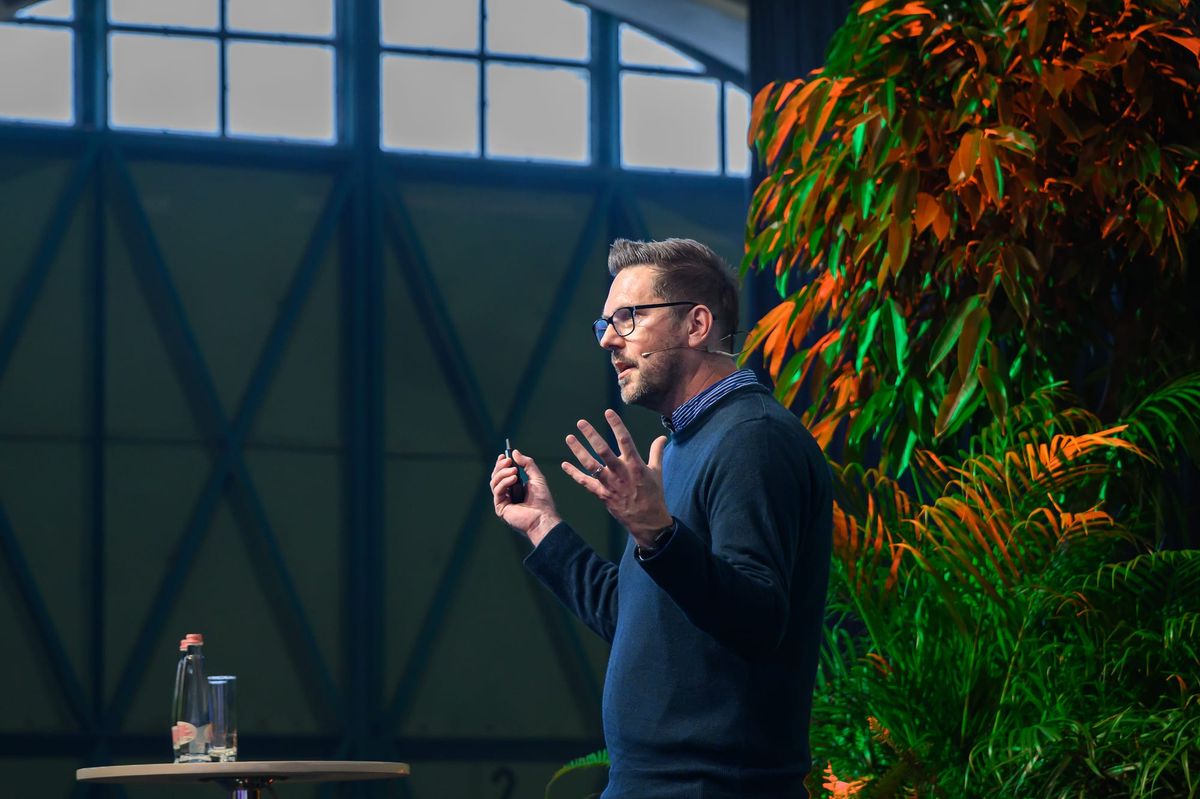
Story-led keynotes on how good work happens, how careers actually grow, and how communication and creativity shape the climate around both.
The best keynotes don't give you more to remember. They give you something you can't stop noticing.
I've spent twenty years working inside organisations, working with, and studying, good people doing good work – and noticing how often the conditions around them determine what becomes possible.
An idea can be excellent and still go nowhere. A talented person can be capable of much more and still find themselves stuck. A team can have all the right intentions and still struggle to communicate, create or move.
The difference is often found in the space between potential and what actually happens. That's the territory I explore on stage.
My keynotes bring together stories from organisations, observations from the world of work, and ideas about human potential, creativity, communication, careers and Idea to Value.
They aren't designed to give people another framework to adopt on Monday morning. They're designed to change what people notice.
Because when you see something differently, you start making different decisions. You ask a different question in the meeting. You notice the climate your team is working in. You recognise the idea that isn't getting the attention it deserves. You see the person who has more to give. You question the thing everyone else has simply accepted.
That's where change starts.
I work with organisations on keynotes for leadership events, conferences, away days and moments when a room needs to think differently about how work gets done. The talks are story-led, practical without being prescriptive, and grounded in the reality of organisational life.
The goal isn't applause, although that's always nice. It's for people to walk out with a little more clarity, a little more energy, and a new way of seeing the work they return to the next morning.
How I think about talks
Over twenty years of speaking, and a Zero to Keynote book teaching the craft to others, has left me with a small set of principles I return to for every talk I give. They aren't rules. They're the standards I hold myself to.
01 - Purpose, audience, context — before anything else.
I never start with simply what I want to say. Instead, it is always grounded in what the audience needs to hear. Purpose, audience and context is where every talk I write begins.
02 - Ninety percent of the work happens before the room.
The visible confidence and delivery on stage is invisible preparation showing through. Shaping the idea, structuring it for the audience, cutting what doesn't earn its place – that's the real work. The delivery is the last ten percent.
03 - A talk is a story, not a lecture.
Ideas travel further in narrative than in bullet points. Every talk I give is built as a story with a spine – a beginning that puts the audience inside a specific moment, a middle that changes what they see, and an ending that leaves them with something to take forward.
04 - No borrowed frameworks dropped in from outside.
Audiences can tell when a speaker has arrived with a generic model. The best talks are anchored in the audience's own reality, then use ideas from outside their immediate world to shift how they look at it.
05 - The audience is the point.
Every choice – the story I open with, the joke I tell, the slide I don't use – earns its place by serving the audience, or it gets cut. If a moment is there for the speaker's ego, it goes. The audience's precious time, energy and attention are what matters.
06 - Practice out loud, more than feels reasonable.
I practise out loud, at length, until the shape is entirely mine. Practice is preparation.
07 - Show up as yourself.
I don't put on a different keynote-speaker persona or mask. The talks that land are the ones where I sound like me – warm, direct, funny, optimistic, hopeful, occasionally serious, always trying to help.
08 - End with something worth remembering.
No summary. No "in conclusion." A talk closes with a clear observation the audience can take with them into the meeting they walk into afterwards.
The talks I currently give
I've spent a career studying one question, across every setting I could find it in: whether an idea becomes the value it should, and whether it's any good to be part of the work that gets it there.
Not just in business – in writing, in film, in music, in craft, in the way a museum curates a room, in how a novelist gets from a fragment to a finished book. The same movement, the same pattern of what makes it work or breaks it, showing up in every field that turns something imagined into something real.
Almost all the development people get is about getting better at their own job. A little is about working well across a team. Almost none is about seeing the work from outside it — from another industry, another discipline, another way of thinking entirely. That's the rarest and most useful view there is, and it's the one a good talk can deliver in an hour.
It's what I've spent a career doing: reading widely, studying how ideas move, working across engineering and HR and journalism and creative practice, and bringing what I find in one world to bear on another.
Certain themes keep surfacing: how good work moves, what the climate around it needs, the behaviours that make it possible, and what it takes to sustain meaningful work over a career. These are the talks I currently give.
How Ideas Become Value
A talk on where value actually comes from — and the lenses most of us were never handed
The word idea comes from the Greek for to see. The word value comes from the Latin for worth realised. Which means every organisation is really a movement between something someone saw and something worth having – and everyone looks at that movement, all the time, without necessarily being shown different lenses to see it clearly.
This is a talk about those lenses. Over twenty-five years of noticing how good work actually happens inside organisations, condensed into a series of small, specific observations:
- The surprising human currencies that never make it onto a balance sheet.
- The friction and reward calculus that shapes what teams choose to do next.
- The ways organisations work against themselves without meaning to.
- The climate that lets human potential become something real.
- The story every business is writing whether it means to or not.
Story-led, warm, and funny. Audiences leave with a set of things they'll never quite unsee in their own organisation – and clearer thinking about what to do with them on Monday morning.
Ideal for: company kick-offs, leadership conferences, strategy off-sites, and any event where the audience needs to leave looking at their own work differently.
Variations: Talk Value not Testing (for development teams and testers).
Creativity Is a Climate Issue
Creativity isn't a personality trait. It's a result of the climate people are working in. This talk explores the five conditions that shape whether creativity flourishes, or is pushed to the side – and how leaders and teams alike can shape the climate where people's creativity helps solve problem, generate value, improve work, and why human creativity is the key to engagement in the business and the work.
Ideal for: innovation programmes, leadership gatherings, culture events.
Idea to Value: How Modern Organisations Really Create Results
A £200 million spend over four years of stalled delivery. Then the platform shipped in eight and a half months – freeing the next idea that had been waiting just as long. This talk tells the story of how it happened, and what it reveals about the messy middle between idea and outcome. Funny, story-driven, and one of the most practically useful talks on how good work becomes real value – and how the people in the middle of it are often the one who can move it forward with confidence, if only the climate and conditions are right.
Ideal for: leadership events, strategy off-sites, product and transformation teams.
The 10 Behaviours of Effective Employees
Culture isn't what's written. It's what's repeated through everyday behaviours. This talk explores the everyday behaviours that create trust, clarity, and momentum – and gives teams a shared language for what good actually looks like.
We start with a story of incompatible behaviours in a square in Tallinn, we collectively improve a terrible business process on stage – created by leaders insisting on reporting standards – and we weave our way through the behaviours that create the right climate for good work to happen.
A fun, insightful and interesting exploration of ten behaviours that build a positive culture.
Ideal for: culture shifts, accountability resets, organisational alignment.
Thriving in Modern Work — and Modern Life
Energy, learning, and creative resilience – inside work and outside it. A practical and human exploration of how people grow, adapt, and build meaningful careers and meaningful lives in complex environments.
We start with Mr Freakin' Furious and his conference show down, and work our way through ten elements that can help build meaningful organisations, meaningful careers, and lives of creative and human flourishing.
Ideal for: company events, talent programmes, conferences, employee development sessions.
What it's like in the room
Talks are story-led and naturally hold attention. Ideas land because they're clear, not because they're loud.
Audiences leave with shared language that reduces friction, a balance of creativity and commercial reality, and clear next steps rather than just inspiration.
What people say
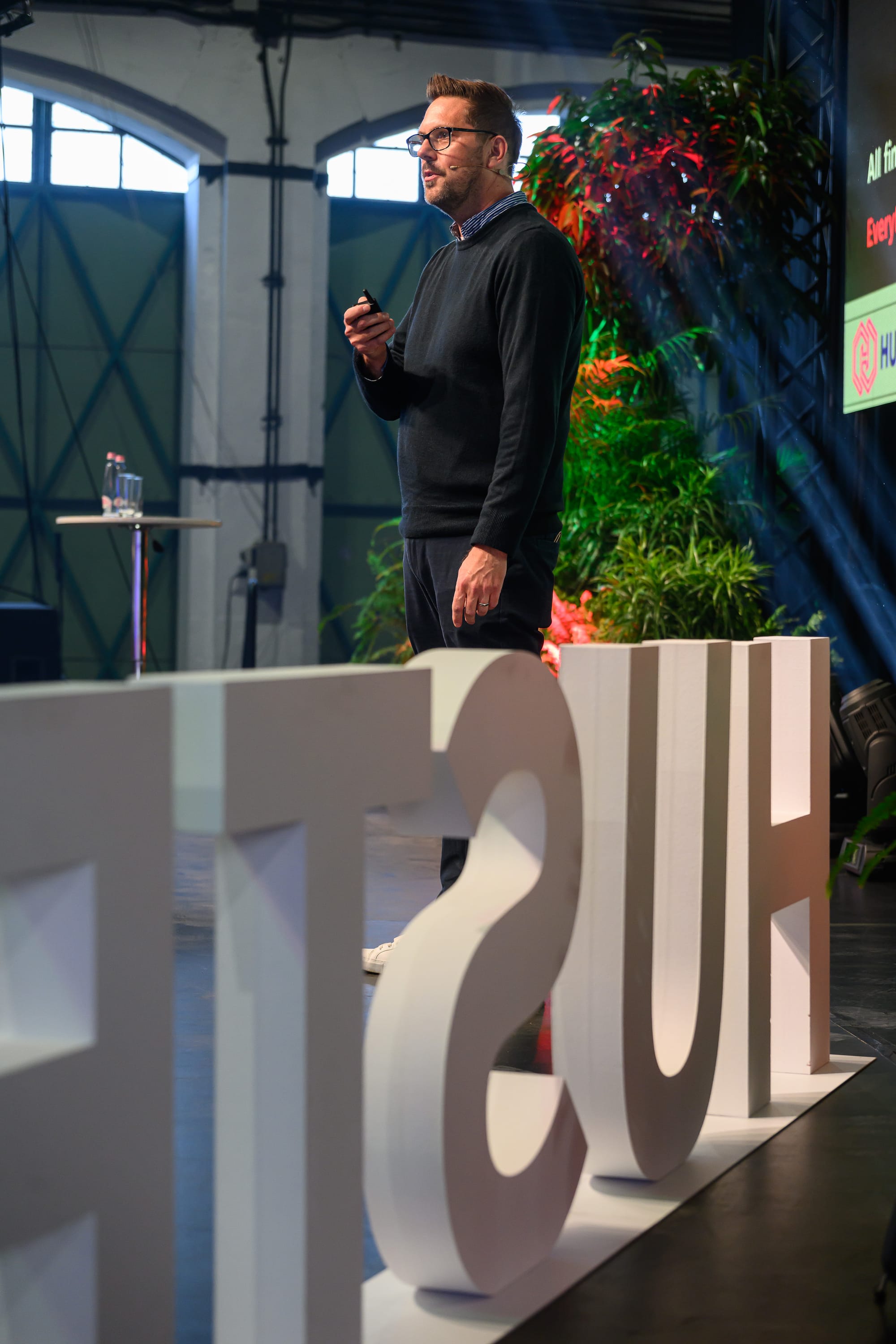
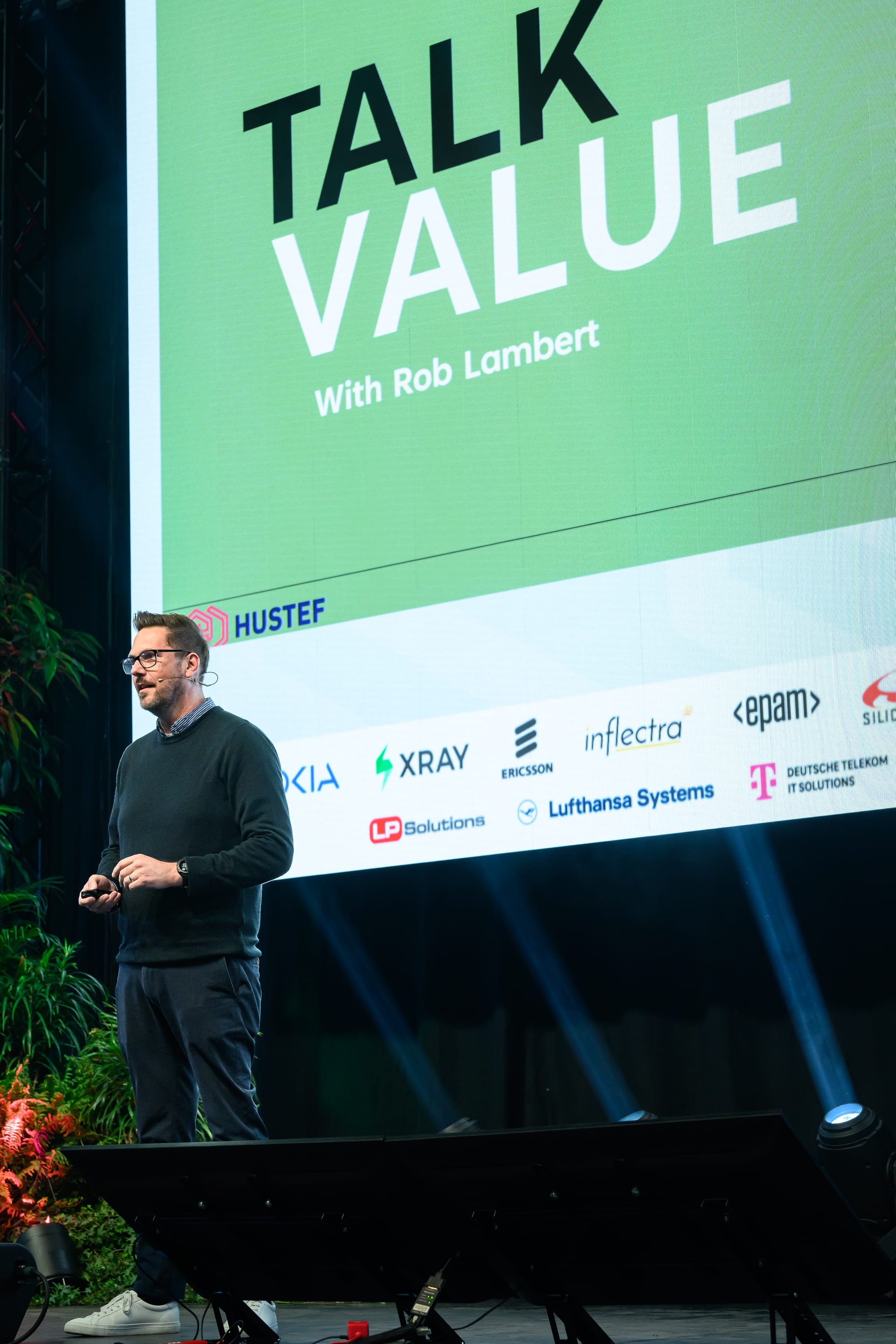
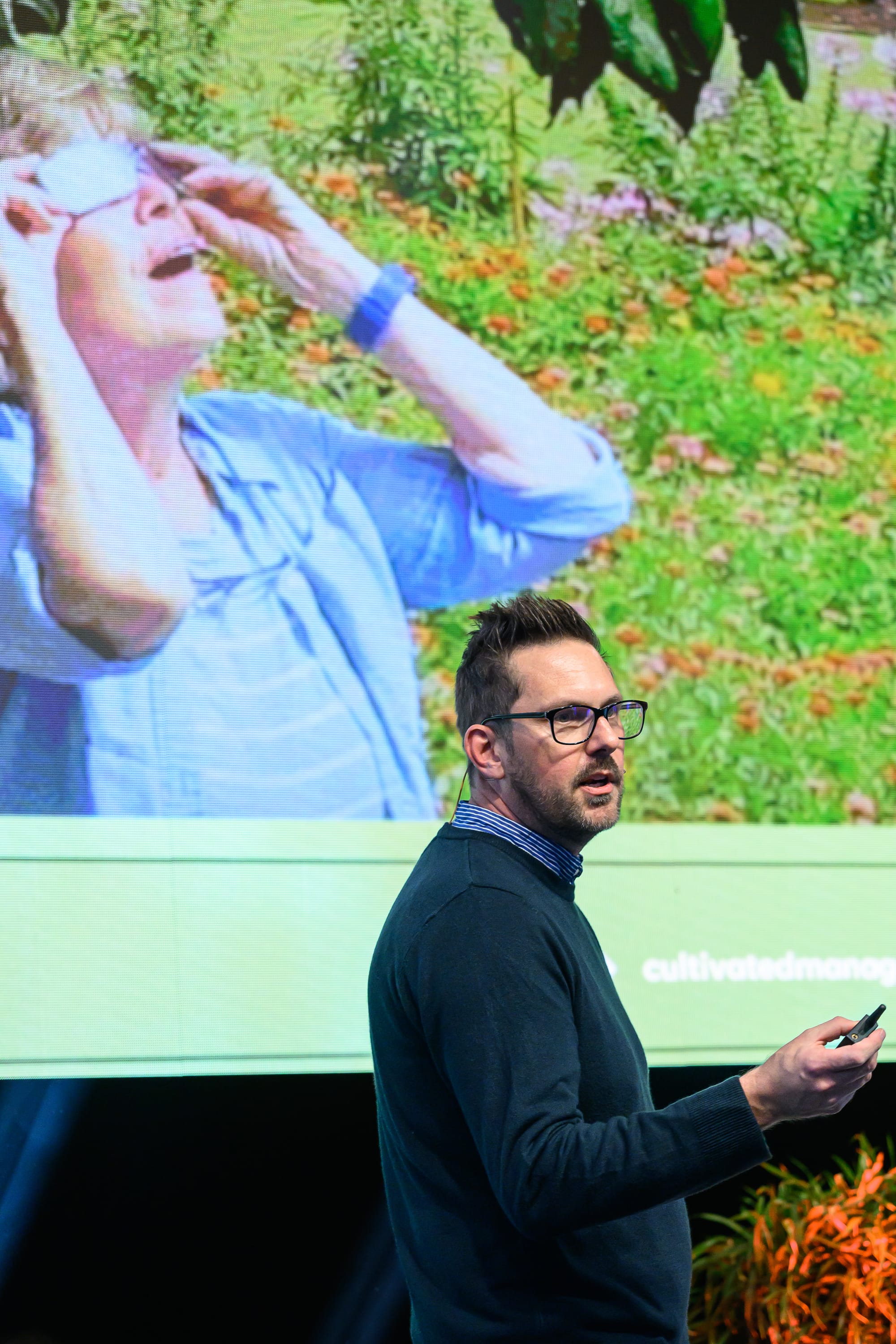
Conference organisers describe the talks as consistently their best of the event. Attendees describe them as practical, super clear, and useful the same afternoon. Companies say how insightful and useful the talks are.
"Rob's energy, expertise, and amiable presenting style were a big hit — we left with new skills, insights, and practical knowledge."
— Scott Summers, Director, nFocus
"The whole business was buzzing after the session. The clarity and insights landed with our teams well."
— CIO, Energy Sector
"Always our best talk at the event. A natural communicator with great presence and the most interesting insights our audiences love."
— Conference Organiser
Talks delivered at industry conferences, leadership off sites, and internal all-hands events across tech, financial services, energy, manufacturing and public sector — to audiences from twenty to two thousand.
The craft underneath the talks
I've been giving talks for over twenty years, and teaching other people to give them for almost as long. That work is public. I wrote Zero to Keynote, the practical guide to turning ideas into talks that land, and I run the Zero to Keynote workshop as presentation training for teams and individuals.
The point of naming this on a speaker page isn't self-promotion. It's a specific reassurance. When you book me for your event, you're booking someone who has thought about the craft of a talk – purpose, audience, context, structure, delivery – as deliberately as the content.
One story worth telling here. A few years ago I ran the Zero to Keynote workshop for four people in my own team, preparing to submit talks to an industry conference. All four of us landed on the agenda. All four of us finished in the top four of the event, ranked by the audience. The point isn't the ranking. It's that the work of preparing a good talk is teachable, and if you do it – really do it – talks that land aren't a matter of natural talent. They're a matter of doing the right work in the right order, and using the audience's finite resources of time, energy and attention respectfully.
Where these talks land
Conference keynotes, leadership off-sites, all-hands events, strategy summits, internal company kick-offs, team away-days, employee development sessions and industry gatherings. Audiences from twenty to two thousand, across tech, financial services, energy, manufacturing, and public sector, at industry conferences across Europe and corporate events in the UK.
Consistently ranked among the top talks at events, with best-of-event awards across multiple engagements and top-three placements at international conferences.
Based in the UK, available worldwide — always glad of a reason to travel somewhere new.
About Rob
Rob Lambert is a writer, speaker and teacher whose work is about learning to see — the work you do, the career you're building, and the conditions around both.
He began his career in journalism and media science — the empirical study of how messages move, why they distort, and what happens between meaning and receiver. That discipline followed him into organisations, where one pattern kept showing up: when communication is clear, priorities make sense, and the climate supports them, capable people turn ideas into value and grow while they do it.
He moved into software startups, engineering leadership, and senior roles as VP of Engineering and VP of HR. That combination — creative, technical, and deeply human — shapes everything he speaks about. He's the author of Zero to Keynote, runs the workshop that teaches its methods, and is an internationally rated keynote speaker whose talks have won best-of-event awards and top rankings at conferences across Europe.
His talks are warm, practical, story-based and quietly funny. Audiences leave with clearer language, renewed energy, and tools they can apply the same afternoon.
He also keeps a public commonplace book of things worth noticing, writes his letters on a typewriter, and co-hosts a podcast about stationery called Stationery Freaks. It looks like a hobby kept clear of the serious work. It isn't — the noticing is where most of the thinking starts.
Bespoke sessions
Some of the best talks are built for the moment — shaped around your context, your people, and what you want them to walk away thinking about. Company kick-offs, strategy off-sites, leadership gatherings, team away-days.
If you have a specific need, get in touch and we'll shape something together.
Book a talk or keynote
Let's get me in front of your people.
Tell me about your event — the audience, the moment, what you'd want people walking out thinking. Wherever you are, the best next step is a short conversation. No hard sell, just whether it's the right fit.
Get in touch → Or email directly: info@cultivatedmanagement.comUsually responds within 24 hours.
Some conference audiences become clients afterwards; the advisory work is the other door into the same practice
Speaker materials
Short bio
Rob Lambert is a writer, speaker and teacher whose work is about learning to see — the work you do, the career you're building, and the conditions around both. Drawing on over twenty years inside organisations, including senior roles as VP of Engineering and VP of HR, he helps people see how work really becomes value, and act on what they find. He's the author of Zero to Keynote, an internationally rated speaker whose talks have won best-of-event awards at conferences across Europe, and — because most of what the job titles don't tell you matters more than they look — he writes his letters on a typewriter and co-hosts a podcast about stationery.
Medium bio
Rob Lambert is a writer, speaker and teacher whose work is about one thing: learning to see. The work you do, the career you're building, the ideas that keep stalling, the conditions around all of it — clearly enough to know what to do next.
He began his career in journalism and media science before moving into software startups, engineering leadership, and senior roles as VP of Engineering and VP of HR. Along the way he noticed a pattern: the problem is rarely talent or effort. It's that people can't quite see what's happening to their work — or to themselves inside it. Give them a clearer way of looking, and good work follows.
He's the author of Zero to Keynote and an internationally rated keynote speaker, with best-of-event awards and top rankings at conferences across Europe. He keeps a public commonplace book, writes his letters on a typewriter, and co-hosts a podcast about stationery called Stationery Freaks — because the slow, tactile, human things usually matter more than they look.
Full bio
Rob Lambert is a writer, speaker and teacher whose body of work is about one thing: learning to see. His central idea is that most work — and most careers — fall short not for lack of effort or ability, but because it's hard to see clearly where an idea is going, where it's stalling, and what it's really for. Change how people see the work, and what they do changes with it.
His career spans journalism, media science, software startups, engineering leadership, and HR. After moving into tech, Rob rose to VP of Engineering and later VP of HR, helping scale a high-growth startup through complexity and change. That range is deliberate: most of what he brings to a stage comes from carrying ideas found in one world into another.
He's an internationally rated keynote speaker whose talks have won best-of-event awards and top rankings at conferences across Europe. He's also the author of Zero to Keynote — the practical guide to turning ideas into talks that land — and teaches the accompanying workshop to teams and individuals, which means he thinks about the craft of a talk as deliberately as its content.
The wider body of work carries the same practice into books, courses, and systems. Idea to Value is his working model for how good work moves through an organisation; alongside it sit Life of an Idea, Everyday Communication, the 10 Behaviours, and Take a Day Off. Through Creative Soul Projects he explores adjacent territory — noticing for its own sake, in writing, film, and observation.
What audiences most often want to ask about is the creativity beneath it all. He keeps a public commonplace book, composes his letters on a typewriter, and co-hosts a podcast about stationery called Stationery Freaks. It looks like a hobby kept clear of the serious work. It isn't. The noticing is where the work starts.