What We're Really Managing
Most organisations think they're managing projects, products or people. But what if the thing being managed is the idea — and everything else is infrastructure?

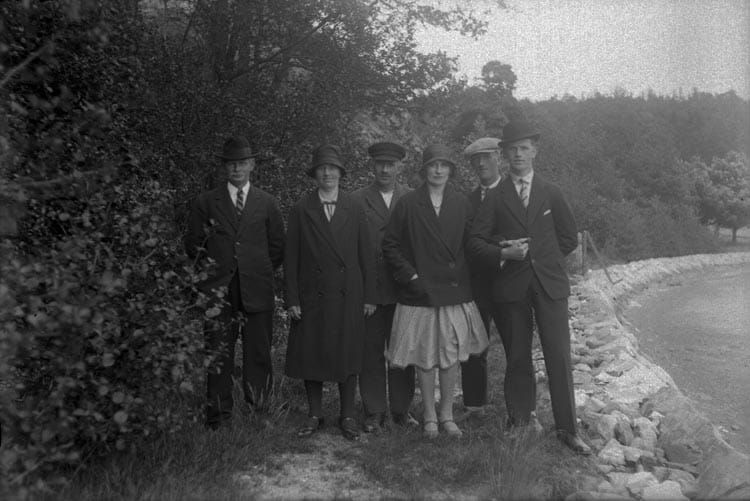
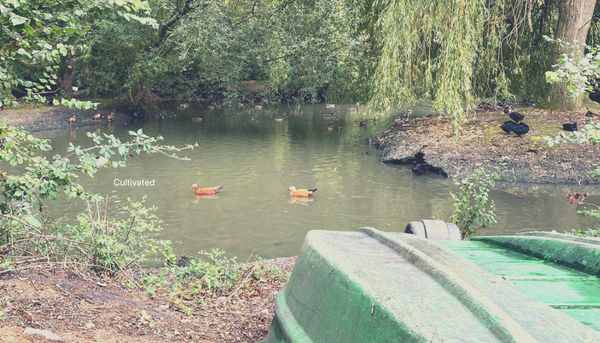
There's a walk I often do around Winchester Cathedral, down to the River Itchen and round to King Alfred's statue – it's a pleasant stroll for sure. I've walked beside the river many times. More times than I can remember.
It bends around small islands dotted with trees, adheres to concrete garden walls that direct it where to go, splits off into two different channels, disappears beneath bridges, comes back together again and occasionally floods when it has nowhere else to go. It has spent thousands of years adapting to the landscape around it.
Ideas, I've come to trust, do much the same thing.
You see the backlog isn't the work. The workshop isn't the work. The meeting isn't the work. The status report isn't the work. The governance meeting isn't either.
In fact, I've become increasingly convinced that many organisations spend their time managing the containers and structures that ideas move through rather than nurturing the ideas themselves.
But what is an idea?
I have always been fascinated by the moment before something exists.
The moment when a writer sees a book before it is written. When an architect sees a building before the first sketch is drawn. When someone looks at an empty shop on the high street and says, "That would make a wonderful bookshop." (That might just be me).
A photographer notices light. An architect notices space. A writer notices a sentence from an overheard conversation. A founder notices a problem everyone else has accepted as being normal.
I've spent enough time around people who create things to know that they all notice things. Their lives, in many ways, are simply a series of acts of noticing.
Which is perhaps why I was delighted to discover that the original meaning of the word idea was simply: "to see."
That etymology matters because it changes the question we're really trying to answer at work.
How do we preserve a seeing long enough for it to become value?
Not: how do we execute a plan. Not: how do we ship a product. Not: how to manage and govern the many tasks involved. Those are downstream. Upstream, and running through everything, is the seeing – and the potential that seeing could realise.
The whole discipline of doing our work is preserving what was first seen through every transformation the idea goes through on the way to something of value.
Metamorphosis
An idea changes form as it moves. That's not a fuzzy statement at all – that is the work we do.
It begins as something in someone's mind. Then it becomes language, images, models, words and maybe a diagram or two, or a user journey. Then notes. Then plans, resourcing, governance structures and investment frames. Then tasks. Then decisions. Then routines. Then abstract measures and metrics. Then products and services and artefacts. Then outcomes. And ideally then, value.
At each stage, it gains something and it loses something as the idea changes shape and form.
It gains structure, or shape, or clarity, or momentum. It loses immediacy, or nuance, or the essence of whatever was seen was in the first place. In some places it loses everything that made the idea important in the first place. Every hand-off and artefact and business structure is a translation, and every translation costs.
This is why communication matters as much as it does. Poor communication doesn't just slow progress. It often mutates the idea, and not always in a good way.
By the time it reaches reality, it may no longer resemble what was first seen (and for the record, that may not be a bad thing – ideas are seeds, and seeds must mature as we learn more). It ships on time, meets the specification, satisfies the plan, meets all governance standards, fits within the cost frame – and delivers something that isn't used, needed or valuable.
The ideas that survive their journey aren't the ideas with the best plans. They're the ideas whose meaning was carefully nurtured, carefully adapted based on feedback and carefully protected through every state they had to pass through.
Songwriters know this intuitively.
Something arrives in the head — a phrase, a melody, a lyric, a mood, a feeling, a shape that isn't yet the song. Something seen, in the original sense. Something noticed. And then the craft is preservation and adaption: the lyric that catches enough of the feeling without squandering it, the melody that carries the feelings and mood without over-explaining too literally, the arrangement that supports the original meaning without losing the essence, the production that lets the song feel alive, the performance that returns it to something living from the stage rather than something recorded.
At every stage, the songwriter is making decisions about what to preserve and what to let go and what to change. I think that's beautiful. And every decision is a small negotiation with the original thing seen — is this still the thing I first saw, or have I lost it in the making?
Writers know it. Their plans, outlines, story arc and manuscripts are the container about people, or a place, or a possibility – things they either saw around them or saw in their heads, and the whole work of drafting and editing is protecting what was seen while making it useful and valuable to a reader.
Publishers know it. A book is a seeing that has passed through an author's manuscript, an editor's mind, a designer's good taste, a printer's press, a marketer's promise, and a reader's attention — and if it's a good book, something of what the author first saw is still recognisable at the end.
Companies do this too, though we tend not to talk about it in these terms. A strategy is seeing what a business could be and the purpose it plays in society. A product is seeing what a customer might need. A team is seeing just what good people could do together, what creative potential they can express, what value they can add when they combine their strengths together.
The daily work of running the business is, in reality, the work of protecting things that were seen through every conversation, decision, and delivery.
Different domains. Same process. The journey of an idea through people, artefacts and systems until it becomes value — or doesn't.
If the whole discipline of doing work is preserving what was seen long enough for it to become value, then maybe there are some questions that are worth playing with.
Which ideas are worth pursuing? What are we trying to become? What matters? What doesn't? Which ideas should we invest in? What, from what we have seen, do we actually want to turn in to something valuable?
How does the original seeing become value? What does the transformation actually look like in our context, our system, our people, our work? What does it cost in investment, attention, effort, resources, time and action, and what emerges at the end? And is it worth it?
How does meaning survive the journey? Ideas don't travel directly from one mind to another. They travel through conversations, documents, sketches, presentations, roadmaps, plans, financial frames, stories, workshops, software and symbols. What do we require to achieve clarity and alignment around the idea? Where does it break down and what can we do about it? Which artefacts keep the seeing and meaning alive, and which make it conform to a standard that dilutes the essence, and along with it, the value?
Can people actually do this work — and do it well? What are the conditions and the climate that let human judgement, taste, creativity and experience meet an idea and make it valuable, and make it better through it all? What does it take for the work to feel worth being part of?
What did the journey teach us? Every realised idea creates knowledge, whether it created value, or not. Knowledge about ourselves, about how effective we are at moving ideas through shape and form, about how we build momentum or lose it. And ultimately, was it worth it?
These questions describe the same road trip an idea goes on, whether you happen to be running a hotel, writing a novel, shipping software, or leading a country. They're not proprietary. They're just what the land looks like once you accept that the water — the idea, the seeing — is what you're actually managing, not the tasks or the people.
The five layers of the Idea to Value system are my attempt to map those five questions in a way that's useful inside organisations. But the questions come first, and they matter far more.
Once you look at work through this lens, the questions change. You start to appreciate that the distance between the idea and the value it realises is where the work happens, and the costs accumulate.
The questions many people ask, are about control. How do we add more process? More governance? More reporting? More pressure? More job roles? More target operating models? All of them, ultimately, trying to squeeze the uncertainty out of a landscape that has uncertainty as its absolute defining feature.
Maybe new questions lead us to better work:
- What's standing between the idea and the value?
- What climate gives people the best chance of doing their best work?
- What do we need to know that we don't yet know?
- Can we narrow the gap between an idea and value without losing what the idea was?
- Does the idea need to become something else?
- What value are we actually aiming for?
- How much should we invest in this idea, this thing that we have seen?
- How complete is the idea, honestly?
- Was it worth doing?
And, most important of all: where are we losing meaning, clarity and alignment on the way?
An organisation that can hold those questions steadily is doing something rare. It has stopped confusing the containers of activity for the water, and started paying attention to the thing that was actually seen in the first place — and to whether it survives the journey long enough to become something anyone else can use.
That's the work. The rest is infrastructure.
Where this sits in the Atlas
Orientation·Idea to Value·Communication·Creativity & Climate·Learning