There Is No Waze for Creative Work - Clarity at Work
Why clarity matters in messy creative work. We don't need to know every turn, but without a clear destination, good people can spend enormous effort going in the wrong direction.

Ideas require direction
I still have an AA Route Planner, somewhere. Likely tucked in the boot of the MX5 along with a red tartan blanket that belonged to my grandad and my collection of cassette tapes. The boot of a classic car (well, nearly classic) seems to be the best place to keep growing my collection of old car related stuff.
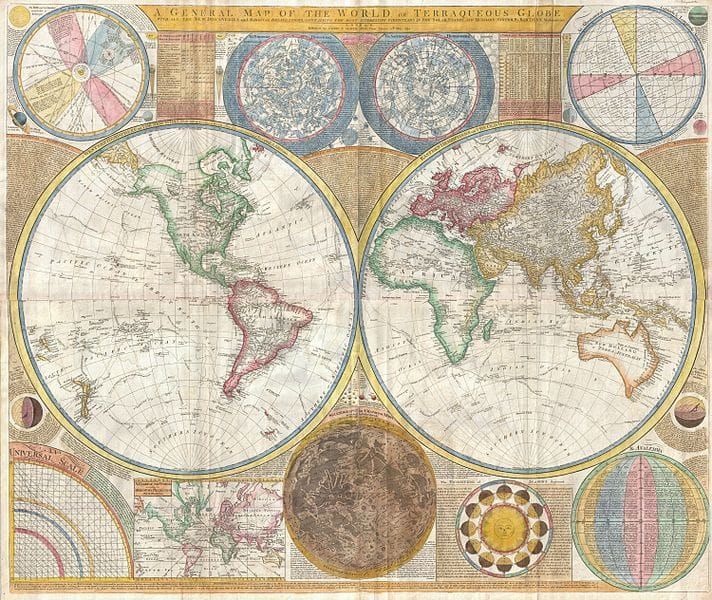
The route planner is A3 sized (yes, very practical), yellow, and completely useless in a moving car on it's own. I remember using it often, unfolding it across the passenger seat or dash, finding the place you're looking for – and the logical roads to get there – and tracing my figures along it, repeating the route in my head.
I miss them. Not the maps, specifically. But the certainty that you could be lost.
Before sat navs, we used maps. Proper paper ones. Sometimes beautifully designed, sometimes practically designed, sometimes neither, all a collective output of talented people bring clarity to the roads of England. I think I still have an old Sheffield A-Z somewhere too.
You plotted a route, set off, and, usually, got lost. Being lost wasn't a failure though. It was simply the bit before you found someone who knew the way.
So you'd wind down the window and ask a stranger.
"Excuse me, do you know how to get to...?"
You trusted them to point you in roughly the right direction, while accepting the slight possibility that they might send you three miles in the wrong direction for their own amusement. And here's the thing, it worked surprisingly well.
I was reminded of this years later when I thought about a documentary festival I volunteered at as a teenager. I would spend most of my time standing in doorways, telling people which room they wanted for the film they wanted to watch, answering questions and generally helping the whole thing move smoothly.
The documentaries were good. But that's not what I remember. I remember the feeling that everyone there knew what the thing was for. The organisers knew. The staff knew. The other volunteers knew. Even the people wandering around with lanyards seemed to know what the whole thing was about and what they wanted from it
You could feel it in the building. Nobody needed to explain the entire festival every time someone asked where Room 4 was. They just pointed.
Years later, I worked somewhere that didn't have that feeling. The people at the top weren't sure which way to take the business, so – refreshingly, they thought – they asked everyone else to decide it for them. Most of us had no commercial experience, no real accountability for the results and, being young, no shortage of strong opinions either.
There's a clue in the job titles none of us held. It didn't end particularly well.
And once, in a pub in Winchester, I overheard four executives laughing – properly laughing – about how every project, every year, cost a fortune and delivered almost nothing.
They found this hilarious. I didn't. There was something almost obscene about the amount of human effort being described so casually: money, time, intelligence, attention, good intentions – all of it disappearing into projects nobody seemed able to explain. And even worse, then doing the same thing again next year.
What struck me wasn't that they were incompetent. Quite the opposite. They seemed perfectly capable people. They just didn't seem to know where they were going.
This is where I think we make things harder than they need to be. We often imagine clarity means having the whole route worked out. It doesn't. When I used to get lost in Sheffield, I didn't need someone to explain the entire road network of South Yorkshire. I needed someone to point at a road and say: You're here, you need to keep going that way. Or turnaround, and head back a mile that way, then sharp left. Or look out for the old church on your right, then keep going two miles and you're there.
That's enough to get moving again.
In our work we see the absence of it once we know what to look for. Every task becomes priority one. Meetings happen without decisions. Beautiful documents, with nice fonts, are produced that nobody opens. Two teams start building the same thing, separately, each certain they're the one doing it, and doing it right.
Everyone is busy. Everyone is trying. Nobody is necessarily doing anything wrong. The problem is that everyone is filling in the gaps from wherever they're standing. They're a little lost, and they're keeping on going.
And when that happens, even good people make perfectly sensible decisions that don't add up to much when you put them together.
When we sense we're getting even more lost, the usual response is to push harder. More meetings. More updates. More urgency. More communication. More governance. More oversight. More control. More watermelon reporting.
Sometimes though, the most logical thing to do is to stop. Not for very long. Just long enough to ask the questions that should probably have been asked at the beginning:
What are we actually trying to do? What problem are we trying to solve? What does success look like? What value are we actually chasing? And is everyone clear about what we're trying to do?
Not the five-year strategy. Not the transformation narrative. Not the beautifully worded statement that went through three committees before sign off. Not pizza on Friday to keep everyone motivated.
Clarity. What are we actually trying to do?
If you can answer that plainly, a remarkable amount of other stuff gets easier. People can make decisions where they are and close to the work – in alignment with the direction they are moving. They can tell which things matter and which things don't. They can see when someone else is already doing the thing they were about to start doing, and discuss it calmly with all involved. They can disagree properly, because they're at least disagreeing about the same destination, rather than their own version of it.
And eventually something rather pleasing happens. You don't have to push quite so hard. In fact, nobody has to push at all. Things start to move. Not because everyone has suddenly become more productive, or because you've discovered a revolutionary new management technique, or you've implemented a borrowed framework that everyone else is using.
They simply know where they're going. And when people have clarity over where we're all going, we can align around it.
It's pretty tough to align around something that isn't clear. And instead of busy, well intentioned, but directionless action, we create the conditions for momentum to happen when we have clarity. Momentum is energy, it's fun, it's engagement. It's not busy action, it's movement towards the destination.
But momentum isn't just speed. A car driving quickly in the wrong direction through Sheffield has plenty of motion and very little momentum worth having.
The same is true of work. The scarce thing isn't talent, effort or hours. Often, people are putting their all into the work. What's missing is somewhere for all that capability and effort to go.
And I know what you're thinking. That's what Waze is for. Of course it is.
We don't really need to know how to read a map any more. Tell Waze where you want to go and it will tell you where you are, which road to take, what's happening up ahead, whether you've missed a turning, to watch out for the pothole and, with confidence, what time you'll arrive. And it's usually pretty good indeed. I wouldn't trade this for maps now at all.
But there's no Waze for messy creative work of taking an idea and turning it into value. Nothing tells you that you're three meetings away from discovering the thing you were actually trying to make.
Nothing we have says you've taken the wrong turning four decision ago, or that the idea needs another twenty minutes, or that the clever thing you've just built is taking you further from the thing you actually wanted.
There is no blue line showing the route from an interesting idea to something useful. That's why I still like the old maps. They didn't tell you everything. They couldn't.
They didn't know about traffic. They couldn't reroute you because you'd missed a turning. They certainly couldn't tell you that you'd be home in 47 minutes. Or that if you skipped next week's design meeting, your idea would become more valuable to your customers.
They just gave you somewhere to go. And if you got lost, you could wind down the window and ask someone. Maybe that's all clarity really is.
Not knowing every turn. Not having the whole route worked out. Just knowing where you're going. And I guess real clarity only comes in retrospect, when you trace the actual work, the path, the idea and the value it created.
But one thing I know for sure is that if you provide the clarity of the destination you are moving towards, you create the conditions for alignment to happen. Alignment then creates the conditions for momentum to emerge. And momentum is how we take a good idea, transform it through our organisation until it becomes the value we seek – effectively.
And we could try to create an app to do that, or we could appreciate that humans, coming together to do good work, simply need to know what we're doing and why. And then to bring their own creative experience, skills and thinking to get us there.
Where this sits in the Atlas
Orientation·Idea to Value·Communication·Creativity & Climate·Learning