Six meetings to buy broadband
Ten executives spent six meetings deciding a thousand-pound broadband upgrade. On why debate without evidence is cost — and the smallest test is the fastest path forward.

A small test would resolve this
I was perfectly happy with the biscuits by meeting number six. Foxes cream classics. A much better improvement from the ones in meeting one.
Maybe I'm being a little unfair. The decision we were wrangling was whether to upgrade the office broadband – a thousand pounds for the year, give or take. We absolutely needed it. Tricky to be a cloud company when our internet was so slow.
The old connection just about worked but as we scaled, we needed to increase it considerably. The case for it was reasonable without being overwhelming: exactly the sort of small, sensible question you'd expect a competent business to settle over a cup of tea and a simple nod of understanding around the table.
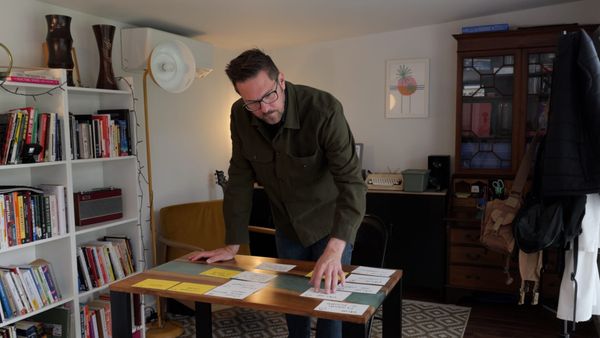
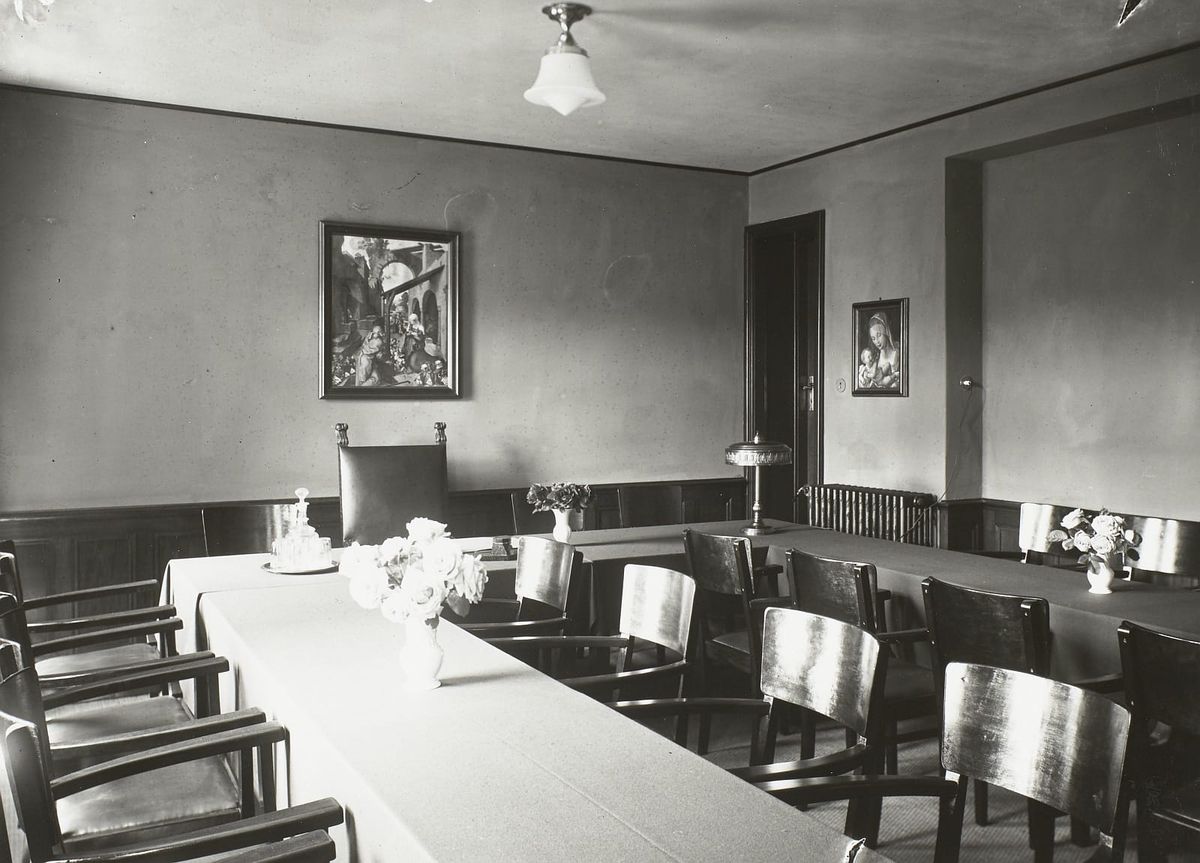
Instead, it was settled over six meetings. Ten executives attended the first, and, rather than be left out of future discussions around this topic, most of them attended most of the rest. The opening session was thorough and reached no decision, though it did surface "some things to slow down and consider".
The second decided to consult two more stakeholders, just to be safe. The third reopened whether the business case had been properly challenged, or whether we needed to bring in external "thinking partners". The fourth discovered a vendor risk. The fifth returned to the beginning again. The sixth, at last, decided: yes, upgrade the broadband.
Add up the salaries in that room across those six meetings and you land somewhere between fifteen and twenty thousand pounds of senior time – spent deciding how to spend one thousand pound. It's the kind of arithmetic that would be funny if it weren't happening, in some form, in probably every organisation on earth, at this very moment.
Here's the thing to consider though, because we could you put this under the "ineffective meeting" category and move on. The broadband story is only fascinating because it's small enough to see. The number is absurd, the stakes are trivial, and so the disproportion is obvious to everyone in the room and everyone you tell afterwards. But the same thing is happening all day, everywhere, on questions where the disproportion is sometimes invisible – because the value at stake is fuzzy, the cost of the debate is buried in salaries, and nobody's arithmetic ever gets done.
It's been my observation that a lot of the working week is not actually spent discussing "what should we make" – that's a small portion of it – especially in larger organisations. Far more of the time goes on everything around the work: the tool, the vendor, the operating model, the risk model, the dependencies model, the finance model, the reporting model, the delivery model, the organisation model, the target operating model, the RACI, the reporting line, the approval threshold, the new model for the thing we just used to get done.
Any one of these can sit in open debate for months, eating attention wildly out of proportion to what's actually at stake. Much of this is needed, maybe. But whilst the debates rage, the people downstream wait for a resolution, sometimes for a long time.
A team can spend half a year designing a new performance system without once trying it on a single team. A finance function can deliberate a reporting standard for a quarter without trialling it anywhere real. And every hour of it is costing something – time, money, energy and attention – against a value that hasn't arrived and might never.
What the broadband committee were really doing, underneath, was something very ordinary. Someone had an idea: faster broadband, fewer complaints, a better day for everyone, to cope with growing demand. Getting from that idea to that small value should have taken a person, a week or a day at most – a modest amount of effort. Instead the gap between an idea and the value it realised ballooned into six meetings, and the effort became the most expensive cost. The idea reached the value eventually. It just sat in the room being discussed, growing more expensive by the hour.
There's a second bill most places never see, or care to admit, too. While those ten people were trying to decide about broadband, they weren't deciding about anything else — the launch that needed a sign-off, the hire that needed approving, the strategy that needed a steer, the investment deck that needed refining.
Organisations are great tangles of small unfinished decisions with ongoing interactions, each waiting on another, and when one doesn't get made it doesn't only cost its own meeting. It knocks on downstream to everything else – everything inside the organisation is connected. There is always a cause and effect.
The direct cost of a meeting is visible and bounded, if we care to measure it. The waiting it creates elsewhere is usually several times larger, and appears on no dashboard anyone looks at.
So why do we do it? It not laziness. Far from it - a lot of good intention and energy goes into these kinds of decisions. I've come to belief it's because of a very specific, very human trade.
While you're discussing things in abstract terms, in models, through opinions, in theory, everyone in the room is absolutely right. A theory is only a guess until it meets reality, and in a meeting where nothing meets reality, nobody's guess has been proven wrong.
Every position stays defensible, every opinion stay right, every theory can be academically argued to be correct. Discussion is, in that sense, the most comfortable activity in working life and maybe that's why people love it. It seems to be that we engage in debate and discussion because its a place where all the theories coexist, sometimes peacefully, mostly because none of them has been asked to actually prove themselves.
Testing ruins this. A test produces a result, and a result has the dinner party bad manners to tell you something true whether you wanted to hear it or not. One theory survives; another doesn't. The wonderful ambiguity that kept everyone safe collapses. And many people don't like that, especially when it's their world view and strongly held opinions collapsing with it.
Guessing feels safe. Testing feels exposed. But only one of them tells you anything – and the exposure is often astonishingly cheap. A week on a small pilot, against six weeks of meetings. The discomfort of finding out you were wrong on a Tuesday is a bargain next to the cost of discovering it after you've rolled the thing out to four thousand people.
It helps to be honest about what a test actually is, because most of the things organisations call tests aren't.
A real test is small — one team, one workflow, short time – not a full rollout with a governance board and project team and reporting standards that need a new dashboard. It's cheap; if it costs a fortune, it isn't a test, it's a soft launch pretending to be learning.
A test is quick, measured in days or weeks; a "test" that runs for two years is a project. It's designed, with an actual question it's trying to answer, rather than a fun few weeks to see what happens. It's reversible, so a bad result costs you nothing worse than a lesson and some new information. And it's real – put in genuine contact with the world of work, not circulated as a proposal for feedback, or drawn on a whiteboard, or put into a nice slide deck for showcasing. Most organisational "tests" break at least two of these, produce a muddle of information, and get taken as proof that testing doesn't work and we should go back to debating it academically. The testing was fine. The thing they ran wasn't a test.
And none of this is really about broadband, or executives, or organisations at all. The writer who edits the blog post for a fourth week rather than publishing it is sitting in the broadband meeting. So is the novelist re-editing chapter four for the fifty second time, and the podcaster turning an episode over in her head instead of recording it and getting the value of learning quickly, and the founder polishing a feature nobody's even asked for. Every one of them is doing what the ten executives did: choosing the safety of the theory and potential, over the exposure of the evidence. Polish it forever, or put it in front of reality and find out. The scale changes and the vocabulary changes; the choice is identical, and so is the cost of not making it.
None of which means test everything – that would generate a lot of learning and not much progress towards some form of financial value. Some decisions really are irreversible and deserve their weight and a healthy amount of analysis, and maybe multiple tests. Some answers already sit in evidence you have in the business and haven't looked at yet. And some "debates" aren't uncertainty at all – they're a decision someone doesn't want to make, with everyone pretending it's an analysis problem, and no pilot on earth will settle them, because there's nothing to learn, only something to admit.
An organisation that tests everything is as lost as one that tests nothing; it's just learning, maybe, but it's not moving towards something for the customer. The skill then, is noticing the moment when discussion has given you everything it has, and one more round will only add cost without removing any more doubt. That's the moment to stop talking and run the smallest thing that would settle it.
Because the real danger was never being wrong. It's being certain, theoretically, without evidence, and then acting on that certainty at scale. Most of the waste in business isn't caused by testing; it's caused by skipping it, because someone senior was sure, or because finding out felt too expensive to bother with, or politics just meant everyone enjoyed the charade of discussion. Testing is humility in motion – the admission that the reality of your business knows more than the people in the room do – and that the shortest path from any idea to anything worth having runs straight through the evidence of whether it works or not.
Not every test succeeds. But every test teaches, and learning on a Tuesday is always cheaper than guessing wrong at scale, or running six more meetings.
So the useful question is never who's right? It's what did we learn? Test, and the future comes into view just a little clearer. Guess, and it stays a story you're telling yourself in a room.
Where this sits in the Atlas
Orientation·Idea to Value·Communication·Creativity & Climate·Learning