Smiles per mile
At work we've decided friction is simply the enemy, and go to war on it without ever studying what we're removing. This is the lens I use instead: the three kinds of friction, the quadrant, and why a frictionless life isn't the point.

The two forces that decide whether work moves — and why removing all the friction is not the point
Give me a fountain pen and a decent notebook and I’ll happily spend ten minutes choosing a word that could have been typed in three seconds. Put me in front of a typewriter and I’m even happier, despite the fact that it is essentially an inconvenient keyboard, with an inconvenient material, and with an inconvenient storage system.
I like making things, too. A small table from a pile of scrap wood. Something that involves measuring, cutting, sanding and, eventually, discovering that the legs are not quite the same length. Oh well, it will do.
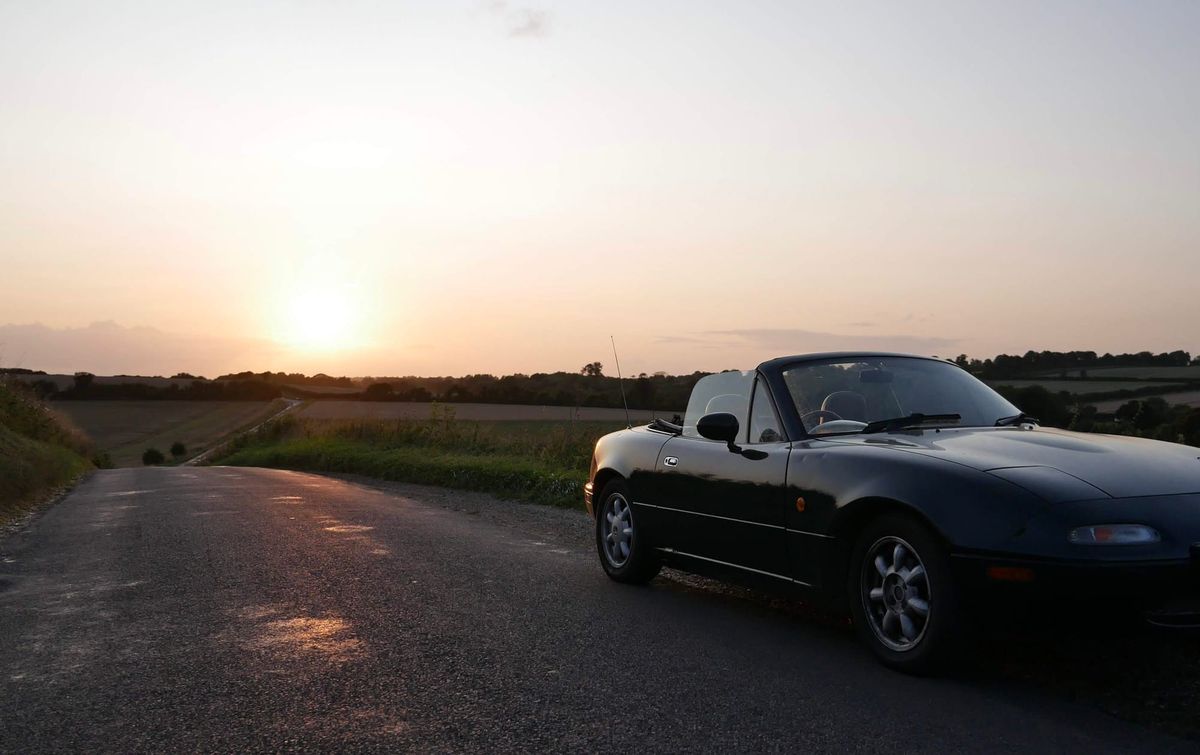
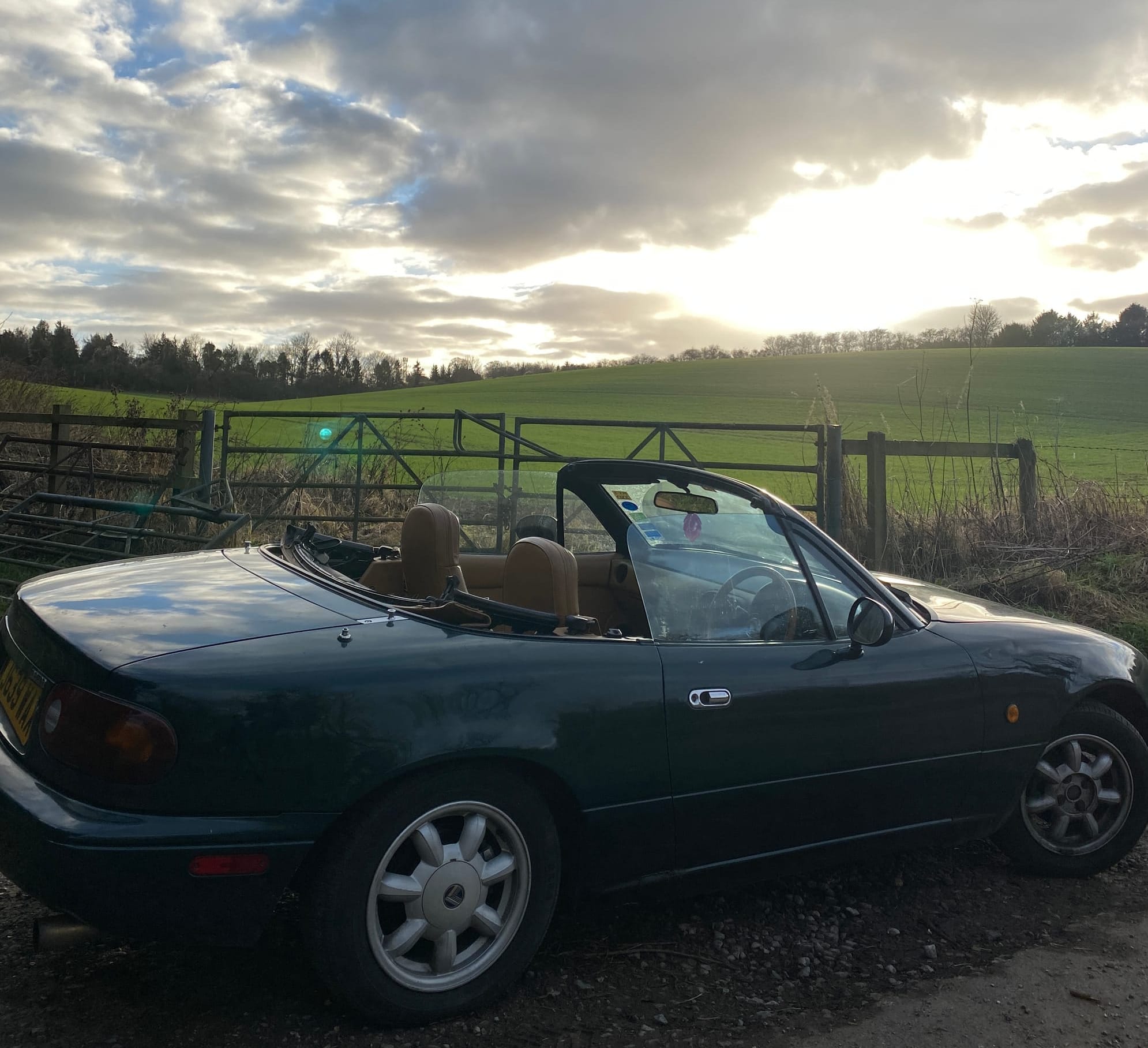
And then there is my old Mazda MX-5: not much power, no particular interest in getting anywhere quickly, rust working it's way through, and an almost remarkable number of smiles per mile.
None of these things are efficient. That is rather the point. The pen is slower than a keyboard. The typewriter is slower than the pen. The table would have been considerably cheaper and easier to buy from IKEA. And the Mazda has a staggering amount of friction compared with getting into a modern car, setting the cruise control and allowing the electronics to do most of the work.
Yet each one gives something back.
The pen keeps me with an idea long enough to find the right words. The typewriter makes writing physical enough that I have to pay attention, and the noise of the keys is mesmerising. Making the table turns an object into a story I can share with others: remember the piece of wood, the poor measuring, the odd cut, the afternoon spent sanding it and the fact everyone's drinks slide off? And the Mazda makes driving itself the point, rather than merely the means of getting somewhere. And pointing that down country lanes in England is a joy.
Which got me thinking about one of the great assumptions of modern work. We treat friction as a problem to be solved. We spend millions removing steps, automating decisions, speeding things up and making everything easier. Often this is the right thing to do. Nobody needs a ten-minute approval process for booking a meeting room.
But we are remarkably bad at asking a second question: what was the friction doing for us?
Because sometimes friction is waste. And sometimes friction is where the thinking happens. Sometimes the difficulty is not an obstacle between you and the reward. It is the thing that makes the reward possible.
For years I kept circling this idea with clumsy words that changed often – resistance and outcomes, cost and benefit – and never quite pinning it down in a way that made sense. The exact version I eventually borrowed from Richard Hammond – not the Top Gear presenter – who writes about retail: friction and reward.
His world is queues, checkouts, delivery promises, choice, omni-channels and the small daily moments where a customer decides whether something is worth the effort. But the lens travels a long way from the shop floor, because every organisation is full of people trying to do something – buy, return, ask, join, leave, learn, ship, decide, build – and in each of those moments the same two questions are always running. How hard is this? And what do I, or we, get on the other side?
Everything between an idea and its realised value is, in one sense, cost – the investment in potential for crossing the distance, which costs us something – money (investment), time, energy and attention of people – those finite resources they will never get back. Friction adds to that cost: every extra step, every piece of rework that could have been avoided, every approval no one can explain, every broken hand-off, every missing piece of information that sends someone back to the start. And crucially, friction is rarely visible from above, nor sometimes, from within either. It's felt by the people living inside it, day after day, and it often decides whether they bring their best to the work or their least.
Reward is what makes the crossing feel worth it. In retail it's blunt and legible: price, speed, convenience, reliability. In work it's subtler – progress you can actually see, autonomy you can feel, mastery you're allowed to build, purpose that isn't just a poster in reception by the lift, fairness that shows up in real decisions rather than fine words, belonging that isn't conditional on your last quarter. When the reward is real, people will put up with a remarkable amount of friction. When it's hard to point at, even a small friction becomes an insult to talented people – a clumsy form of friction, repeated daily, starts to feel like contempt. And friction added without consideration for all involved is practically an assault to human decency.
Friction isn't the enemy we think it is though, despite what many may say. Some friction is waste, or slowing people down, or making things harder than they should be. But friction comes in at least three kinds, and telling them apart is how you address the right ones.
There's friction that is pure cost. The process step nobody can trace the origin of. The sign-off that adds three weeks delay and not much else The report written for no reader. The meeting held because the calendar insisted and nobody is brave enough to denounce it. This is the friction to find and clear, and there's usually far more of it than anyone is willing to admit. Especially in the meeting arena.
There's friction that protects. Some steps are the cost of being careful – the check that prevents harm, the standard that keeps quality high, the pause that stops a bad decision becoming career ending, the process that keeps the business compliant. Strip these out in the name of smoothness and lean-ness and you don't get freedom, you get the incident you were being careful to avoid. This friction isn't a problem to solve; it's a price worth paying, and the job is to own it deliberately rather than resent it and try to squeeze it out.
And there's friction that carries the reward – the part we forget entirely at work while knowing it perfectly well everywhere else. Effort is not only a cost; it's often the thing that makes the reward land and stay. The hand-made table means more precisely because it was hard. Psychologists have a lovely phrase for this in learning – desirable difficulties, the small struggles that feel like obstacles but are actually what makes the understanding stick. The material you had to fight for is the material you keep. It's why the summit you walked up moves you and the one you took the cable car to does not, and it's the engine behind what people call the IKEA effect – we prize the thing we had a hand in building. Remove that friction and you don't improve the experience; you delete the reward.
So the goal is not a frictionless life – it's to tell the friction that is only cost from the friction that is carrying the reward, and to stop spending people's finite resources on the first while accidentally deleting the second. A world with no friction at all isn't only unreachable; it would strip out most of what makes work worth doing.
Put the two forces on two axes and the choices get clearer, and it becomes easier to map where to focus on.
High friction, low reward is where things rot. Customers give up trying to use your platform or service. People shrug and stop trying to do the right thing in work. This is where your best people leave, or they recede into shadows of their former self – rarely with a dramatic movement, more often by quietly going only as far as required and no further.
High friction, high reward is where people willingly pay the toll. They'll queue if the price is right; they'll persevere if the outcome matters. The cheap supermarket with long lines and fast tills is the best example – the friction is real, the saving is real, and everyone understands the trade. Make that process smoother with more people on the checkouts, a little home shopping thrown in and a bigger range and you have to find the money from somewhere. The prices rise, the friction is reduced, and the customers no longer have a reason to shop there. Not every high-friction situation wants fixing. Some of that friction is load-bearing, and some of it, as above, is the very reason the reward feels earned for both the customer and the business.
Low friction, low reward is smooth and instantly forgettable – easy to sign up for, just as easy to drift away from, because nothing on the other side was worth remembering.
Low friction, high reward is the obvious sweet spot, and worth designing toward if possible – with the caveat that a little of the right friction, deliberately kept, is sometimes what makes the reward worth having at all. Amazon is a good example of this. Low friction to find and buy, high reward for next day delivery and sitting on your couch whilst you do it.
In Richard's book, Friction V Reward, he adds a wonderful idea to this, context – what he calls need states and modifiers.
A need state is what someone is trying to do. A modifier is whatever changes the urgency and the emotional climate around it. A customer idly browsing is not the customer whose business has stopped and is losing money by the hour. An employee working through an idea on a quiet afternoon is not the same person trying to rescue a stalling launch at a quarter to five on a Friday.
The identical friction can be barely noticeable in one moment and enraging in the next. This is how organisations so reliably solve the wrong problem: they design for the ideal day – calm, unhurried, everything behaving – and are then astonished when the real day turns up with its modifiers and the whole thing gives way and everyone wants to go for a drink in the Crown and Anchor instead of leaning into the mess. The better question is not simply "is this friction?" but "what does this friction feel like to someone in the state they're actually in?"
Three times this changed the work
At Cultivated we encourage you to use the ways of seeing, or lenses, to look at your work differently. But lenses are only worth having if they change what you do. Three from my own experience as way of example.
Recruitment.
One organisation's hiring ran two to three months from application to decision. On the quadrant this process was high friction, low reward — and the reward side was genuinely weak, because the place wasn't yet much fun to work in. The strong candidates, the ones with options of other work, simply didn't wait.
So, we cut the friction first: fewer stages, managers given the authority to move quickly, better tooling to manage applications and a more robust process for filtering candidates from first contact, to next steps.
Then we worked the reward side – better management, clearer direction, real development, an honest culture, more upside, more experience, and importantly, more meaning in the work we were doing.
Over some months it moved from high-friction/low-reward toward low-friction/high-reward. The timeline dropped from months to a fortnight, the calibre of people rose, and the organisation started attracting people it had no business attracting a year earlier. They were based in Basingstoke after all. And I say that not as a slight to Basingstoke, merely because London is only about 40 minutes away and plenty more companies were vying for the same talent there, often with high salaries.
Software delivery.
The same place was shipping software roughly every fourteen months. So, to go from an idea to anything resembling value took 14 months. 14 months of investment in potential that was costing something, and not only delaying the return on that investment, but not always knowing whether there was a return at all.
Friction everywhere – slow to specify, slow to build, slow to test, slow to release, slow to deploy, slow to roll back, slow to communicate to customers – and lacking reward on the other side too, because by the time anything shipped the world had moved on, competitors had better features and the thing we were building often didn't matter either. Customers were demanding more rewards and people within the business had stopped believing their work connected to anything.
We went at the friction across the whole system: clearer requirements, smaller batches of work, better tooling, better hiring, more automation, better deployment processes, better information flow and the removal of approval stages that added time without adding any real safety. Within eighteen months we were shipping weekly – not by pushing harder, but by clearing what was in the way.
Customer support.
A large support function ran a process with twenty-five stages. Not because the work needed twenty-five, but because a report went round every Wednesday at 3pm showing how many cases sat in each team's queue. You can guess what happened: people had learned to shuffle cases between buckets to avoid being singled out. Lots of furious activity at 2:57pm onwards and no value at all for anyone involved, including the customers.
The real work of addressing customer issues had turned into a drama performed for a spreadsheet and the leadership team. We removed the reporting (nobody was reading it anyway, just using it to "tell off" whichever team had the most cases), cut the process to five much needed stages, and pointed everyone at resolving the case on first contact instead. Within months the team was settling around eighty percent of cases on the first call, satisfaction climbed, and people started working together instead of guarding their own queues and throwing each other under the bus. The friction had been created by the organisation, and the organisation could take it away again.
That last one is the pattern worth playing with: friction rarely stays accidental for long. It's made by design decisions in the business, not about the products or services, but about the company itself – policies, structures, incentives, approval chains. politics, poor behaviours – usually with decent intentions and then left alone for years until it becomes "just how it is here."
Which means it's always a decision, even when no one can recall making it, and decisions can be re-made.
There's also a political side of friction that deserves calling out, because it's the most corrosive if left unchecked. It's the friction of work places where the truth is risky to say, where being clear has consequences, where people learn to talk around reality rather than leaning into it. That kind compounds, fast and is highly damaging to all involved. Punish the surfacing of problems and you don't get fewer problems, you get hidden ones – and hidden problems grow in the dark until you can't do basic operational activity, like your job.
Friction V Reward is not mystical and magical though, and none of it needs a change programme with a branded name and a launch party. It just needs someone willing to look and study – at where the friction actually is, whether anyone has ever examined it, whether the reward on the far side is worth the cost on this side, and which kind of friction each one really is: the sort to clear, the sort to keep, or the sort that's doing the good work of making the reward mean something.
A business can hold a great deal of friction if the reward is worth it. What it can't survive for long, in a world where customers switch and good people leave, is high friction paying out next-to-nothing rewards. That isn't a stable state at all, it's more like a slow exit. People mostly don't protest, initially maybe, but that protesting takes a back seat if nobody listens and helps. A warning sign to look for; frustrated people still care enough to want to make things better – apathetic people, who once may have cared, have given up bothering. And for anything creatively good to emerge you need care – it's the fuel.
So this is not a motivational idea, and it's not an argument for making everything effortless either. It's a lens – a way of seeing work as it is, rather than as it's described in the slide deck – and, used honestly, with a bit of data and not just a hunch, it makes getting better feel practical and rather positive again. Reduce the friction that's only cost. Keep the friction that's doing a job. And protect the reward on the other side, because that, in the end, is the whole reason anyone crosses at all.
Where this sits in the Atlas
Orientation·Idea to Value·Communication·Creativity & Climate·Learning
From the reading shelf
Recommended reading
Friction/Reward
The source of the friction and reward framework used throughout this essay and across the Cultivated library. Hammond's work comes from retail, but the lens travels well into any organisation trying to understand why work stalls and what to do about it.
Find on Amazon →This is an Amazon affiliate link. If you choose to buy, Cultivated earns a small commission at no extra cost to you. Full details in the privacy policy.
Learning Notes
These are "learning notes" - real notes created for personal learning using the 4 step Personal Knowledge Management System of capture, curate, crunch and contribute. What you see here is part of step 4 - contribution.
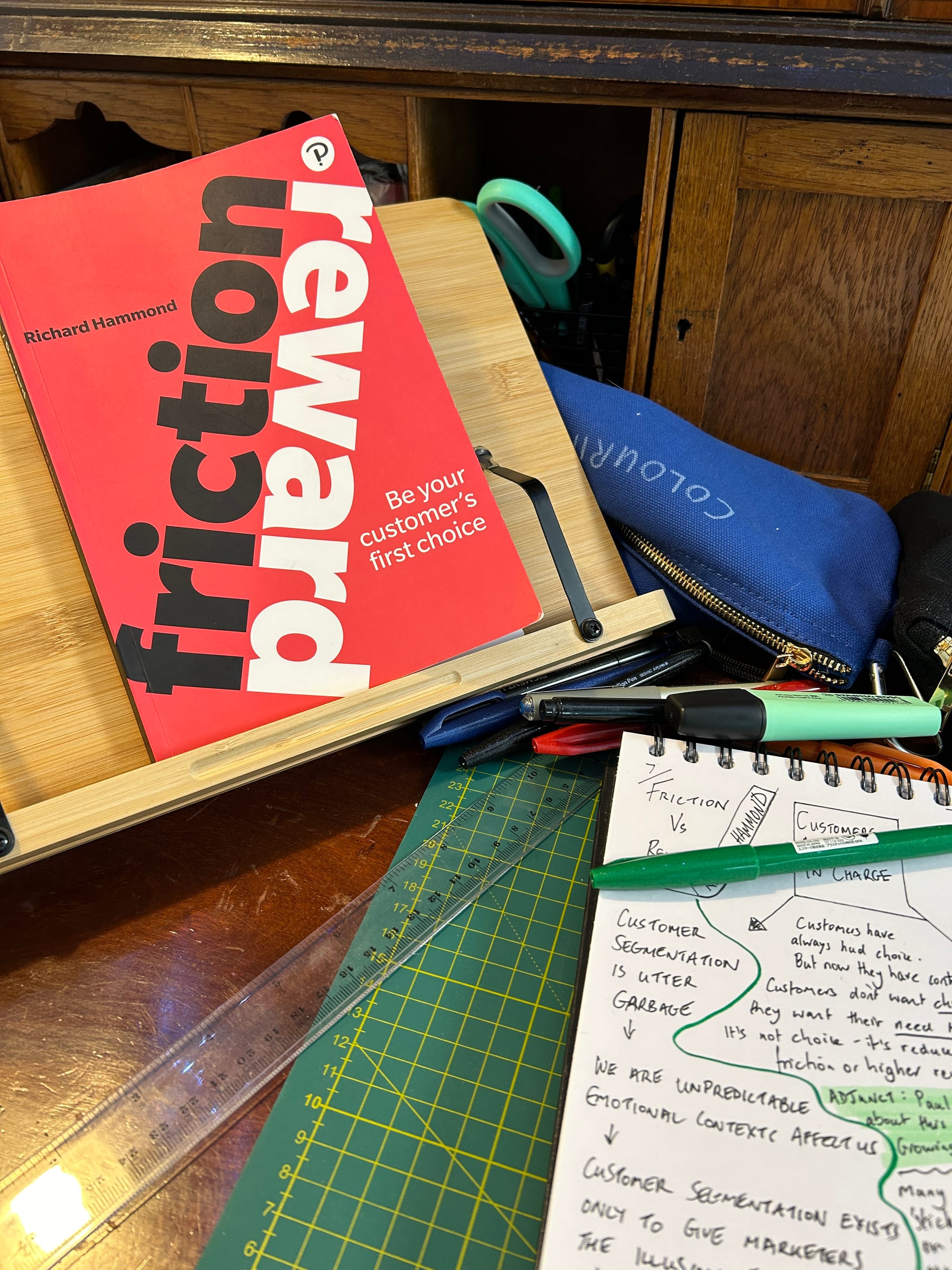
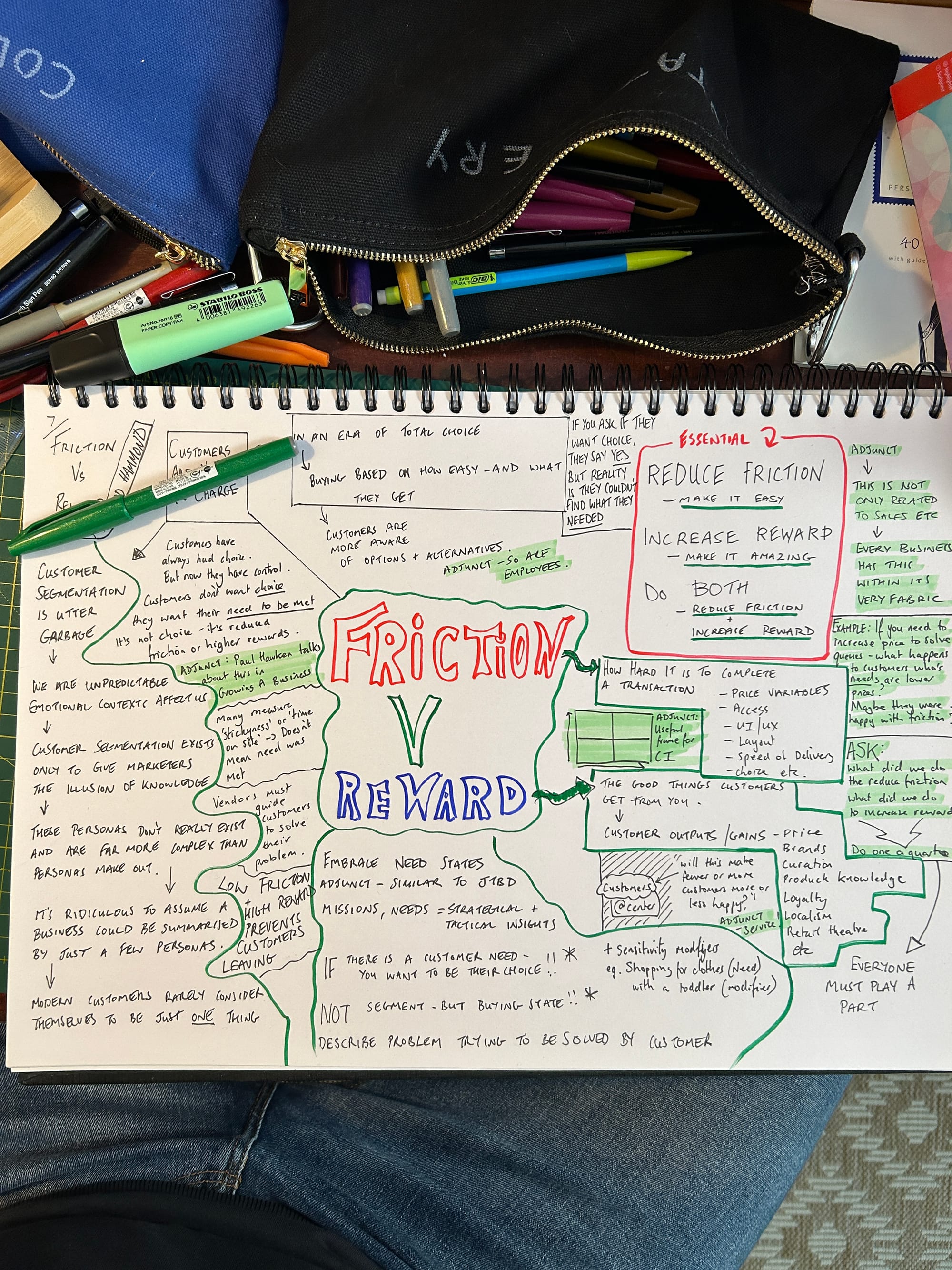
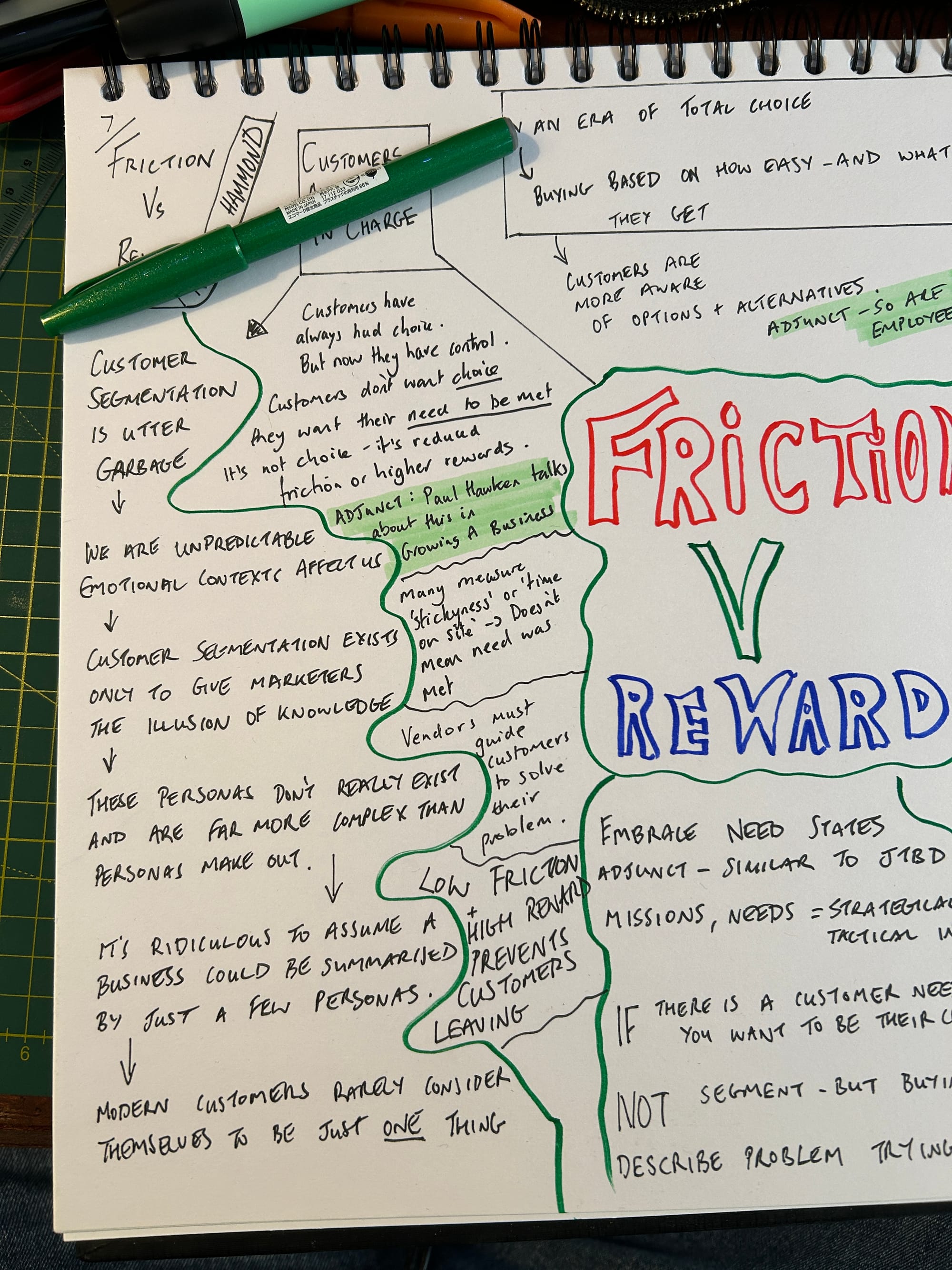
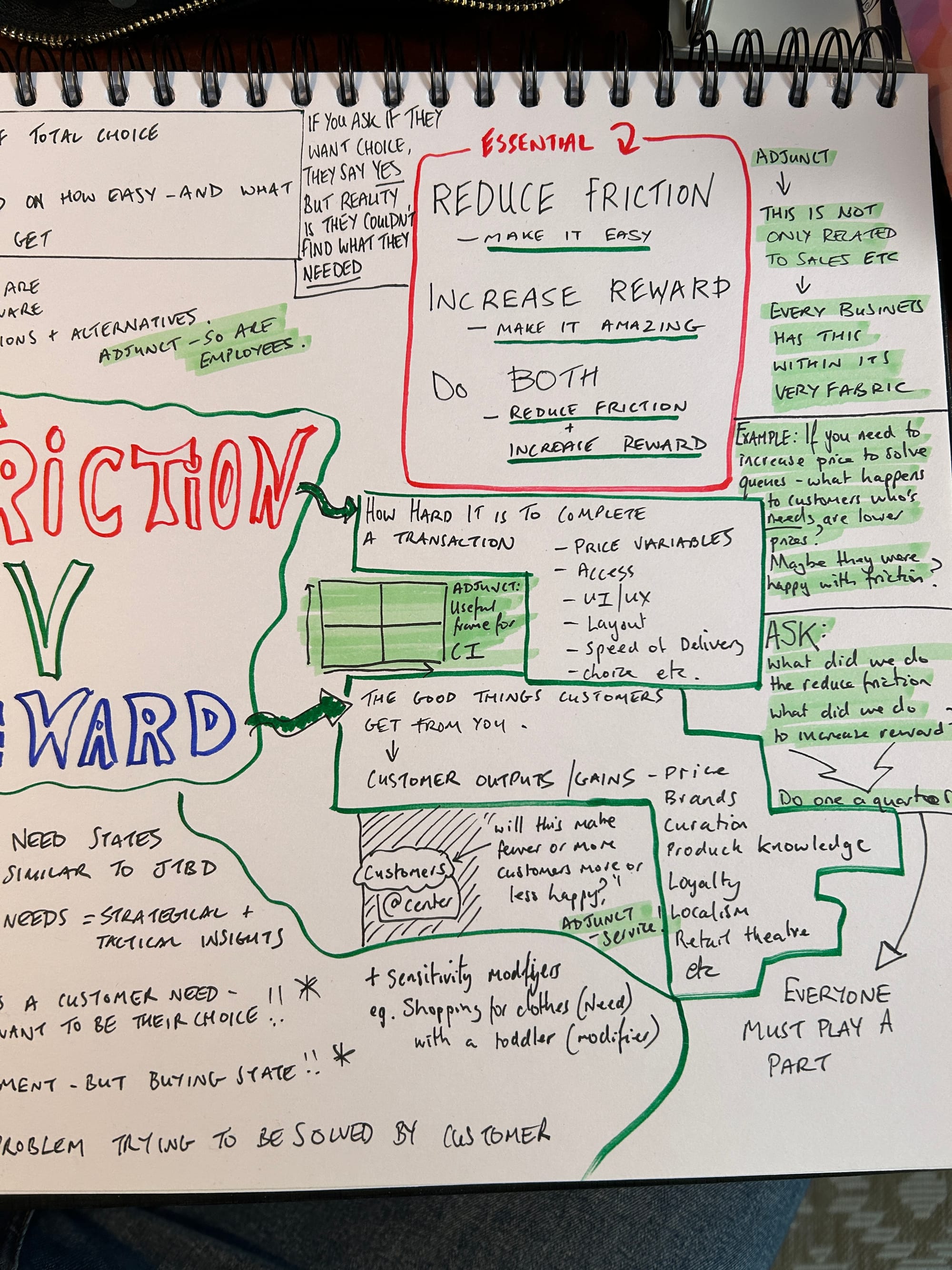
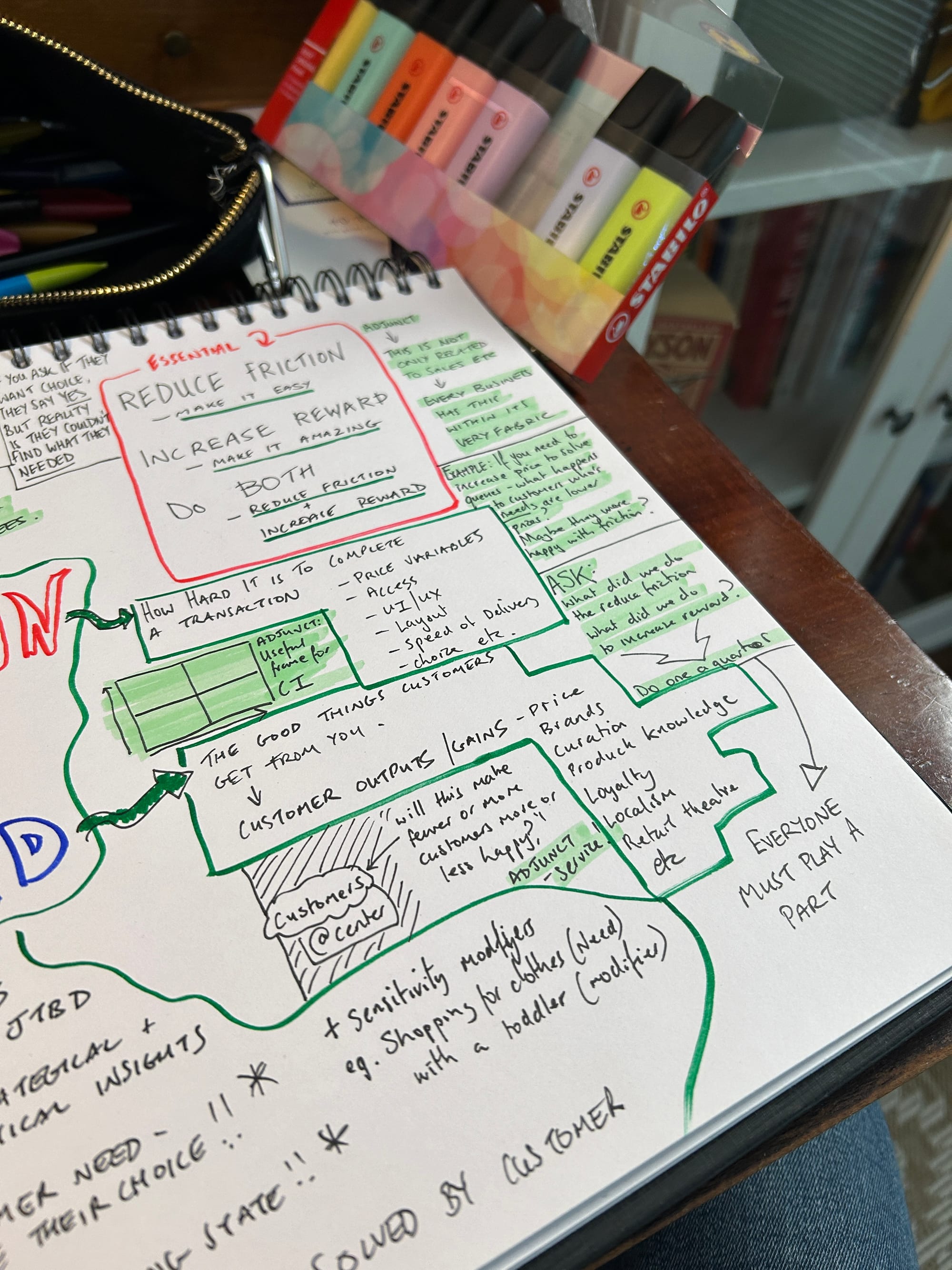
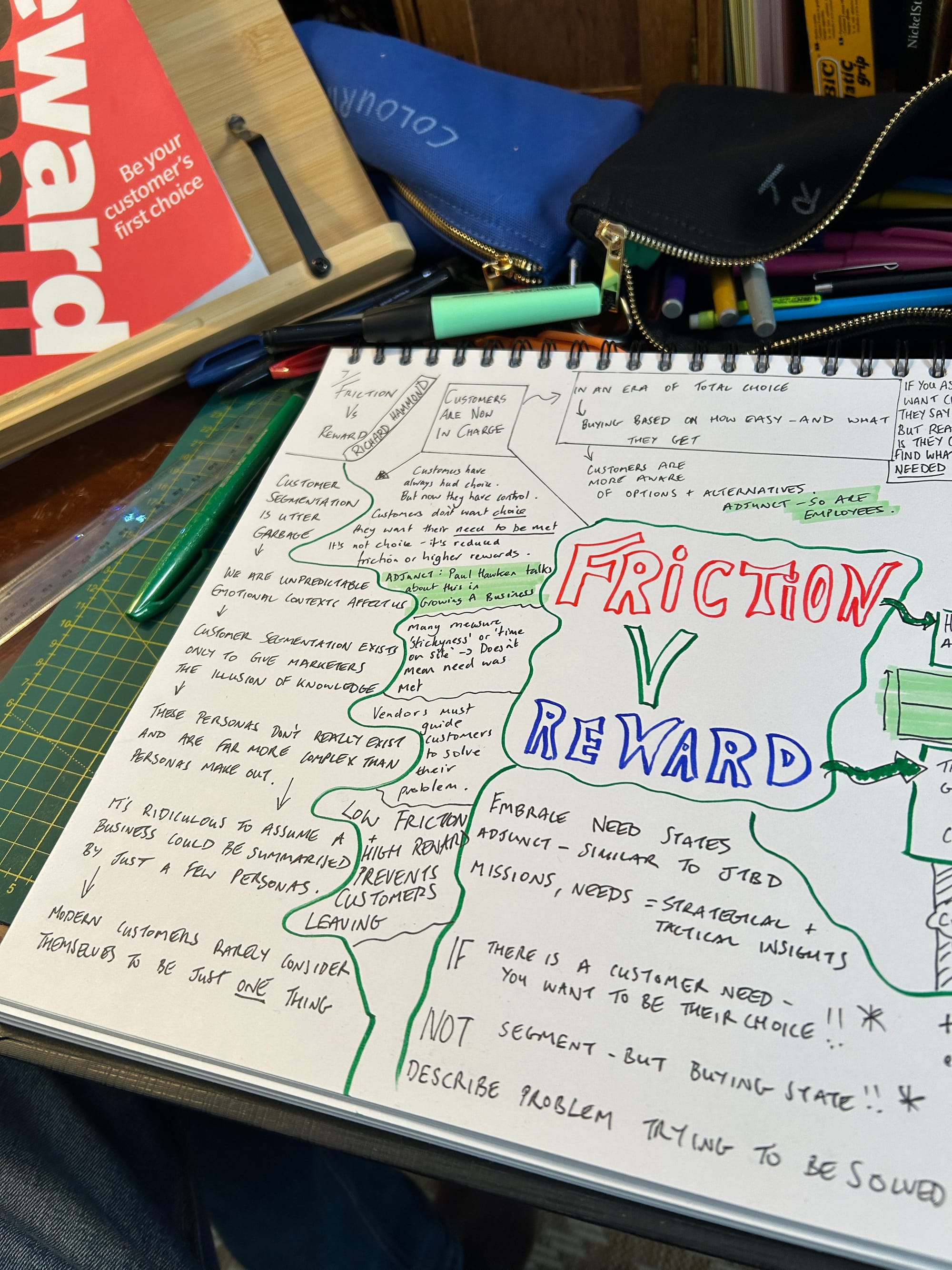
A gallery of learning notes from the book Friction/Reward by Richard Hammond