The analogue recommendation engine
A hot Sunday, a stand full of tat, and my 12-year-old turning into a formidable negotiator.

Sundays here in Winchester are a slow affair, especially on a hot day like today. Take a wander around the city and you'll find plenty of people out walking, shopping, and enjoying a coffee or something a little stronger.
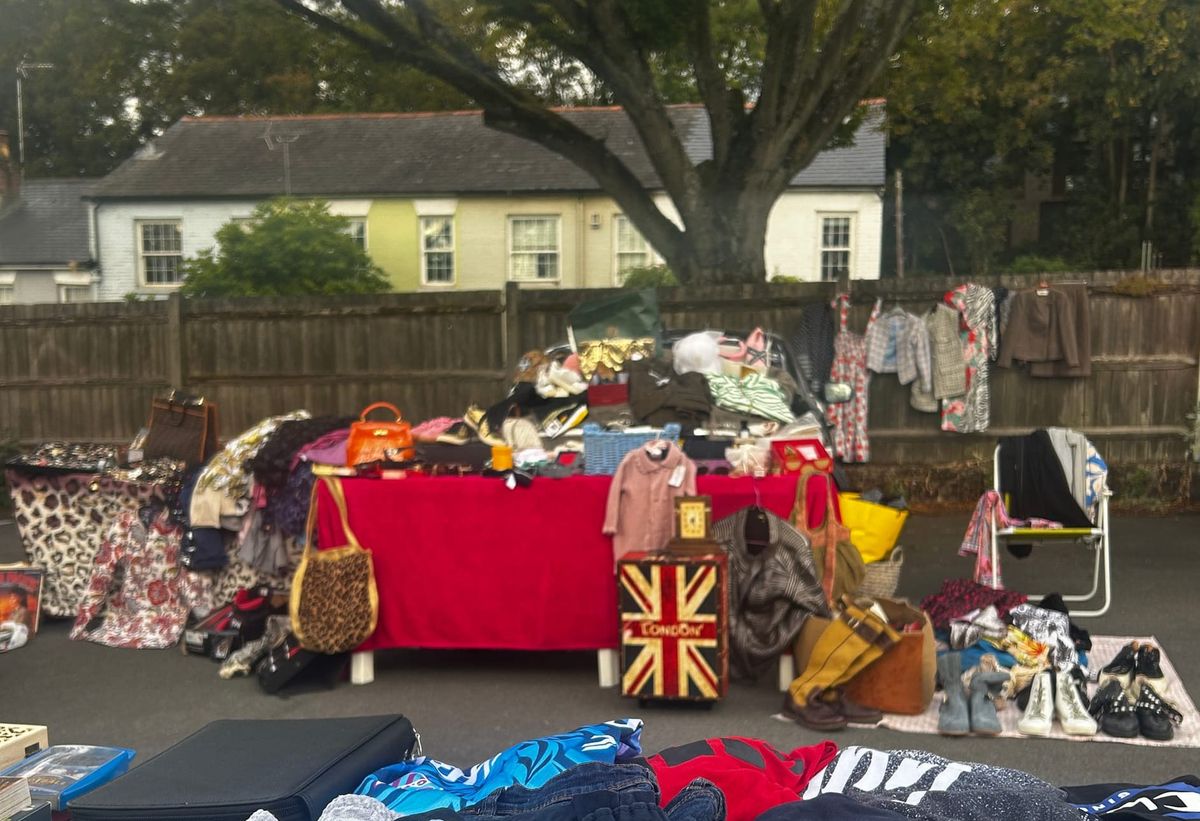
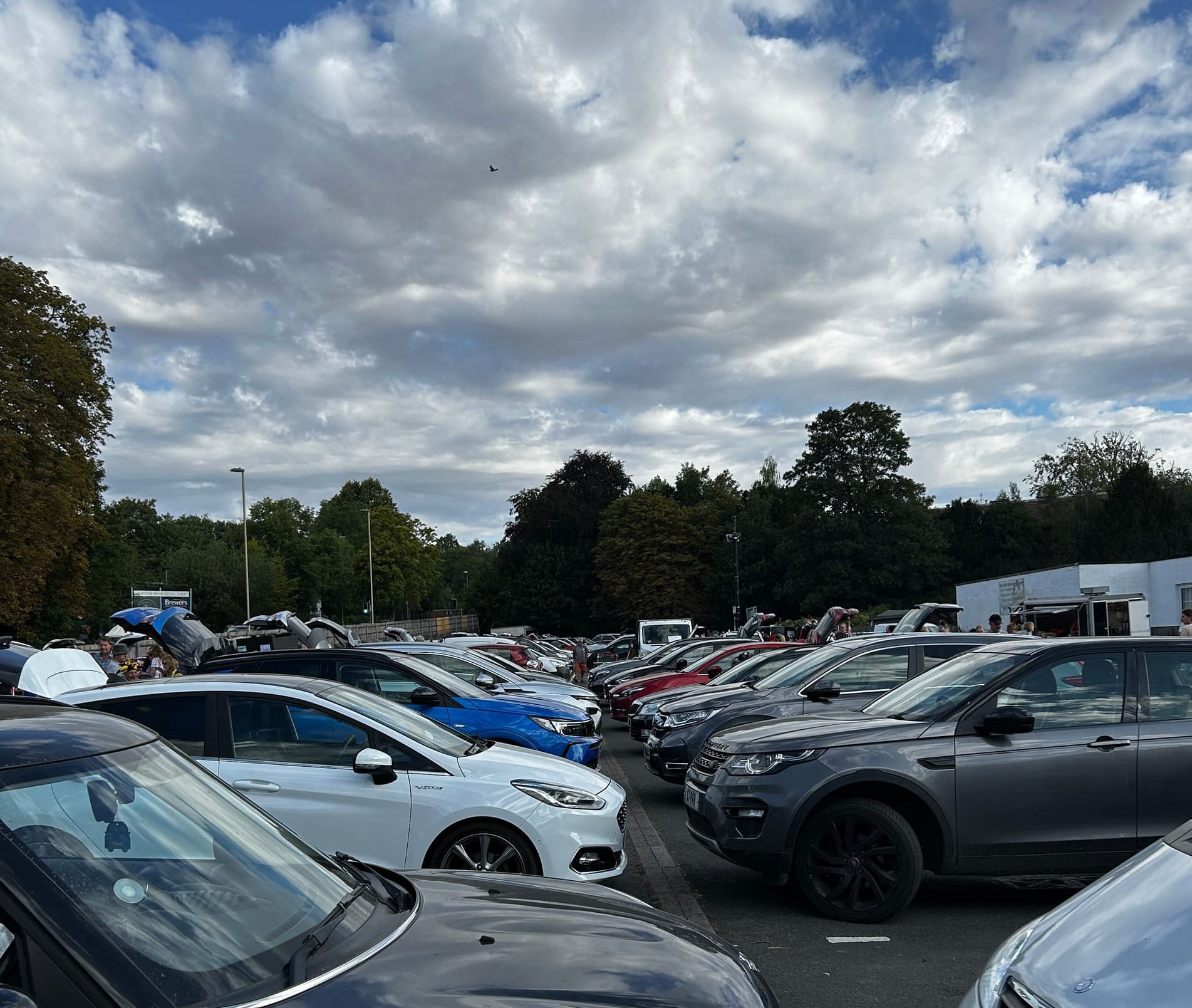
Sunday is also the day for that great British institution, the car boot sale. A micro-economy that appears in a field or a car park on a Sunday morning. Don't mistake it for somewhere to offload unwanted tat — it's a thriving hotbed of bargain hunters, house-clearance firms, small business owners, and, yes, me and my youngest, selling… tat.
My son is going through a remarkably interesting phase of trying to make money and, importantly from my perspective, investing what he makes. He's watering gardens, cat-sitting, and raiding his brothers' rooms for stuff to sell, possibly without asking them first.
So, as we sat there in the sun, I watched what was happening, for no other reason than I found it interesting.
I was thinking about our own stuff, too. Objects we've no longer any need for, moving out of our lives and into someone else's. The journey of something no longer wanted finding a place in someone else's life.
The stall next to us had kids' stuff finding a new home with a new family – a fluffy rocking horse, a collection of Pokémon cards, some clothes, and a cabinet that, she said, no longer fitted the space. Opposite us, two women were selling knock-off Gucci and Herman Miller while insisting to all-comers it was legit. At those prices though, everyone knew otherwise. They had a really nice pair of Patrick Ewing basketball boots. £45. I was tempted. Very tempted.
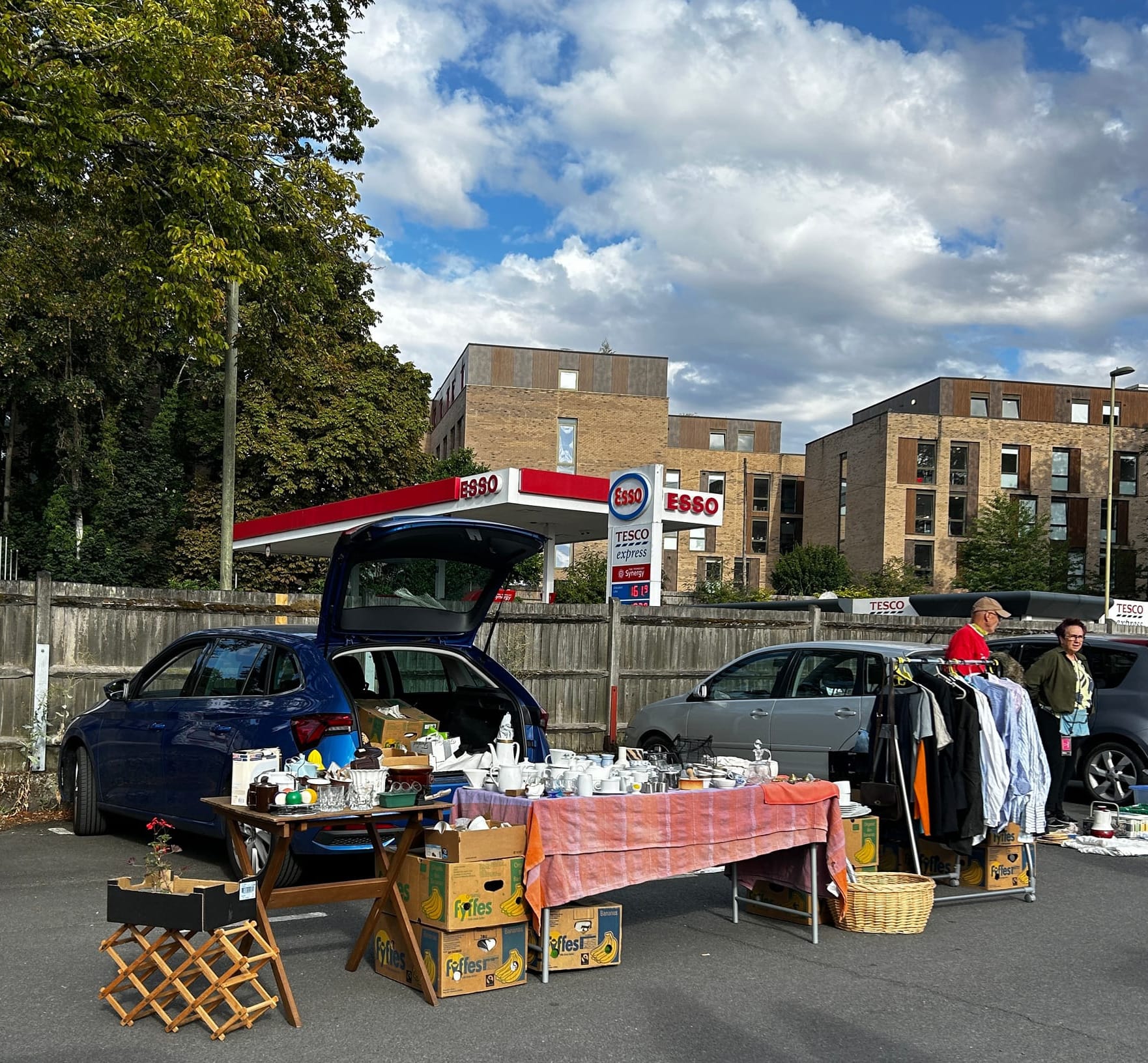
An Austrian guy was selling glassware and trinkets while indulging in a beer at half ten. I pondered whether he'd come all the way from Vienna to sell them. Winchester's not that popular, surely?
Garden stalls, antiques, fruit and veg, and plenty more. All yours for a few pounds on a lovely Sunday morning.
And then complete strangers gather round. They prod and poke, touch and feel, laugh and smile and chat, the way humans do when they're near other humans and curiosity is the main currency. Some shy, some loud, some dramatically funny, others reserved and private.
The seller knows the history of the object and usually has a vague price in mind. The buyer knows none of the history and is often reacting to the number they've just heard. It's a lot of fun to watch – the negotiation, the face when the price lands, the grin when it's settled.
It turns out my son – maybe because he's only 12 and less prone to hard bargaining – is one heck of a negotiator. He sets the price higher than he wants and drifts down ever so slightly to settle on what he was really after, his little face breaking into a genuine, happy smile when he gets the sale.
There really is something quite beautiful about it all.
It's also one of the few places where people still have to talk to each other to come away with what they want. eBay, Amazon and the rest have removed almost all of that. The whole human element of trade is still here, out in the open, at a car boot sale.
On eBay, the object is photographed, described, priced, bought, and shipped without the two people ever meeting. At a car boot sale it's a much richer, more personal moment:
"How much?" "Five quid." "I'll give you three." "Four." "Done."
A tiny human interaction. A connection.
There's almost every part of being a human in there – smiling, eye contact, negotiation, curiosity, judgement, embarrassment, generosity, interest, disappointment, laughter, humour, boredom, and trust. A car boot sale is a phenomenal place to watch human communication in the wild: people with different experiences, skills, backgrounds, and stories, all coming together to buy, sell, wander, scour, and trade.
It connects people who wouldn't normally share the same space at the same time too.
Retired people. Teenagers. Families. Bikers (yes, a group turned up for antiques). Collectors. Dealers. People clearing a house. People after something they can't afford new. People who simply love finding things. People looking for something cheap to sell on somewhere else. And those, like us, whose kids want to shift stuff they no longer need.
You get the person who knows everything about old cameras standing next to someone who just thinks the camera looks cool. The antique dealer with beautiful cabinets and tables, next to Maureen selling an unwanted Ikea sideboard and a Royal Family tea towel. Experts and amateurs on the same patch of grass.
And everyone is looking. Everyone is noticing. Everyone is paying attention.
The object is worth nothing until two people meet over it
So why the story? Isn't this meant to be about work, Rob?
Well – yes, kind of. You see, a car boot sale is a giant analogue recommendation engine, run on a human algorithm.
Someone says:
"You like old cameras? Dave, on the top row, has loads."
Or:
"My dad had one of those."
Or:
"That's the best game, isn't it? I remember playing that when I was ten."
Knowledge travels person to person, as people build a picture of what's around them and what might be interesting to them. The objects become prompts for stories. It's almost as if the car boot sale is a physical version of the internet, before the internet became so efficient, categorised, and stale.
It's messy. It's badly indexed. You can't search it. There are no reviews. There's no algorithm predicting what you'll like.
You have to wander. You have to see. You have to talk to other people. And that's precisely why you find the things you weren't looking for – you go hunting for an old guitar and come home with a 1970s board game missing five pieces, simply because you spotted it under a table. I've written before that some of the best things we find are the ones we could never have searched for. A car boot sale is exactly that.
And I wonder whether, at work, we've become so efficient and sterile that we've pushed aside the human messiness. We have RACIs, org charts, flow paths, roles and responsibilities, task tools, and every report imaginable. We can join a company and slot neatly into the system – too neatly, in places. We can move fast with tools and AI, and find almost anything in seconds, even the things that badly needed a human to curate them. But what are we giving up in the trade?
Maybe it's the need to notice. To connect with people rather than systems. To wander, to search, to make sense of things, to pick up a trade by doing it.
Here's the thing I saw in my son: the object is worth almost nothing until two people meet over it. The value isn't in the rocking horse or the fake Ewings – it's made in the moment of contact. The story. The haggle. The grin when it's settled. My son didn't really make his money selling toys. He made it being good with people – noticing them, reading them, talking to them, judging the moment. No RACI taught him that, and no app could. A patch of a Winchester carpark and a morning of paying attention did.
And that's the bit I'd try to guard at work. Keep the efficiency, by all means, it helps for sure. But if we engineer out the messy human meetings and gathering, we shouldn't be surprised when the value of the idea we're working on – and the learning – leaves with it.
My son was brilliant. Chatting to people, selling his toys, driving hard on the price, learning to negotiate, and making a little money – £45 profit for the morning. He's already keen to do another in a couple of weeks' time. His brothers are boarding up the doors to their rooms.
And I never did buy those Ewing boots. I couldn't be sure they were legit, and let's face it, I'm too old to wear a pair of bright red basketball boots to the office.
Where this sits in the Atlas
Orientation·Idea to Value·Communication·Creativity & Climate·Learning