The case for a Chief Curation Officer
On a family trip round Europe's museums, a pattern kept surfacing: the best ones curate your attention as carefully as their objects. Here's what that has to teach the places we work — and why the most useful skill might be learning to see the room you're already in.

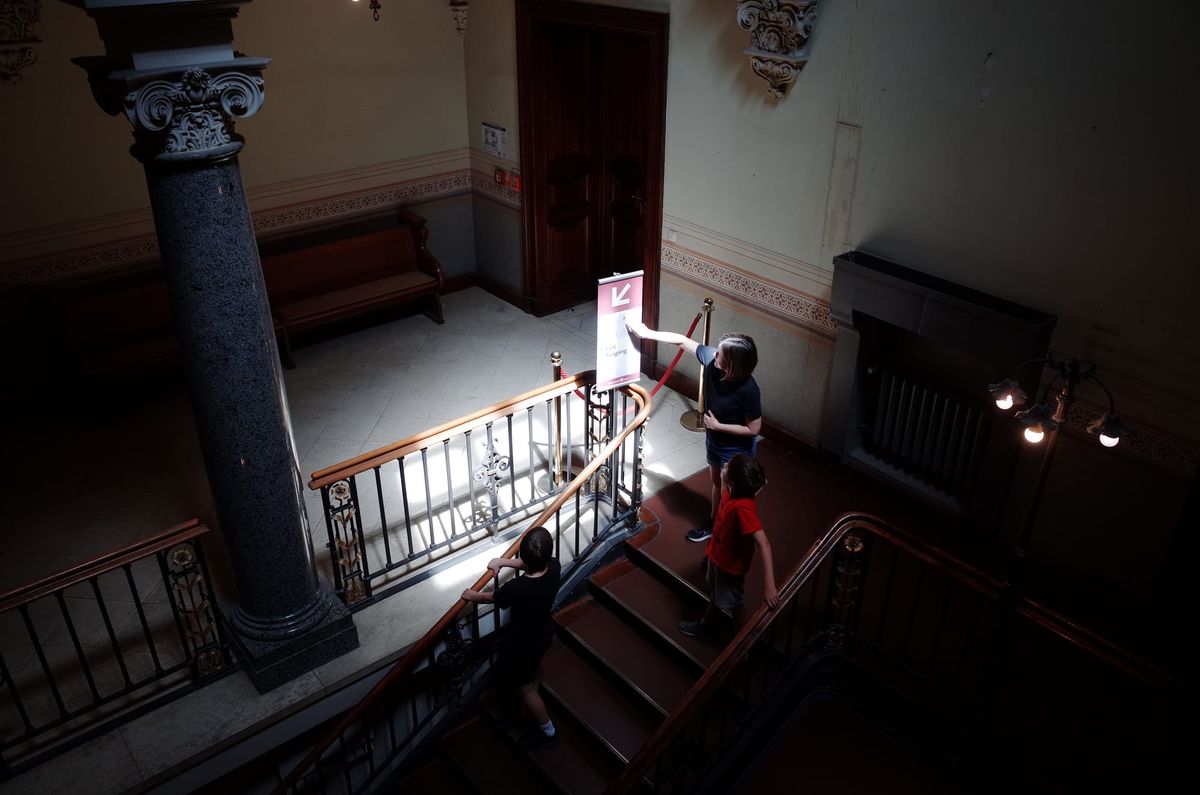
On a typical Lambert city break there are museums. At least one a day, sometimes two, and if I'm feeling ambitious, three. The boys used to need dragging round them. Now, as they've got older, there's a real interest. Sometimes.
We go for the curated content and objects, of course. But the longer I spend in a good museum, the more I notice it isn't only curating objects. It's curating attention. What you look at, in what order, how you feel before you turn the corner — none of it is accident. And I've come to think there's something in that for the rest of us, wherever we happen to do our work.
Two ways museums curate attention
In Berlin, after a hot walk across the city, we arrived at the German Museum of Technology — a sprawling collection spanning around 28,000 square metres. Housed in a former freight railway (still train lines and locomotives there) and visited by around 700,000 people a year, it is mightily impressive. Staggeringly so. The boys took no convincing, at least initially, to explore the vast collection of around 4,000 objects on display.
Here’s the interesting number though: the museum holds around 150,000 objects in total. The 4,000 on display are a deliberate edit down from 150,000. The four thousand you see are a curated output — a decision, made by people, about what would most repay your attention and what to keep in store. Everything shown is something someone chose for a good reason.
A place that size needs a map, and the map is everywhere: clear waypoints telling you where you are, what's around you, and where you might wander next, along with a paper map of the entire estate. You go where your curiosity takes you. Rooms open onto rooms, coloured signs mark the sections, different buildings hold different collections. The whole thing is arranged so a stranger can find their own way through and feel oriented the entire time.
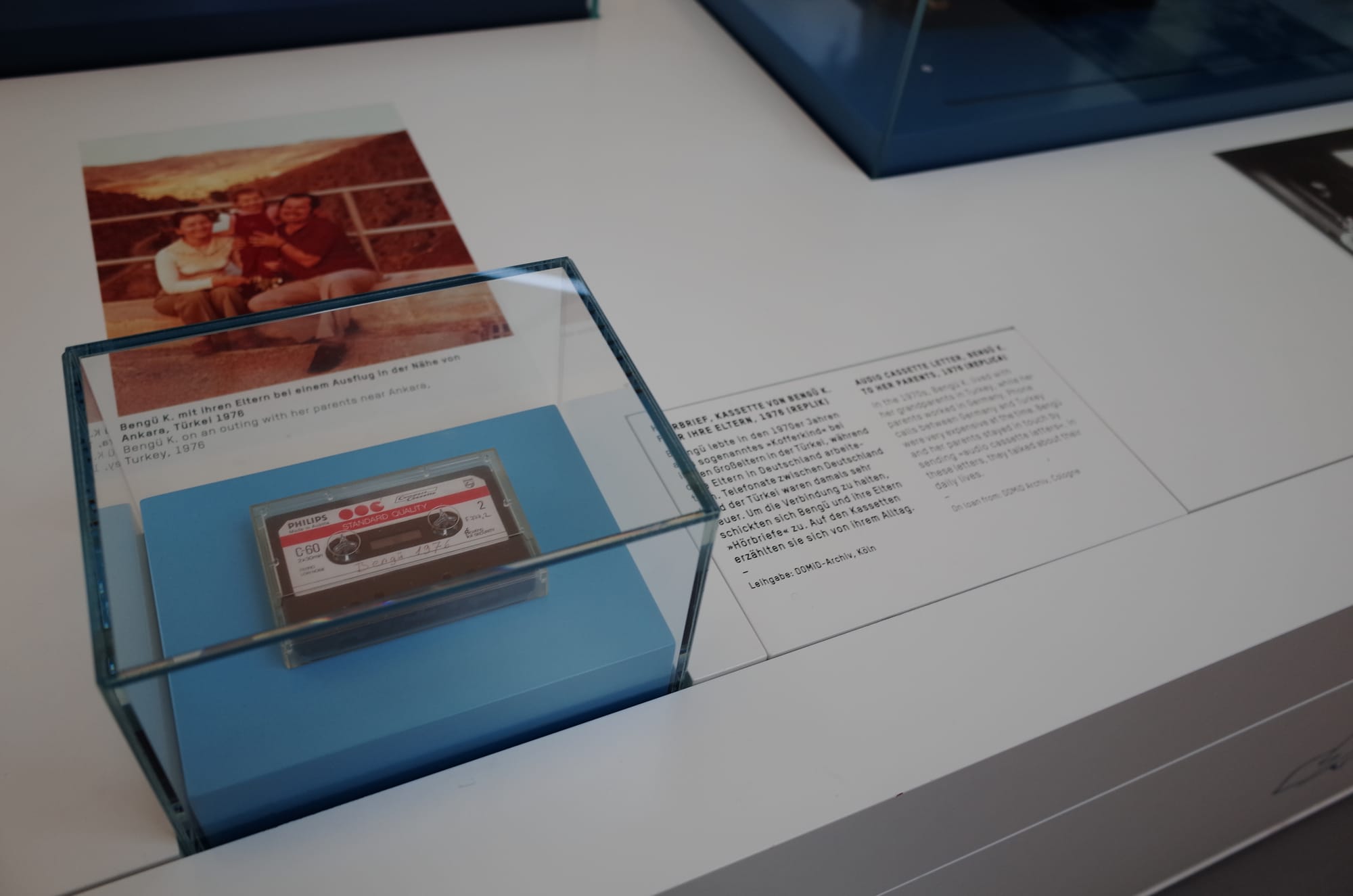
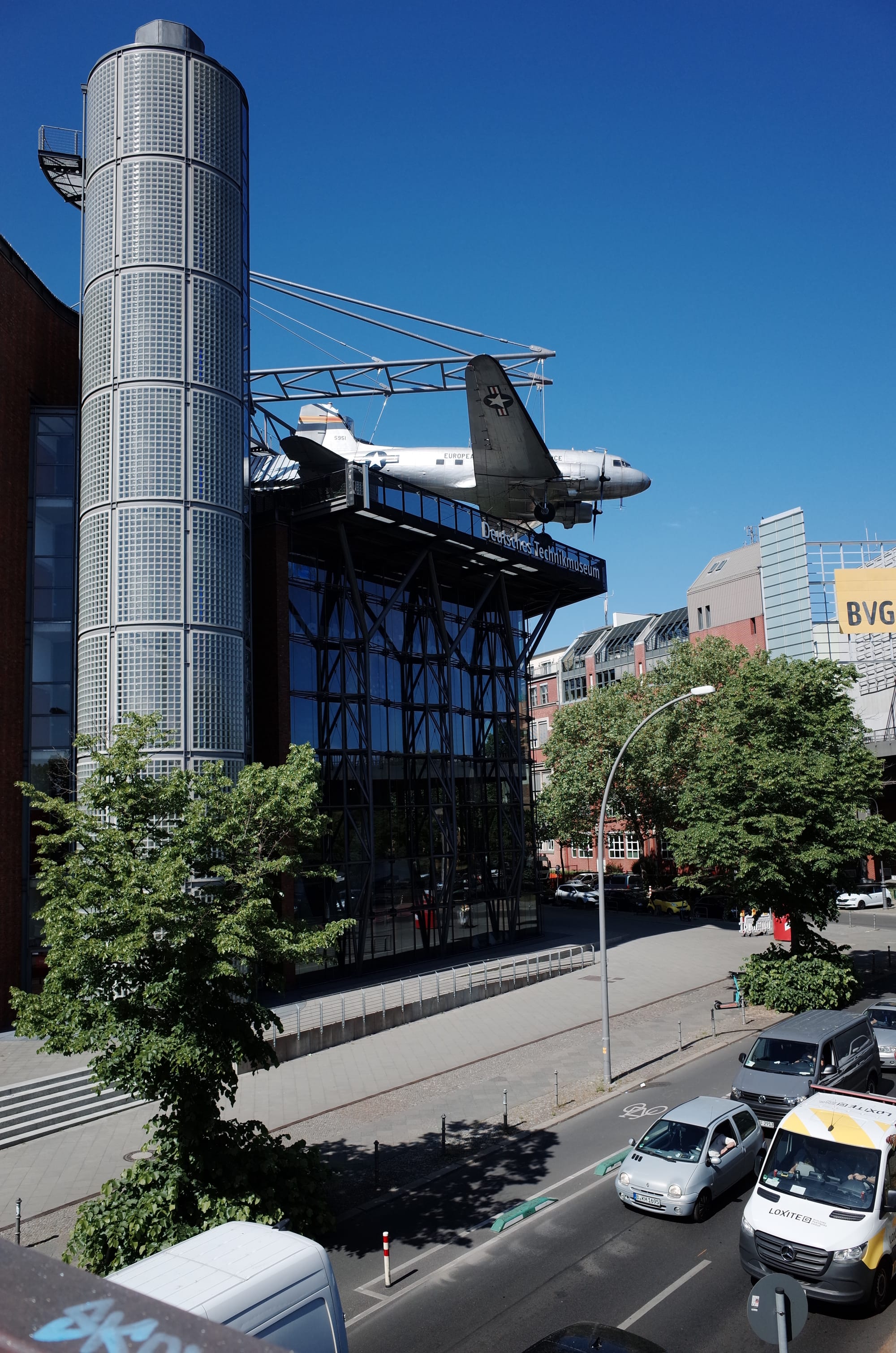
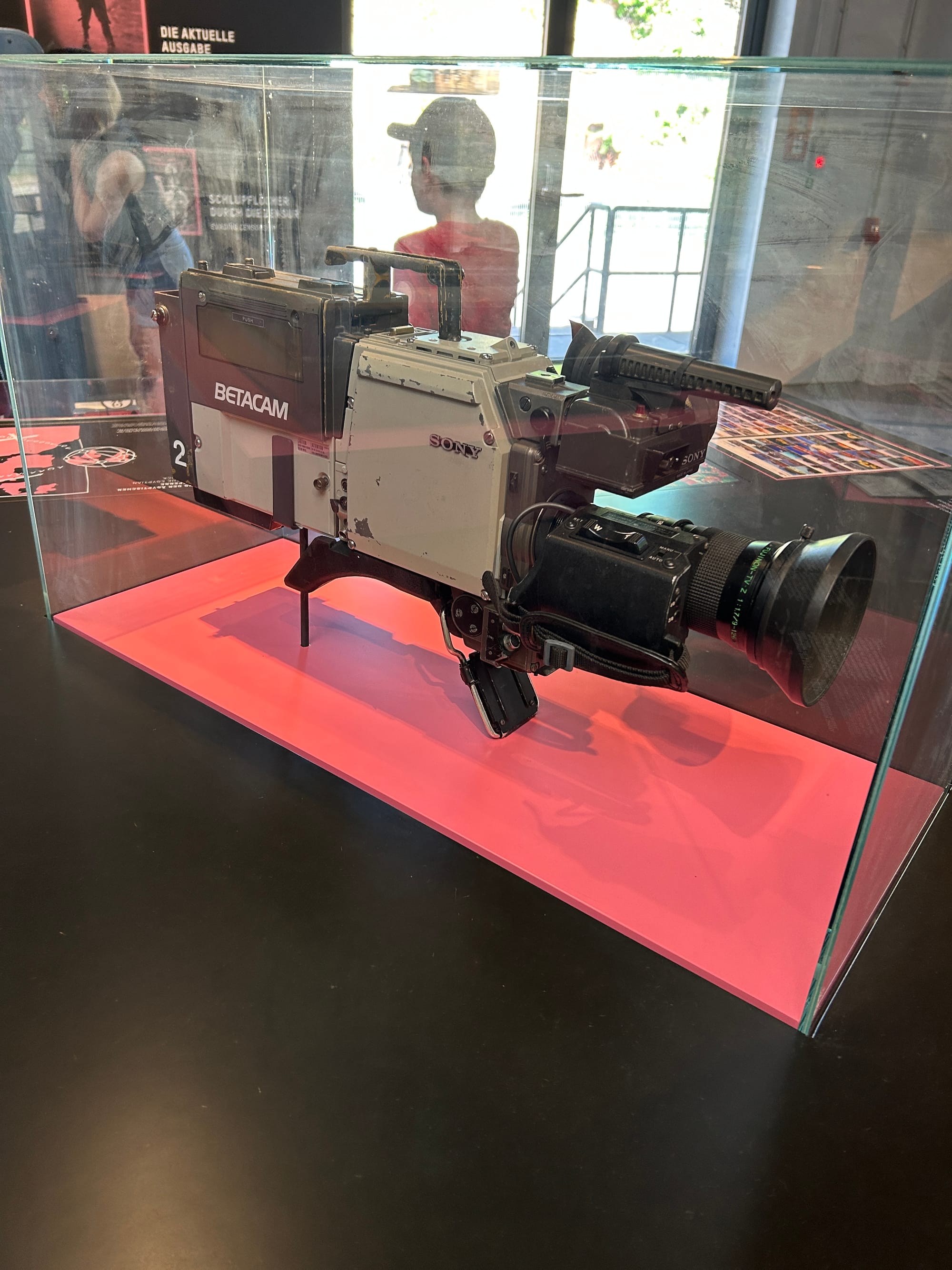
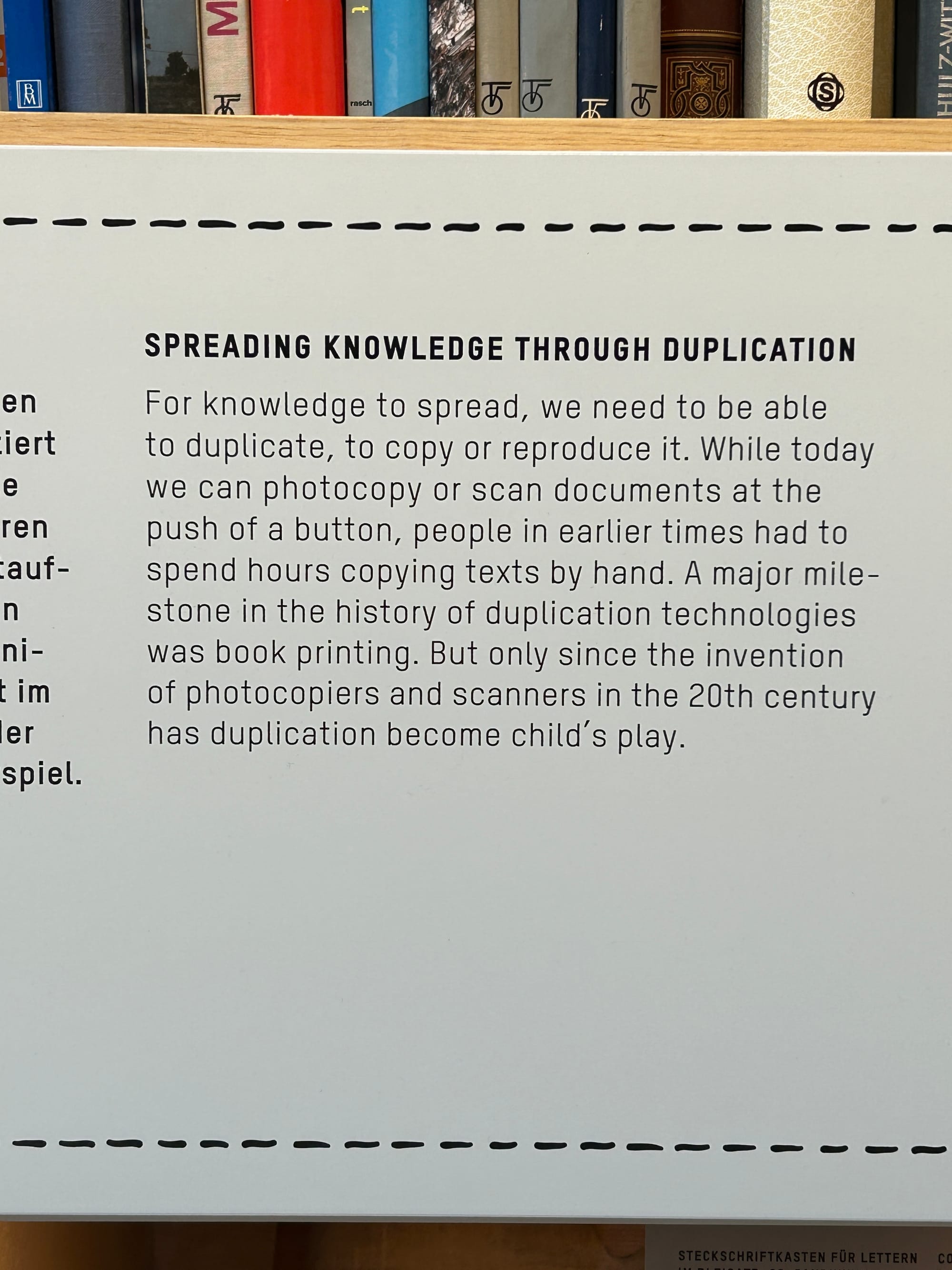
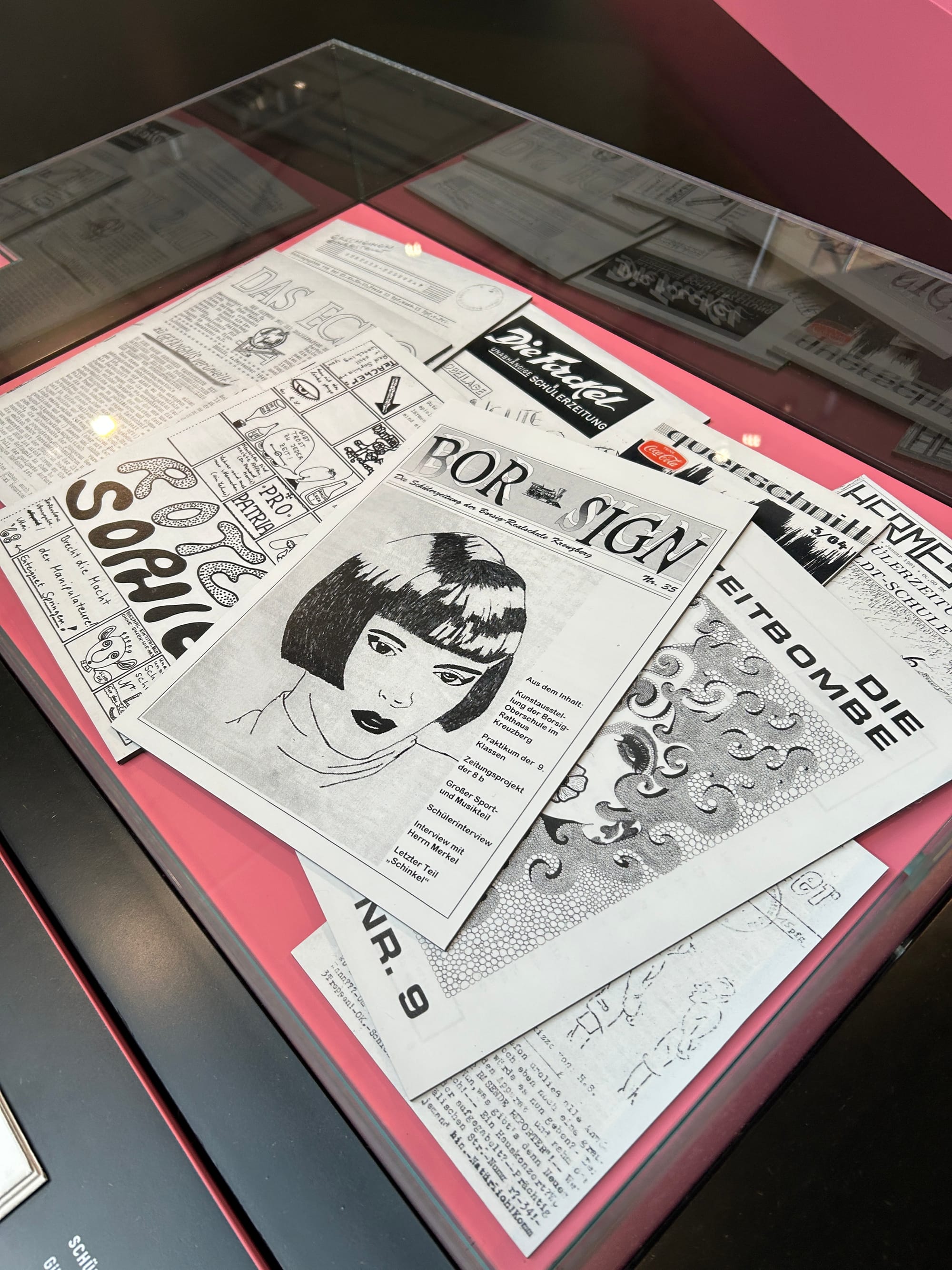
There was no shortage of things to see. I added many hundreds of snaps, observations and ideas to the commonplace book.
After around three hours the boys got bored, so we headed home — passing, on the way back to the hotel, the Museum of Communication. My wife and the kids went back for a rest; I jolted straight in.
Another marvel. Smaller — a couple of thousand objects — and arranged around how we move ideas rather than things. Same generosity, though: maps, waypoints, and enough room to follow my own interests, like the wickedly marvellous collection of typewriters, pens, notebooks and posters. I may have missed getting back for tea.
In both museums the curation was contained, told a story, and let the visitor explore in broadly any direction they wished.
The Museum of Terror in Budapest works differently, it does something else entirely. It tells the story of Hungary under fascism and communism, and it tells it along a single path. Different rooms, different light, each glimpsed through the threshold of the last, drawing you forward. There's almost no map, because you don't need one — the building itself walks you through. You come out of it quiet, we all did, and moved, I'm not sure "emotional" does the museum justice - it is really a very powerful place to visit. There's no wandering here, and the structure makes that plain without a single sign saying so. My youngest tested the limits of that, and the structure won.
Different museums, two ways of guiding a person (I'm sure there are many other ways), and the same underlying craft. The more an environment tells you through its structure, the less it needs to tell you in words. Give someone a clear map and they'll explore well; build the story into the structure of the building and they'll follow it without one. Either way, someone has thought about how a person moves, what they meet first, and what they're ready to see next.
If you've spent time around the way I look at work, you'll recognise two layers of Idea to Value here. Helping a stranger stay oriented in a vast space is the Map — knowing where you are and where you might go. Composing what someone meets, and the conditions they meet it in, is the Engine — the conditions that let good work happen. Museums do both, on purpose, all day long.
Your workplace is doing this already
Here's the idea worth playing with. Every place we work is doing what a museum does — arranging attention — whether or not anyone has decided to.
That's easy to see in a building. A wall of whiteboards and notice-boards, half of it months out of date, is teaching people what to attend to just as surely as a curated gallery is. But it's most alive now in the digital spaces where most of the work actually happens. And digital has a trap folded into it: the cost of making more is almost nothing, while the cost of attending to it all is very high. So the internal system keeps every document it has ever held. The folder holds twenty-five versions of the same file. The chat channels multiply past the point anyone can name them cleanly. Nothing was thrown away, which sounds generous, until you notice that nothing was chosen either.
A museum that put all 150,000 objects on the floor wouldn't be richer for it. It would be a store-room you had to push through. Most of our shared spaces, physical and digital, have slowly become store-rooms — not through neglect, but because keeping is easy and curating is hard work, and it was likely nobody's job to do the work.
Marshall McLuhan gave us "the medium is the message." Spend a while studying how rooms and tools shape what people do, and you start to feel a companion to it: the environment is the message. It speaks before the induction deck, before the strategy page, before anyone opens their mouth.
If a company hopes for deep thinking but offers no place or time to think, the environment wins. If it hopes for good conversations but gives people no decent way to have it, the environment wins. If it says it values experimentation but every room is laid out for presentations, the environment wins. If it says it values creativity but everyone’s calendars are stacked with back to back meetings, the environment wins.
The environment is always teaching something, constraining something, nudging something. The only real question is whether it's doing what you meant.
Wayfinding, and the quiet questions
When designers talk about wayfinding they're rarely talking about how to reach room 4B. They're talking about answering the questions a person carries into any space. Where do I go? Can I sit here? Is this a place for talking or for concentrating? What matters most here? A well-made environment answers these before they're asked, and mostly without words.
Carry that into knowledge work and the same questions turn up wearing different outfits. What should I be working on? Which document is the real one? Who owns this? Why are we meeting? Which of these fifteen tools is the one for this job? A person can lose a startling amount of a day to questions the environment could have settled for them. Settle them well, in the structure itself, and you hand that time and attention back — to the work, and to the person doing it.
Structure carries most of this load once you let it. Watch a woodworker at a well-kept bench. The tools sit where the hand expects them, in the order they're used. The grain is turned to the light. Very little is labelled, because the bench is doing the teaching.
James Gibson called this affordances — the idea that a place doesn't just hold things, it invites behaviour. A staircase invites climbing; a bench invites sitting. Widen it and you see it everywhere: one big table invites talk, a quiet booth invites focus, a writable wall invites sketching. Our environment is never neutral.
It's always suggesting how to behave — and left unattended, it will suggest something with complete confidence, whether or not it's the thing you'd have chosen. A bit like AI 😀
Curators invite, they don't command
The thing I find most brilliant about curators is that they rarely force your gaze. They compose, and then they invite. The first painting in a gallery is not there by chance, and neither is the light on it or the width of bare wall beside it. The curator is saying: before you see this, we'd like you to feel this, and then this.
Try walking into your own working world with that eye. What does someone meet first on a Monday morning — in the room, or on the screen? What's the tone of it? What story is the space telling before anyone has spoken? I've rarely heard the work we do together described this way, and I think that's the opening.
You don't need the title
It's tempting to give this a title, I think that would be interesting. A Chief Curation Officer. A Chief Attention Officer. Someone whose whole remit is to look — really look — at the environments people work in, and to curate them the way a museum does, for attention and focus: choosing what to show, taking down what's finished, removing digital clutter, removing physical clutter from workspaces, building the answers to the subtle questions into the structure, and asking of every wall and tool and ritual what it's teaching, what it's supporting, what it's affecting, and whether that's what anyone meant it to.
Most organisations have someone who owns the information. Almost none have someone who owns the attention. So the title is a fair provocation, and perhaps some places will take it up.
But I don't think you need the title, and I don't think you need permission. The seeing is available to anyone, today. You can walk your own corner of the building, or your own home work space, or your own handful of tools, or your own information storage, or your own notebook and read them the way you'd read a gallery — noticing what they're arranging your attention toward, and whether that's the thing that matters.
You can take down the notice that's ten months old. You can make the current document the obvious one. You can be the person who answers one of the quiet questions before a colleague has to ask it. None of that needs a mandate. It needs an eye.
That's most of it, really. Not telling people what to think, but arranging things so they can see more clearly, focus more intently on what matters and trusting them with the rest.
Rory Sutherland describes his own way of leading like this:
"I don't tell people what to do. I show them where to look."
A museum shows you where to look, and then lets you look for yourself. So can a room. So can a tool. So, once you've started to see it, can you.