Craft is power — and where your power at work really lives
We've made the word craft soft — craft beer, craft fairs, hand-crafted. Underneath sits an older meaning worth recovering: craft meant power. Here's where yours lives at work.

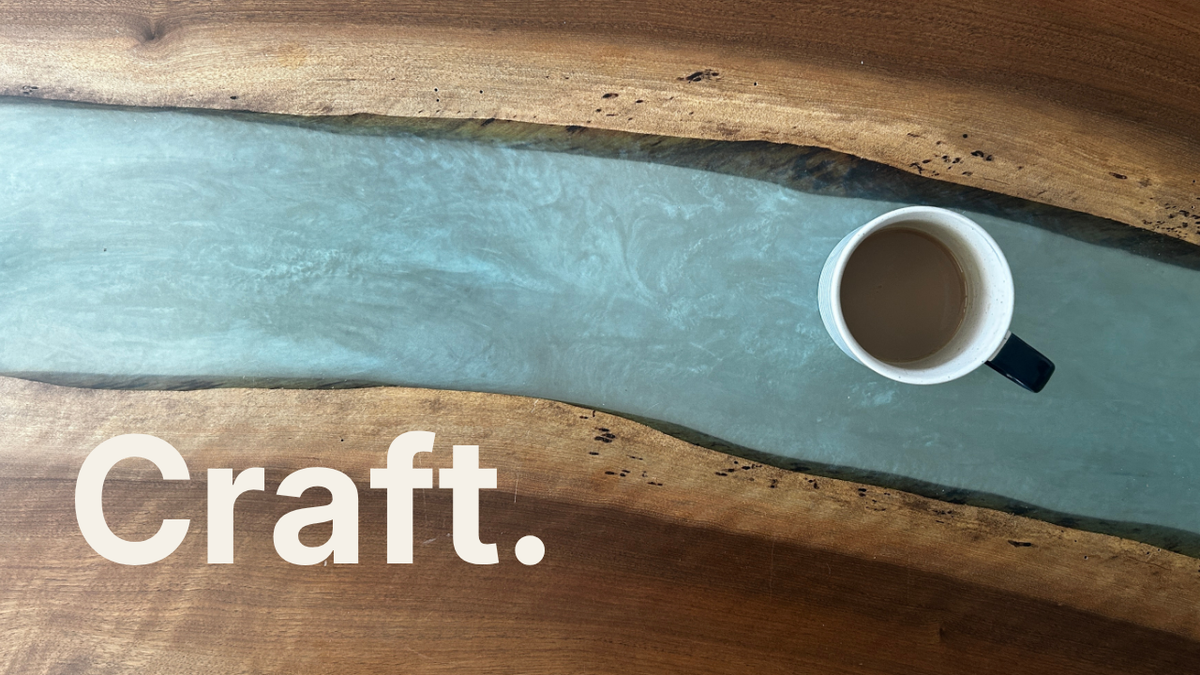
We've stuck the word craft onto almost everything — craft beer, craft fairs, hand-crafted, small-batch, artisanal — until it's gone soft around the edges and lost some of its meaning. Which is a shame, because underneath all of that, craft is carrying one of the best stories in the English language. And it is a story about power.
So let's start where I always start: the dictionary.
Editor's note — where this sits
This week's word is craft — and it turns out to be a word about power. It sits in the Flywheel layer of the Idea to Value system — the habits and practice that compound over a career. Craft is the first of the three areas of learning that live here: the trained seeing you bring to the work, and keep sharpening by doing the real thing.
The Idea to Value system — five layers
Four meanings that don't seem to belong together
The Oxford definition gives us craft as a noun — a skill in making things, especially by hand. An activity or trade that needs that kind of skill. Carpentry, weaving, writing: the crafts. My grandad was a cabinet maker. That is a craft.
Then a stranger, darker definition: the skill of deceiving people. Cunning. Guile. That is the craft in crafty. And then, seemingly from nowhere, a boat (or other vessel)— a ship, an aircraft, a watercraft, a spacecraft.
Four meanings that don't obviously belong together: a skill, a trade, trickery, and boats. How did they end up sharing a word?
Craft once meant power
Go back about a thousand years, to Old English and the word cræft. It didn't mean skill at all. It meant power. Strength. Might. Physical force. If you had cræft, you were strong.
You can still see that original meaning sitting in plain sight in German, where Kraft still just means power. Kraftwerk — the band — means power station. That is the old meaning, preserved. But English is the only Germanic language, as far as I can find, where the word made that shift, from meaning power to meaning skill.
Every other branch of the family kept the muscle. English kept the hands.
I don't think that's a downgrade. I think it's an insight. At some point, English speakers looked at raw strength, then looked at skill, and decided they were the same thing. That skill is power. That the person who really knows how to do the thing — in their hands, their eyes, their mind — holds a kind of strength that brute force can't touch.
The other meanings settle into place once you see that. Crafty used to be a compliment — strong, skilful — before it shifted into cunning, when people noticed the skill could be turned on other people instead of on materials. Same power, different target.
And the boat is most likely short for "vessels of small craft" — boats that took real skill to handle. The vessel was named after the skill it demanded.
Here's the idea worth playing with
Your craft is where your power at work actually lives. Not your job title. Not your place on the org chart. Not your grade, your band, your level — those are borrowed from the structure of the organisation. They are issued to you, and they can be reissued, restructured, renamed on a random Tuesday afternoon in an executive announcement. I've sat in enough of those, on both sides of the table, to know how quickly that kind of power evaporates.
But your craft — the thing you've learned to do well through years of actually doing it — is owned. It travels with you. It compounds. Every hour you spend in honest contact with the real work, the judgement gets a little finer, the eye a little sharper. Nobody can restructure that away from you. Those Old English speakers had it right the first time: craft is might. It is power.
Craft lives in the eyes, not the hands
Here's the part I find most interesting. We talk about craft as if it lives in the hands. It doesn't. It lives in the eyes and the mind. What separates a craftsperson from someone who merely produces things is often what they can see.
I'll never forget watching my grandad in his workshop at the bottom of the garden — small, but perfectly laid out. I was seven, eight, nine maybe, watching the way he would look at a piece of wood and set it aside – I often wondered why, so I asked him. He told me he saw the grain, the tension, where it would split, what it actually wanted to become. He could see it, and I couldn't. That is craft.
A good editor hears a sentence carrying too much before it quite lands. A good engineer feels where a system is straining before anything breaks. The hands only carry out what the eye has already noticed.
Which means craft at work isn't reserved for people who make physical things. If your work involves ideas — and whose doesn't? — then your craft is the trained seeing: the noticing, the observing you bring to it. The things you notice that others don't. That is the skill. That is the power.
Craft is how an idea becomes value
Between every idea and the value it could become, there is a distance to travel. Craft is what you carry it with.
It is how that distance shrinks — how the idea becomes something valuable.
This is exactly why, in the Flywheel layer of the Idea to Value system, there are three areas of learning — and one of them is craft. I chose that word deliberately.
Craft as care personified
One more thought before you get on with your day. There is a Japanese word — mottainai — a kind of regret at seeing something's potential go unused. I think about it often; it sits underneath much of my work with clients.
Craft, to me, is the opposite of mottainai. It is attention that honours the material. Nothing about the word, the sentence, the idea, or the person gets wasted. Craft is care personified.
So here is the question worth carrying into the week.
Not what's my role? — that is borrowed power. The better question is: what's my craft? What have I learned to see that others can't yet? And am I spending enough time in contact with the real work for that seeing to keep sharpening?
Because a thousand years ago, craft meant power. It still does. We just wrote it down differently. Craft is the hands carrying out what the eye and the mind have already noticed.
From the Cultivated library — take this further
Workshop Mastery
Guide · PDF download
The art and craft of workshop teaching - a practical guide to designing and running learning that works.
£14.99
See Workshop Mastery →The Idea to Value System - a way of seeing how ideas move to value
Guidebook · PDF · Video
The whole system in one place — the five layers an idea moves through on its way to becoming value, and where your craft does its work within them.
From £19.99
Explore the System →That's this week's word at work — craft — and I hope it's been an idea worth playing with. It's still scorching here in the UK, so stay cool, keep hydrated, and take care of yourselves. Speak in the next one.