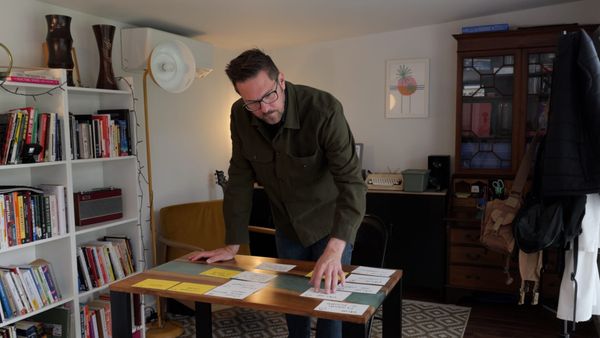
When I am here, I do this
Every space teaches you how to behave in it - long before you decide. On environmental affordance, dedicated spaces, and designing a workspace (even a kitchen corner) for the work you actually want to do.

Designing Spaces for Work That Matters
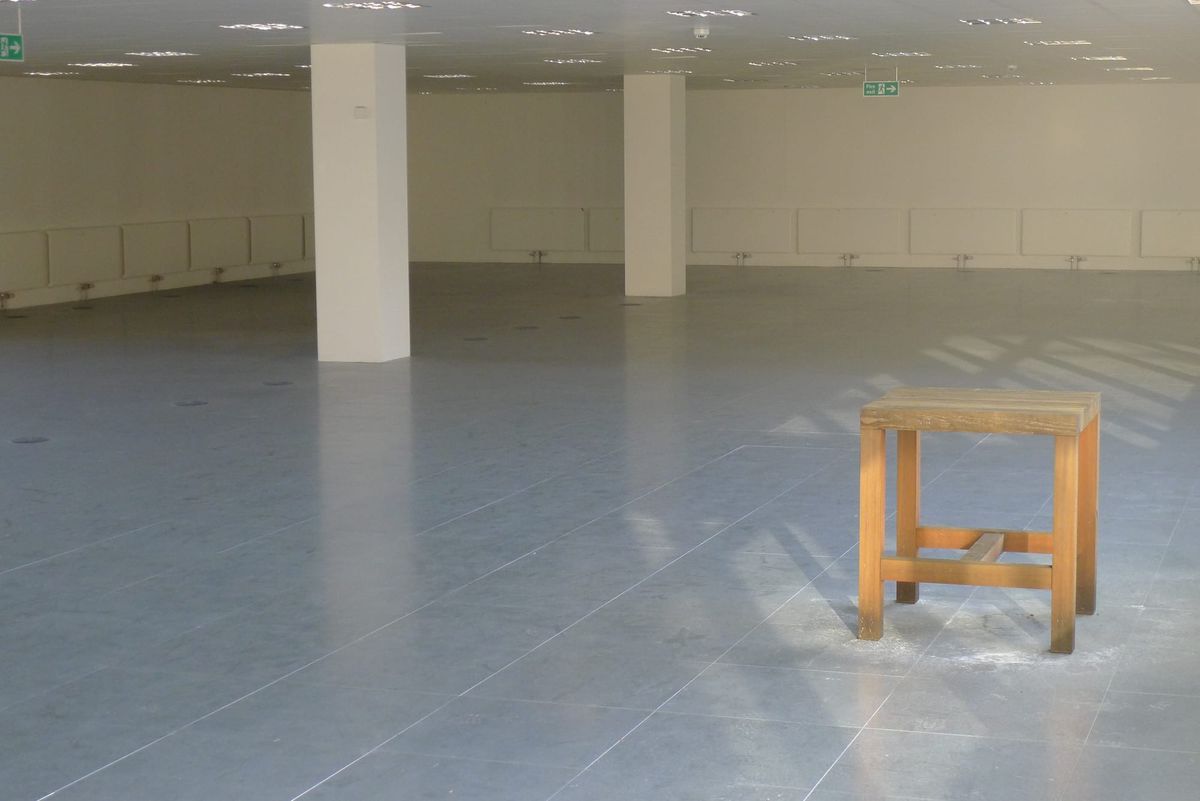
I love a good museum. Properly do. Thankfully my three sons do also, although I'm not so sure my wife does. Museums are a fascinating place beyond the actual objects they have curated on display. They're a wonderful place to study how the place itself – the building, the structure, the layout, the temperature, the lighting – affects how you move through them, what you notice and how you're expected to interact.
Art galleries offer the same insights. Old buildings do too. In fact, to cut to the chase, all spaces affect us. And work – the space many of us spend most of our time in – affects us greatly too. Whether we work from home, or commute to an office, or work from a garden studio, the space is still shaping us, and importantly, shaping how we turn up and what we do, whether we realise it or not.
Where we place ourselves to think, learn, create, meet, discuss or decide becomes a form of invisible infrastructure over time. Environments begin to teach us what is possible, what is expected, and what is allowed – even the ones we set up for ourselves.
This has a rather fun-sounding word – environmental affordance: the idea that spaces invite certain behaviours and discourage others, long before we consciously decide how to act. Which is a wonderful thought to sit with, really, because it means we can – and I'd argue we should – think very carefully about the spaces we work and operate in.
When I am here, I do this
One of the most obvious places to start is with assigning a space to a specific kind of work. This has the remarkable tendency to remove friction from starting, and hopefully the work we do gives us a little reward on the other side too.
By giving a space a purpose related to doing something, it creates a psychological boundary: when I am here, I do this. The mind does not have to negotiate its role each time. You do not have to fight with yourself to sit down (or stand) and do the thing you want to do. The environment already signals the mode; you just need to do the pleasing thing of turning up.
Of course, part of this relies on having enough space to separate out the different spaces for different types of work. Despite my absolute distaste for open-plan offices, many do have designated space – although I would argue they have them a little backwards. There are collab spaces, eating spaces, quiet booths and the open-plan desks for people to work at. In my ideal office, I think the quiet booths and offices should be for the daily work we do, and the smaller parts of the office open for collab.
For those who sign up for the Meeting Notes newsletter, there is a free gift – including an essay, which explores the way we're drawn to old design studios, offices and places from the past that absolutely nailed this. Places to proof, print, design, think, collaborate, produce, inspect, prep and work. We've lost a little of that and are now expected to do all of it, in an open office, glued to a screen, in the same spot.
Alas, let's get back to the point. A space where we do this work is a powerful thing. I think teams consistently underestimate this. We talk about culture, process, routines, ways of working and strategy, yet we rarely talk about rooms, lighting, layout, and cues. Yet these are among the most immediate levers for shaping behaviour – and among the cheapest.
In organisations I have led, we deliberately created environments for particular modes of work. In one company we commandeered a room on the third floor, designated purely for creative problem-solving. Any team or person could use it, but only for that purpose – no regular meetings, no calls, no administrative work, no interviews.
Over time, people added to the room: more whiteboards appeared, a constant supply of stationery, inspiring material, analogue workspaces for building rough prototypes. It developed its own gravity, vibe and tone. People entered with different expectations. When we entered the room we were primed for conversations, thinking and creating. We also, as an aside, generated several value-generating ideas, improvements to long-running ways of working and a whole host of random fun things that had nothing to do with work. And that was the point. In our virtual worlds now, and for every team I lead, we do the same thing. We carve out a space in our calendars once every two weeks and use Mural as our virtual creative space. Someone brings the music, everyone brings the ideas, and we see what emerges. The space becomes a collaborator in the process.
In another company, we created a space used only for learning – comfortable furniture, a bookshelf of well curated books, mood lighting, paper for capturing notes and plenty of surface for good tea and coffee. The signal the room gave was specific and consistent: this is where we slow down and take things in. Not where we deliver. Not where we report. Where we learn. Powerful stuff indeed.
These are not expensive interventions, as both rooms existed before we redesigned their purpose. The change was intention, not infrastructure.
How I apply this in my own work
In the studio I have distinct zones for different kinds of work – consulting and coaching in one area, digital work (writing, editing, recording) in another, a space for music and analogue thinking, a small area for art and typewriter-based work with no technology present, and a dedicated space for video recording.
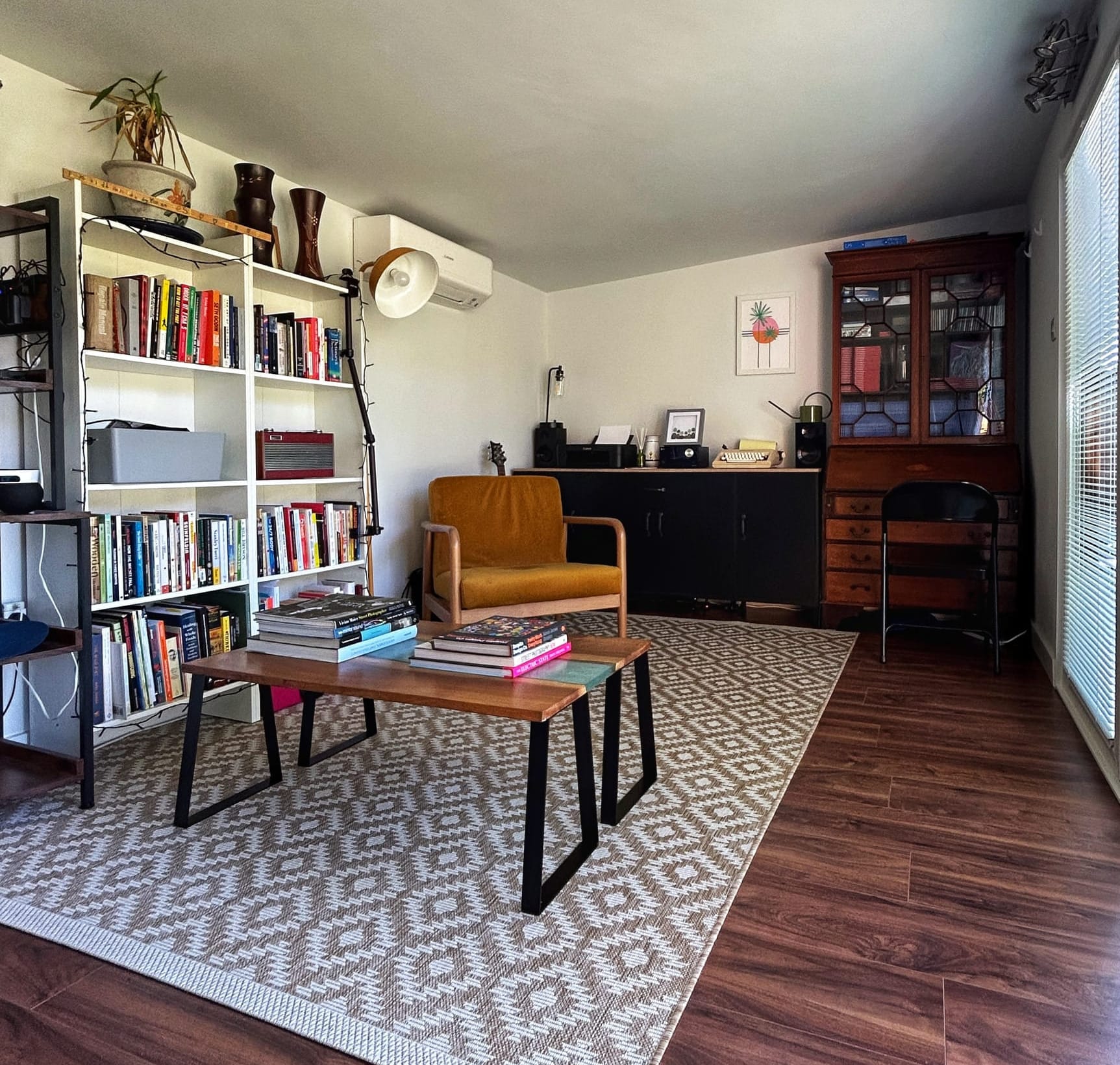
None of these spaces are large. The point is not size; it's that each one gives a different signal about what kind of attention is appropriate and what work is expected when I'm there. A writing desk invites writing. A reading chair invites slowing down. A standing desk invites delivery. Over time, the association between space and mode of work becomes automatic – the environment removes the cognitive switching cost of deciding what you are here to do. And of course, some decent music for the right moment too.
This is the physical equivalent of time-blocking. You are not only scheduling your calendar – you are scheduling your environment to suit the work. By removing unrelated cues and distractions, you lower the cost and friction of starting. The brain interprets the environment as instruction, and you move into the work with more ease.
It is the same logic as laying out running shoes the night before a morning run. The environmental cue reduces the friction between intention and action. Sleep researchers recommend removing screens from bedrooms for identical reasons – environments teach behaviour, and a bedroom should afford rest, not stimulation and doomscrolling. A workspace should afford the kind of work you want more of – and, interestingly, we absolutely can design this into our workplaces with more intention, if we choose.
Designing for the work you want
When shaping a space – whether for yourself or a team – the questions worth asking are simple. Does this space signal the right kind of attention? Does everything in it serve the mode of work intended for it? What should be removed because it introduces the wrong signal? And how can we make space for nice tea and biscuits?
This applies to virtual environments too. It is not quite the same as physical space, but the principle holds: a space with a clear purpose produces better work than one that is used for everything.
A dedicated space is a simple declaration of intent, and it doesn't need a giant office to do it. The same principles apply to the corner of a kitchen worktop as to a studio. When I am here, I do this work. Over time it becomes a subtle form of self-leadership – designing the climate that make good work more likely, rather than leaving that to chance.
I'm not suggesting we should turn our spaces into museums, but we can certainly help to make them more useful for the work we do. And of course, for tea and biscuits.
Where this sits in the Atlas
Orientation·Idea to Value·Communication·Creativity & Climate·Learning