A room at the end of the garden
Kitchen tables, rented desks, a damp garden shed that was never quite right. It took me a long time to see the problem wasn't me - it's that some spaces are built for thinking, and some for working. On why deliberate conditions matter, and how to build your own anywhere

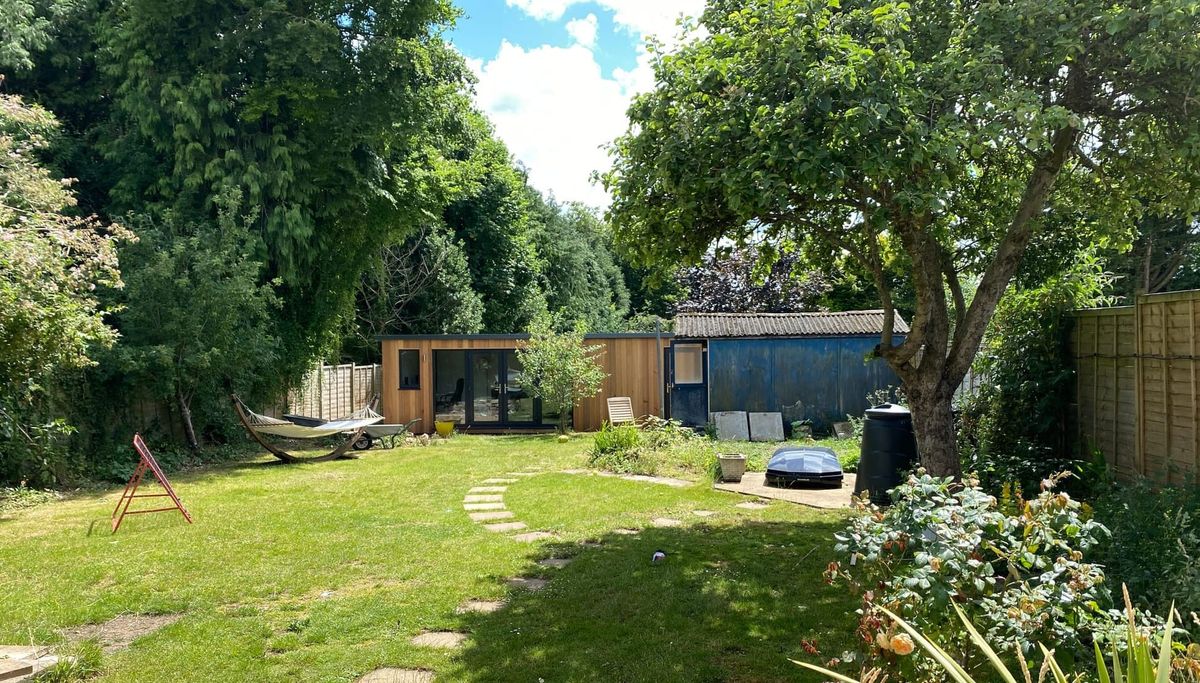
For a long time I worked wherever I could. Kitchen tables. The corner of a room. Borrowed offices. Abandoned floors in run down offices. Rented desks in places that smelled of other people's tuna lunches and bleach. At one point, I converted a giant shed in our newly bought house into an office and recording studio. It was damp, attracted spiders the size of the England Rugby team and was cold, so cold, even on a hot summer day. The kind of place where all of my notebooks developed wrinkles and curls after a day of exposure. All of them functional. None of them right.
For years I assumed the problem was me. Maybe I simply needed to knuckle down wherever I happened to be sitting. It took a remarkably long time to notice that the problem wasn't the quality of the spaces at all. It was that not one of them had ever been designed specifically for the kind of work I actually do.
Because there's a real difference between working and thinking. Between producing things and developing ideas. Between answering email and building a system. Most workspaces are built, sensibly enough, for the first kind, productivity – desks, screens, connectivity, overhead lighting, the sort of work you can measure and manage. Thinking work wants something else entirely: longer horizons, far fewer interruptions, a bit of nature and some physical signal that this mode is different from the often reactive activity the rest of the day demands. More than anything, it wants somewhere that says that what happens here is worth doing well.
So I went looking – and I should be honest that most of the options were either too expensive or too unsettling. Extending the house priced itself out by the square metre. A rented desk in a business park was useful for a few months, until we were all asked politely to stay at home for a while. Converting the damp shed up properly would have cost a small fortune and was still an eye-sore in the garden. What I landed on in the end wasn't the cheapest option, or the easiest – it was simply the one I could build deliberately: a studio at the end of the garden, designed from the first sketch for the kind of work Cultivated actually needs.
And I want to be careful here, because this is exactly the point where a piece like this can descend into a man telling you how marvellous his office building is. I've been lucky enough to have this opportunity and wonderful clients that have made it possible for this to become my business space, and a creative space. It is a nice space, and it's a blessing for sure, but it's also proved economically better than long term renting ever would. The point was never the room. The point is what a deliberate space does.
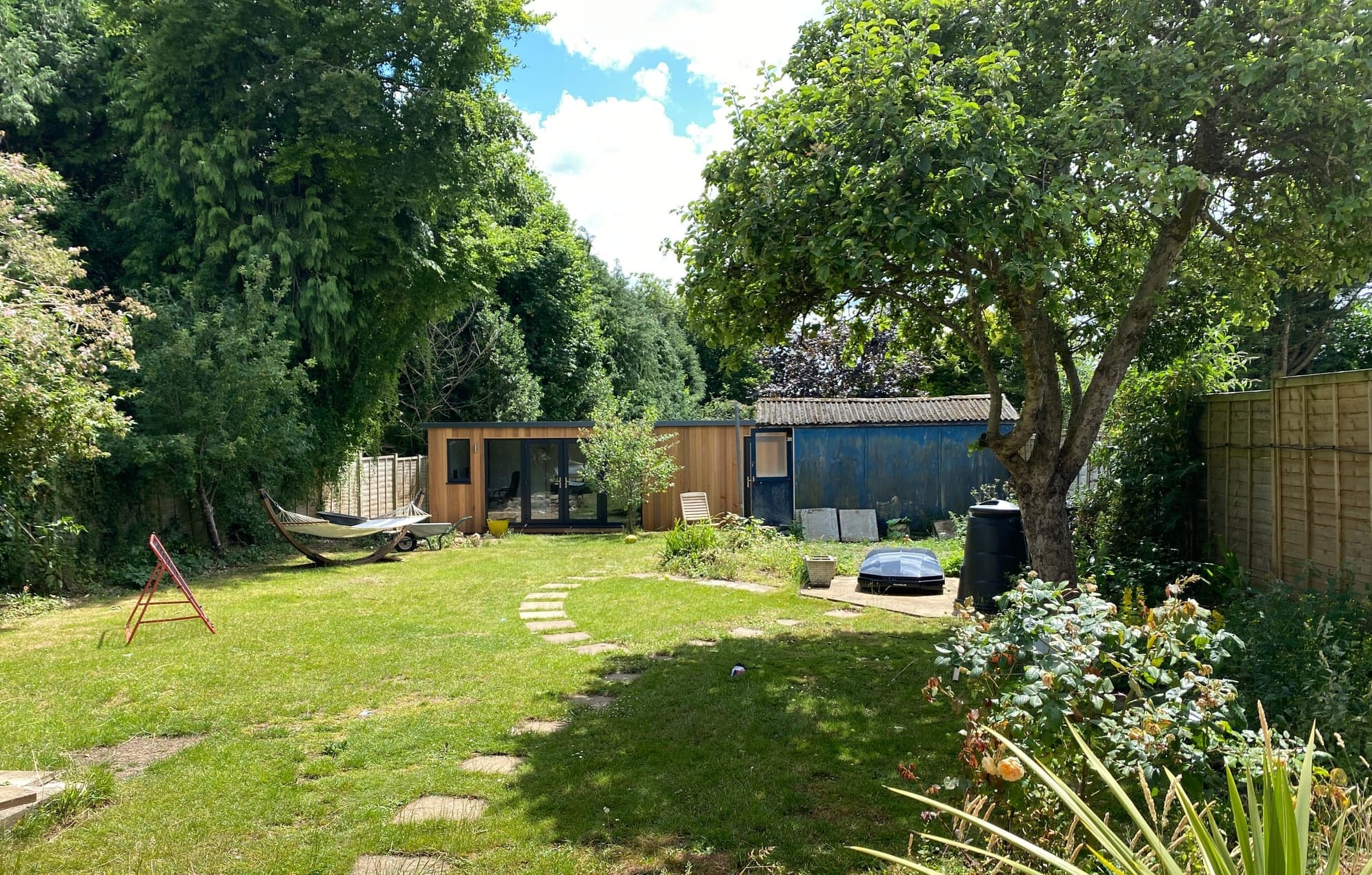
It's a studio in the oldest sense of the word – from the Latin studium: earnest application, zeal, devotion to a subject. Not a performance space; a working one. It's where an idea for a piece of consulting gets tested, taken apart and rebuilt long before it goes anywhere near a client. Where writing happens, usually with good background Lo-Fi beats and a good cup of tea. Where filming isn't a 4 hour task to get setup before record is pressed.
The design of it matters, though not in the way a list of nice objects would suggest. What matters is what the space signals – to the work, and to me. When I step across the threshold, I step into a different mode: fewer interruptions, longer thinking, higher standards of craft. The threshold itself turns out to be the instruction and the reset in the brain.
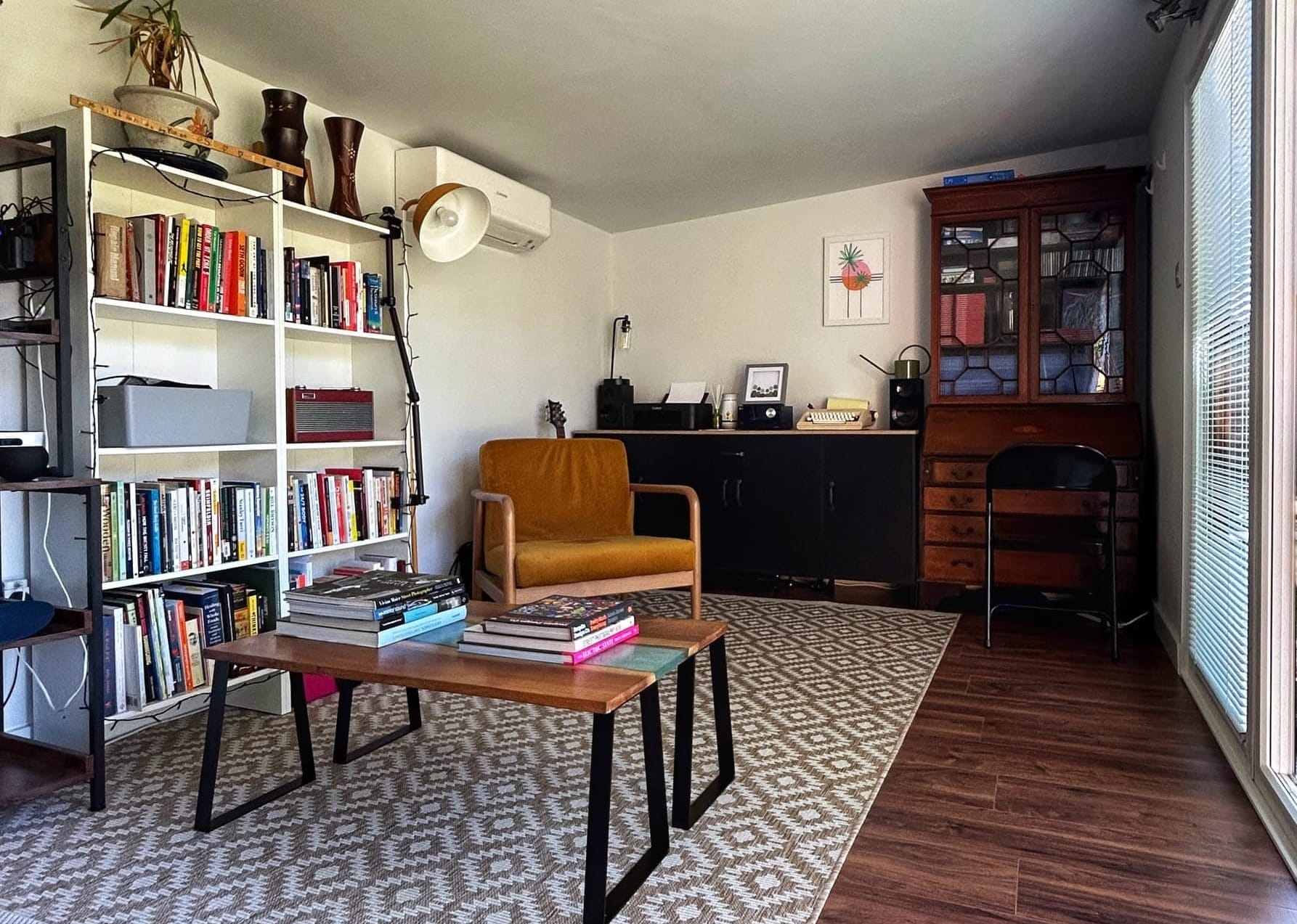
None of which – and this is the part that actually matters – is really about the building itself. I've written elsewhere about the art of noticing, about journaling and the commonplace book as private tools for thinking, about the weekend retreat as a working condition rather than a treat. They all point at the same unremarkable truth: good thinking needs the right conditions – not expensive ones, not elaborate ones, but deliberate ones. Conditions that protect the kind of attention slow, careful work actually depends on. The studio is just the most physical version of that belief I've managed to build. You can build far smaller ones anywhere: a chair by a window that means thinking, an hour the inbox isn't allowed to touch, a notebook kept only for the real stuff.
It's also, as it happens, the room where Creative Soul Projects are often filmed and where the writing here takes shape – and it's where the Studio membership comes from, if you've ever wondered. That exists for one simple reason: I wanted a way to share the thinking while it's still in progress – the working notebook, the ideas not yet ready for a long essay but worth passing on as they form – the view from inside the room, rather than the tidy view of it from outside.
Because the real thing I'd leave you with isn't the studio at all. It's that the quality of your thinking is shaped, far more than we like to admit, by the conditions you do it in – and that those conditions are yours to design, deliberately, wherever you happen to be. Mine took twenty years and a good deal of damp to arrive at a room at the end of a garden. Yours might be a great deal simpler than that. But it's worth building.
A note of thanks: the studio was built by Sanctum Garden Studios, who did a careful and beautiful job. The blinds were fitted by Winchester Blinds. Neither is sponsored — just credit where it is genuinely due.
Where this sits in the Atlas
Orientation·Idea to Value·Communication·Creativity & Climate·Learning
Creative Soul Projects
There's a video that goes with this piece, on Creative Soul Projects. Same person, same observation — just followed on camera instead of on the page. Explore the channel.