There are always three sides to a story — one side, the other side, and the truth. On balance, evidence, and the discipline of finding the third side before you act.
Opinions were the currency in that company. I remember sitting in the grand meeting room – decent coffee, decent biscuits, decent fonts on slide after decent slide, everyone in a decent enough mood despite the free fall in profits – and being struck by how little of what was being said had any balance to it at all. I'm a great believer in using stories to bring facts to life. But the clue is in the second word. Facts.
There weren't many facts in the room that morning, and it was no great mystery why I'd been invited in to sip the tea and help. Things weren't going well. Twenty minutes in, I had a fair idea why.
I kept trying, not especially successfully, to bring everyone back to a single important question: how do we know this is a problem? It's a gentle question but powerful, and its whole purpose is to tease out bits of evidence – something we could look at together, something we could measure, something we could anchor forward movement around. The room had little appetite for it. What it had instead was a great deal of conviction: strong views, well delivered, warmly received, and acted on at speed. Each one arrived whole and unopposed, with nothing to test it against.
And that – not the opinions themselves – was where they were rapidly coming undone. Because balance was missing. No other side offered up to sharpen the first, nor evidence presented to settle the two. Just one confident account after another, mistaken for the whole picture and acted on with gusto.
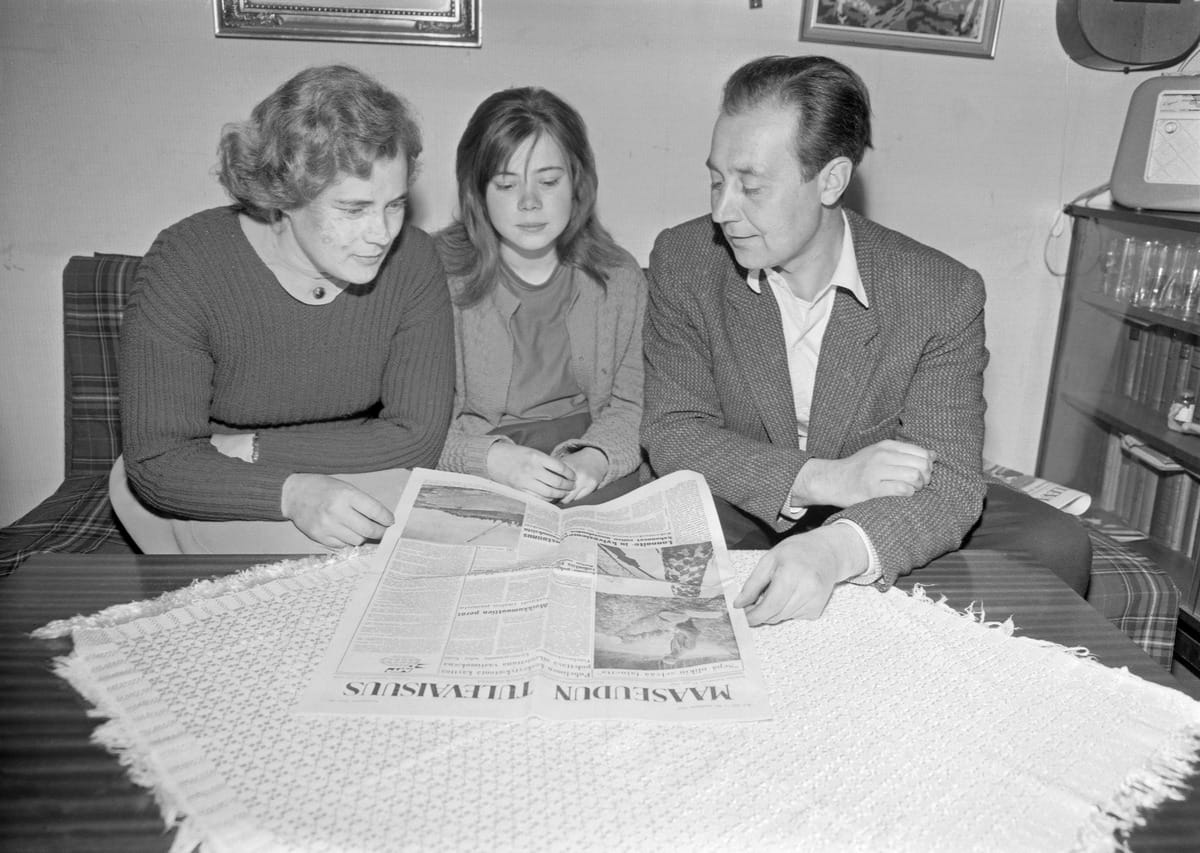
Balance is a word I learned to take seriously studying media science, and later dabbling in journalism, where it's drilled into you early and sticks. There are always three sides to a story – one side, the other side, and the truth – and the truth is the third side, the one you have to go and find. The first two arrive on their own, loudly, for free and sometimes, let's be honest, there are way more than three. The third one though, the truth, you have to work for. And it's almost always the one that's needed.
Now, this is emphatically not a case against having opinions. That way lies a different disaster entirely. How would any of us know where we stand if we believed in nothing? How would an idea ever get off the ground without someone convinced enough that it matters to take it there? We need conviction – it's the engine. We just also need the other side, and the evidence, especially when something large is about to be decided on the strength of a feeling.
W. Edwards Deming put it more bluntly than I would dare: "Without data, you're just another person with an opinion." He wasn't dismissing opinion. He was reminding us that opinion, on its own, is a wobbly thing to build on.
And build on it we do. This is the part that makes one-sidedness remarkably expensive rather than merely irritating. When you act on one side of a story – one person's version, rather than what actually happened, or is happening – you don't just risk being wrong the once. You lay the next decision on top of the first, and the one after that on top of that, and the small original direction compounds into a journey that no longer leads where anyone thinks it does, or goes where it needs to. It just keeps growing, further and further from the mistake that started it, until it's almost impossible to fix.
The third side is the antidote to all of this, and it's made of stronger stuff than either of the first two. It's built from evidence – from behaviour, from outcomes, from data, from insights, from patterns. It's the only ground solid enough to build on.
The trick then, once you're looking for it, is actually knowing where to look – and it's rarely in adjudicating between the two accounts presented. In fact, that can spawn another fifteen variants of the story too.
A conflict erupts in a meeting, and two people leave with different versions of what happened. Neither is lying, exactly; each account has been shaped by fear, by role, by history, by what that person needed to be true, by what they were paying attention to. Sit in judgement between the two sides and you'll be there all day and wish you could retreat to the Crown and Anchor for a decent Chablis. The third side is in the behaviour: what was actually said, how it was said, and what the pattern between these two has been over months. That's the thing to go and look at – not which story wins, or sounds more plausible, or comes delivered in power and confidence.
A release breaks production, and one team says the process was followed while another says it wasn't. The third side is in the evidence: was a step skipped, or was this a weakness in the system that will surface again next month? How long did it take to notice and put right? Whether the honest answer is "someone needs a hand" or "the process needs mending" depends entirely on what actually occurred – and getting that wrong is how you end up fixing the wrong thing and meeting the same breakage twice. And, even more insidious, is adding even more process to fix something that wasn't wrong, and adding further delays between your ideas and the value they intend to generate.
A campaign generates zero leads, and the retrospective fills up with competing theories about whose assumptions were to blame, who didn't do something they should have done or why someone is the blame. The third side is in the data: was there reason to believe it would work before it went out? Which assumptions were tested, and which were simply hoped? What actually happened so we can learn? None of that is about winning the argument or taking a side. It's about improving the next decision and next move – which is the only reason to hold a retrospective at all.
In each case the discipline is the same, and it's wonderfully freeing: listen to every side, generously – and then recognise that none of them, on its own, is the truth. The truth is what remains once you've looked past the stories to what the evidence actually shows.
Here's the twisty complication though. The third side is shy, sneaky, playful and ruthless. It only turns up where it feels safe to.
In places where a mistake is met with blame rather than curiosity, the truth learns to keep its head down, hide in the bushes and skip the retrospective. It wriggles away behind fudged numbers and watermelon reports – green on the surface, red all the way through – and behind accounts carefully crafted and delivered to spare the person telling them. A decision made on that kind of ground doesn't solve the thing it was meant to at all. The problem simply spawns more problems and grows, which is the last thing you want it to do.
So, part of the work is less like detection and more like gardening: you tend the climate and conditions in which the third side is willing to appear. You create the right environment for it to want to show it's face, to turn up to meetings and to smile as it introduces itself to all involved. Nearly everything a person does to make it safe to say the awkward thing – owning their own missteps, meeting bad news with "tell me more" rather than a flinch, treating a surfaced problem as a gift – improves the quality of what they'll actually get to hear. It's not being kind for the sake of it. It's climate control, and the climate decides what information ever comes forward to be worked with.
Which turns some of the harsher questions from accusations into genuinely useful ones. Not "whose fault was this?" but: how can we make the business better? Were the warning signs visible and skipped – or invisible, because nobody felt safe enough to raise a hand? Was the space ever really open to someone saying what they actually knew? These are much kinder and gentler questions than picking a winner between two versions of an incident, and they're far more revealing, because they go after the conditions that produced the situation rather than the surface, or person, it happened to break through.
Good journalism is the discipline of finding the truth inside the noise – hearing every side and then going past all of them to what the evidence will support. Good thinking, in a business or anywhere else, is no different. There are always at least three sides to a story, and the responsibility is to reach the third one: carefully, humanely, and without fear, so that people can learn, decisions can get better, and honesty doesn't neutralise the person brave enough to offer it.
The Stoics had this nailed two thousand years ago. Marcus Aurelius, who had every opportunity to live a simple and comfortable life, wrote that he'd gladly be shown where he was wrong – because no one, he reckoned, was ever harmed by the truth. The truth doesn't wound us. It's ignore it where the problems start.
And no matter how you approach the above, good tea and decent fonts matter too. I may be joking about one of those.
Finding the third side
A few habits, for when the first two sides are competing and the third is needed.
Ask how you know. "How do we know this is a problem?" is a wonderful question with a sharp purpose – it turns a conviction into something you can look at together with evidence (or not).
Assume there's an "other side," and go and get it. The first account arrives on its own. The second sometimes doesn't. Seek it out on purpose – not to win, but to counter the first to make it more robust.
Look for the third side in behaviour and evidence, not in the people telling it. What was said and done, what the pattern has been, what the numbers show once the feeling dilutes a little.
Make it safe, or you'll never hear it. The truth only turns up where it won't be punished. Meet bad news with curiosity, own your own mistakes first, and the quality of what you get to hear goes up.
Where this sits in the Atlas
Orientation·Idea to Value·Communication·Creativity & Climate·Learning