Leadership and Work in Practice

For decades, workplaces have prized one narrow form of intelligence — logical, mathematical, rational thinking. But there are at least eight kinds of intelligence.

Every organisation has it. A project looks green on the outside — cut it open and it is red all the way through. Watermelon reporting is not a dishonesty problem. It is a culture problem. And the cost of discovering the truth late is almost always greater than the cost of discovering it early.

The words we choose matter. How we behave matters more. When words and actions do not align, the message is still received — just not the one we intended. A short, practical essay on why behaviour is the only leadership message that truly lands.

Every few years a new wave arrives promising flatter organisations and fewer managers. But most complaints about hierarchy are not about structure at all — they are about poor behaviour, weak leadership, and unclear responsibility. Removing the hierarchy rarely fixes any of those things.

You can teach the basics of any craft. But mastery — real competence — only arrives through doing the work. This essay explores why so much organisational training fails, the difference between information and ability, and what leaders can do to create genuine learning environments.

Those who control communication channels hold power. Not power as status or title — but power in its most practical form: the ability to get something done. This essay explores why communication is the highest-leverage intervention available to any manager or leader — and how to use it deliberately.
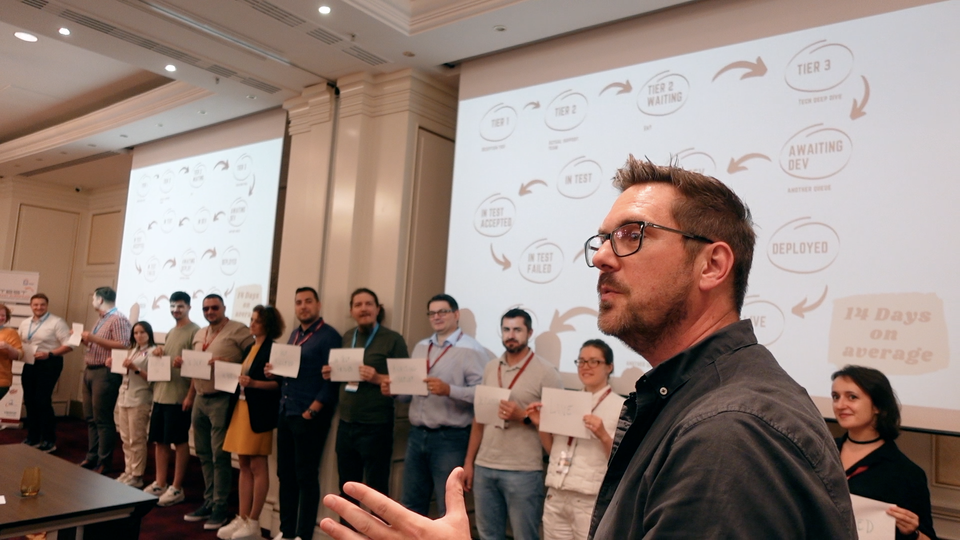
Running a workshop is not a matter of turning up and hoping for the best. It is a craft — built through preparation, intention, and genuine care for the learning journey. This essay makes the case for taking teaching seriously, not as performance, but as responsibility.

Most barriers to creativity in organisations are managerial — not a lack of talent or ideas. This essay explores why keeping the dream alive is a management responsibility, and what it actually takes to create the conditions for imagination to survive.
Most organisations struggle not because they lack ambition, but because they cannot translate imagined futures into focused momentum. Backcasting does the opposite of traditional planning — it starts with the future and works backwards. Here is how to run it.