The shed at the bottom of the garden
On Oscar Wilde, a 2,500-year-old wheelwright, and the truth that the things most worth knowing can't be taught, only earned.

On Oscar Wilde, a 2,500-year-old wheelwright, and the truth that the things most worth knowing can't be taught, only earned.
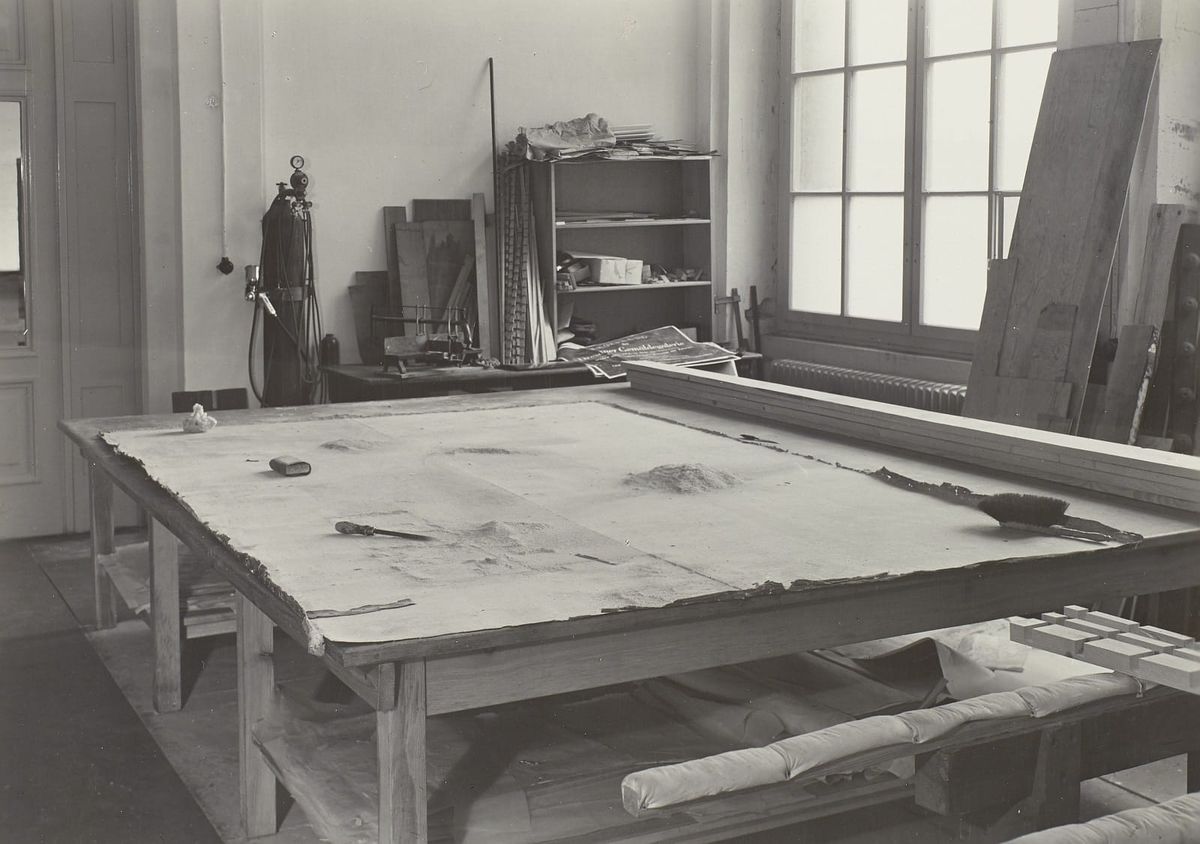
As a young boy I spent a lot of time at my grandparents'. They lived in a small but perfectly formed terrace house on the outskirts of Sheffield, and at the bottom of the garden was a woodworking shed. It was my grandad's. He was a cabinet maker. By day he did admirable work – for a charity, he would teach people with learning difficulties to make cabinets, tables, pretty much anything you could shape from wood – a life skill that would help them gain employment. He once made me a toy multi-storey car park, all in wood; I wish I still had it. He made the desk I used right up until I left for university. And whenever I visited, we always ended up in the workshop.
It smelled the way wood workshops do – sawdust and timber and the distinct smell of stain and varnish. His tools were old but beautifully kept, everything laid out to hand on hooks with labels, each thing with its place and returned to it before finishing for the day. As he set about making something he'd talk me through it, and I'd ask my curious questions. But he knew – from a lifetime of both doing the work and teaching it – that there was only so far words and demonstration go. So, mostly he'd just guide my hands as I made simple boxes, drawers, and, if I remember rightly, a wooden cross; he was a man of deep faith. When he passed, I inherited his toolboxes – chisels, hammers, saws, all of it. I still have them. They still work. And they still remind me of him.
My grandad understood something that took me years to understand in my head. Oscar Wilde put it best:
"Education is an admirable thing, but it is well to remember from time to time that nothing that is worth knowing can be taught."
It's a remarkably interesting line, if we sit with it long enough – because it rings true. You can teach the basics of any craft – the names of the tools, the order of the steps, the theory, the rote instructions. But the thing actually worth having, the mastery, arrives only through doing the work: the immersion, the practice, the repetition, the tiny adjustments as you learn more, the fumbled early attempts, forming judgement that is almost impossible to put into language and models.
I tend to read a lot of older Chinese texts too – and found an interesting passage. It's normally shrunk down and labelled a "Zen proverb" but it actually comes from Zhuangzi, some two and a half thousand years ago. A duke is sat, reading in his hall and below him, in the courtyard, an old wheelwright named Pian is chiselling a wheel. The wheelwright busy crafting, sets down his tools, climbs the steps, and asks what the duke is reading. It's the words of the sages, says the duke. And are these sages alive? No, says the duke, long gone now. Then what you're reading, says the wheelwright, is only the dregs they left behind. Pressed to explain himself – threatened with death, pretty harsh – he does indeed explain what he means. When I cut a wheel, he says, if I go too slow the chisel slides and won't bite; too fast and it jams and won't run true to the material. Not too slow, not too fast. I feel it in my hand and answer it from my heart. I can't put it into words. I couldn't even teach it to my own son. And so here I am, seventy years old, still making wheels.
It's what my grandad knew without ever needing to say so. The wordlessness was never him withholding some secret, or hanging on to what he knew, or not possessing the words to describe what he was doing. There was no secret to hand over. What he knew lived in his hands, his head and his heart, in decades of not-too-slow-not-too-fast, and the only real way to pass any of it on was to stand me at the bench and let me do it badly beside him until, very slowly, I got better. He couldn't tell me. He could only show me, and then get out of the way while I earned the skill.
And this, I've come to think, is true of nearly everything worth learning – far beyond a workshop. You can be taught the scales but not the feel of the music; the recipe but not the moment the sauce is exactly right and the steak is as you want it (medium rare if you're interested). The basics can be handed to you over a period of time. The craft has to be built, by your own attempts, over a stretch of time that no course can shortcut and no book can stand in for.
Which is positively hopeful, right? The things most worth knowing can't be bought, or downloaded, or delegated. They have to be lived into.
I still have his chisels. I take one out now and then. It still works, it's still sharp, and it still sits in the hand exactly as it should. But the real inheritance isn't the tools, and it wasn't anything he said. It was the hours in the shed at the bottom of the garden, and his patient guiding of my hands, teaching me the one thing he couldn't teach me – by letting me do it.
Where this sits in the Atlas
Orientation·Idea to Value·Communication·Creativity & Climate·Learning