He couldn't cross the road
On the many intelligences we carry, why we reward the few that are easy to measure, and the subtle waste - mottainai - of every gift we never think to grow.

The different types of intelligence
A friend of our family was probably the cleverest person I've ever known. Deeply, academically intelligent. Multiple degrees, a Masters, a couple of PhDs. He was described, variously, as a genius, an academic, brilliant, super brainy – the most intelligent person any of us knew. And yet he was astonishingly bad at the one thing we're all actually here to do: navigate a life.
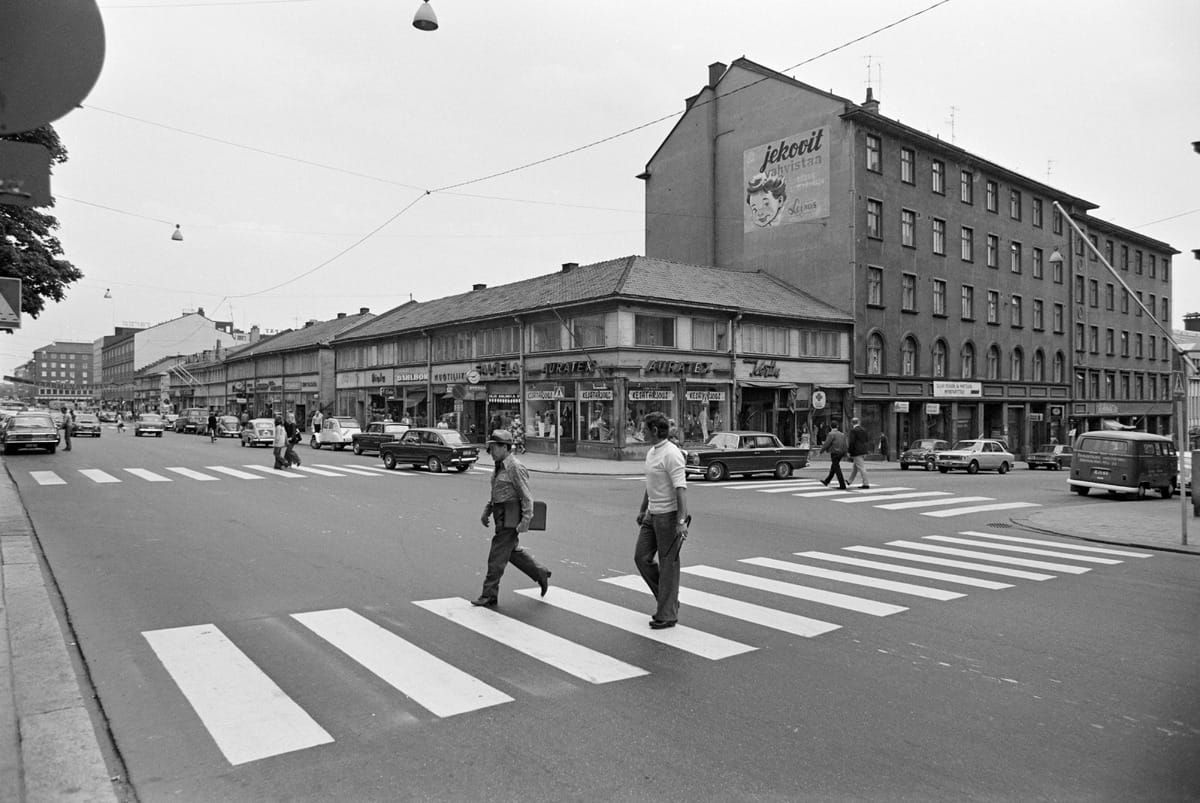
His academic mind ran at super human levels that, while waiting to cross the road one day – no doubt working through some astonishing piece of calculus – the lights changed several times and he remained exactly where he'd been twenty minutes earlier. In the end, to stop baffled drivers from honking their horns, some local shopkeepers helped him across. This, as I've written before, was the same man who once plugged his phone line into the pole outside his house and took out half of Sheffield.
His logical, mathematical intelligence was his gift to the world. But here's where we so often get confused, especially in our workplaces: there are other kinds of intelligence too.
I was not gifted in the world of maths. Far from it. My school maths teacher told my parents I couldn't tell the difference between my backside and my elbow – a comment I suspect would carry a lawsuit these days. But I can see systems, and take them apart, and explain them to others. I can stand on a stage and be lifted by it, while giving an audience something worth their investment in me. I write, I teach, I make films, I make podcasts.
A friend's daughter is gifted in movement – anything goes – dance, play, sport, anything physical and she is in her element, as Sir Ken Robinson would say. She's turned that intelligence into long distance cycling challenges for charity, teaching sport and surviving the outdoors, and building a life on her own terms; chief among them the need to move in order to think clearly.
Many of my friends are musicians who would become a shadow of themselves if you sat them in a meeting to talk through growth charts. They come alive, and give the most, through their gift for seeing something, turning it into music, and handing it to the world.
There are the writers and poets and wordsmiths I regularly hang around with, and work with, who can take an idea and turn it into plays, books, films, television and poems – things we get to enjoy, devour, watch, and be moved by. Their intelligence lives in their words, not in a slide deck or a board meeting.
There are the ones who make us think deeply about life, our part in it, and what it means to be human – counselling, analysing, philosophising, walking alongside people who want to understand themselves and get better in their own minds.
And there are those whose intelligence draws them to other people – building relationships, forming communities, drawing out the best in everyone around them, using warmth and connection to bring ideas into the world.
Some are pulled towards nature, towards the world around us and the ecology of the places we live – photographing it, studying it, filming it, conserving it, bringing it into our lives.
Howard Gardner named eight types of intelligence. There are likely more, and all of them are human by definition. The truth is that most of us are some combination of them – a few strong, others subtle – and I'd argue our chief task in life is to nurture the ones most alive in us. To find work, and spaces, and people that don't squash our intelligences flat to meet a standard that just happens to be easy to measure.
And that brings me, reluctantly, to work. Our workplaces, and the ideas we carry into the world, come alive when real human intelligence and expression are brought to them – and yet, so often, conformity creeps in as the de facto standard. The easy-to-measure intelligences take the front row seats. The easy-to-describe becomes the job description. The easy-to-manage becomes the default standard. And before long you have a room full of people with remarkably similar intelligence – or people pretending to be something they're not, which is its own kind of misery in the end.
There's a Japanese word you find running underneath a lot of my work: mottainai. It's usually translated as a sense of regret at waste – the small pang of guilt at good food thrown away, at a decent piece of wood thrown out, at a resource squandered with little though. But the waste it names runs deeper than objects. The most profound waste of all isn't a thing at all. It's a person. It's an intelligence that was never fed, nurtured or amplified – a gift flattened to fit a shape that was simply easier to score and easier to manage.
The child who thinks in movement, told for years to sit still. The person who sees whole systems, handed a spreadsheet and told to crunch some numbers instead. The natural bringer-together of people, told they aren't quite "analytical" enough for the promotion. Each of those is mottainai in its most prevalent, most human form: potential that was finite, and unrepeatable, and is being left unrealised everyday, because nobody thought to grow it.
I don't believe we do it out of malice but rather, out of convenience. When you hear the word intelligence, what comes to mind first? Exams. IQ. AI. The correct binary answer under time pressure. The kind of thinking that gets you high scores in a recruitment test. For the best part of a century we've prized that one narrow band – logical, rational, mathematical – above nearly everything else, probably for the simple reason that it's the easiest to put a number on. And numbers feel objective, so the measurable took the front row and everything harder to measure was asked to wait by the door.
But here's the reframe that changes some of that. We talk about intelligence as though it were a fixed quantity – a figure stamped on you at birth that an IQ test could uncover. It isn't. It behaves far more like something that grows, or doesn't, according to the climate around it.
Gardner's eight intelligences aren't boxes you're sorted into. I see them more as eight fields of potential crops. Many of us are tending to a few at once – one or two flourishing and growing, others barely watered, and a few that, no matter how much we tend to, are unlikely to yield much return. Whether they grow has very little to do with some magic, innate, ceiling and almost everything to do with conditions and climate around them: whether you've found the work, the spaces, and the people that feed your natural intelligences, or the conditions that flatten them.
Potential, in other words, I've come to see, is not a talent problem. It's a climate problem. Put a person in soil that suits them and they'll astonish you; put the very same person in soil that doesn't and you'll conclude, quite wrongly, that there wasn't much potential there to start with.
Which is why the trouble with elevating only the measurable isn't merely that it's unfair – though it is. It's that it makes us very good at measuring and rather poor at meaning, contribution and potential. Numbers can tell you what is happening; they can seldom tell you why it matters, or what a life ought to do about it. Most of the human things that genuinely move a life along – reading a room, sensing what's gone unsaid, finding the words that pull people together, feeling when a moment is ripe, knowing yourself well, and coming up with valuable ideas – are pretty tough to standardise a test for, so we often don't do it. Look only for the one kind of clever and you'll walk straight past all the others: in other people, and, more sadly, in yourself.
It's true at work, of course, though I'd rather not shrink the whole idea down to that. It's why so many organisations feel busy and capable and not quite reaching its true potential. The diversity of intelligence is right there in the building, it's simply not the kind anyone was trained to see, so it goes uncultivated until, eventually, it leaves. But this same waste plays out in schools, in families, and in the stories we tell ourselves at three in the morning about what we are and aren't any good at, and why we feel our potential is going unmet. A narrow standard doesn't only produce uniform teams, it produces people who spend years convinced they aren't clever and that what they're innately good at is not valued in the workplace. The single frame the world happened to measure them through was never their frame in the first place.
There's a task hidden in all of this, it's the one that runs through a whole life, and it's got two sides. One side: find the intelligences most innate and alive in you – the ones that bring you joy, challenge and the kind of afternoons that disappear because you're in your element. Then feed them, with gusto, even if they were never the ones that earned the gold stars or the payrise or the accolades from others.
And the other side: become the climate for other people's intelligences. Notice the child who thinks with their hands, or has an uncanny ability to bring people together, who moves whenever music is on, or takes stunning photos without really trying. Give the systems-seer something worth seeing. Water the field that isn't yours. Because the opposite of mottainai – the opposite of waste – isn't productivity. It's attention. It's simply seeing what's in front of you, clearing out the weeds and giving it the room to grow.
Our family's brilliant friend never did master the road, and did, memorably, disconnect half of Sheffield from the telephone network. But his mind was a real gift – singular, and rare. The tragedy would only ever have been if the world had decided it wasn't a gift at all, purely because it couldn't be trusted at a pelican crossing or with a phone cable. Everyone you meet is carrying something like that: some intelligence the standard tests were never built to catch. The waste was never in the having of it. It's in nobody – least of all ourselves – ever looking and cultivating what we find.
Where this sits in the Atlas
Orientation·Idea to Value·Communication·Creativity & Climate·Learning