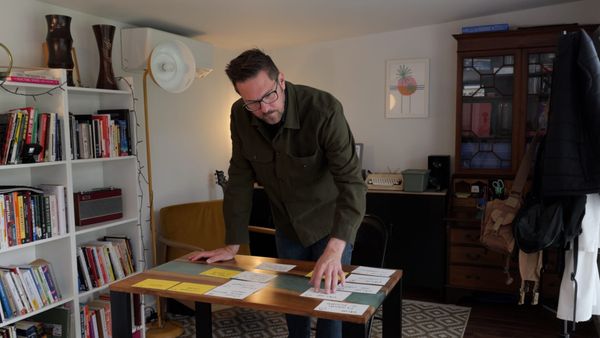
Turning around a struggling team — a six-stage approach
Most struggling teams are not suffering from a lack of activity. They are suffering from a lack of understanding. Before you change anything, you need to see it clearly. This is the approach I have used — and coached others in — for turning around struggling teams.


Study before acting, see before changing — the six-month discipline of team turnaround
Most struggling teams are not suffering from a lack of activity. They are suffering from a lack of understanding.
Work is late, distorted, or incomplete — but nobody can say exactly why. People are frustrated but don't know what to fix. Energy is spent on the wrong things. Good people leave and nobody is quite sure what that costs.
Before you change anything, you need to see it clearly. Most turnaround efforts fail because they begin in the wrong place — with action, structure, and urgency — before the leader has developed sufficient understanding of what is actually happening and why.
This is the approach I have used, and coached others in, for turning around struggling teams. It takes roughly six months. That sounds long. In reality, for any meaningful change to the culture, norms, and flow of a team's work, six months is not very long at all.
It is not a rigid plan. It is a sequence of attention — what to study, what to build, what to improve, and in what order. The further out you are, the less you will know, and the vaguer the plan should be. As understanding deepens, you can move faster and with more precision.
Editor's note — where this sits
This is the practical companion to How Teams Really Change — the six-stage approach behind the philosophy. It sits in the Map layer of the Idea to Value system — because turning around a team begins with orientation: seeing clearly where you are before deciding where to go. The Physics layer runs alongside it: the diagnostic discipline of understanding how work flows, where it stalls, and what failure demand is costing the team before any changes are made.
The Idea to Value system — five layers
Before you begin: the orientation problem
The most common mistake in team turnaround is the same mistake that causes teams to struggle in the first place. We act before we understand. We optimise before we diagnose. We change the system before we know what the system is actually doing.
In the Idea to Value frame: you cannot improve the flow of work if you don't know where it comes from, where it goes, where it stalls, and what it costs when it does. The Physics layer of any team improvement is observation — making the invisible journey from idea to outcome visible before deciding what to change.
Resist the urgency to fix things immediately. The first stage is the most important and the most uncomfortable. Sit on your hands. Study the system. Do not change what you do not yet understand.
Quick reference — six stages
The mapSix-stage approach to turning around a struggling team
The sequence matters. Do not skip ahead. Each stage builds the knowledge and trust required for the next.
Stage 1
Study the system
Weeks 1–4
Gain knowledge before acting. Understand how work flows, who does it, where it comes from, where it goes. Do not change what you do not yet understand.
Layer: Map — see the current reality clearly
Stage 2
Establish a baseline
Weeks 4–8
Measure what matters. Understand value demand vs failure demand. Map cycle time variation. Name the current state honestly — this becomes the starting point for all future comparison.
Layer: Physics — diagnose where ideas stall and cost accumulates
Stage 3
Build direction & relationships
Weeks 6–10
Paint a believable picture of better. Build the relationships and trust that carry change. Define values through behaviour rather than declaration.
Layer: Map — painted picture + Wiring — trust and communication
Stage 4
Improve the process
Weeks 8–16
Make work visible. Run disciplined experiments. Empower the people closest to the work. Delegate real responsibility rather than task completion.
Layer: Physics — remove friction + Engine — create conditions
Stage 5
Develop the people
Weeks 12–20
Embed learning into the ordinary rhythm of work. Coach judgment, not just performance. Invest in people who are growing. Understand clearly who is capable, who has capability, and who is in the wrong role.
Layer: Flywheel — compound capability through practice
Stage 6
Retrospect & recalibrate
Months 5–6
Stop genuinely. Compare current state to baseline. Run a retrospective with the team. Set the direction for the next horizon. The cycle does not end — it deepens.
Layer: Map — see clearly again before acting again
Stage 1 — Study the system (weeks 1–4)
The first month has one job: gaining knowledge. Everything else depends on it.
Start with the work itself. Where does it come from? How frequently does it arrive? Is it predictable or reactive? Who does it? Who prioritises it? How long does it take — and does that match the expectation? Where does it go when your team is done with it? Are the people who receive it happy with what they get? Does it ever come back?
These questions are not bureaucratic. They are diagnostic. The answers reveal whether the team is doing what the organisation thinks it is doing, and whether the work is creating the value the business believes it is creating.
Then study the people. Not to assess them, but to understand them. Who is in the team, what makes them tick, what work they do, what frustrates them, what they think needs to change? Start one-to-ones and keep them going throughout. The people closest to the work understand it better than any dashboard will — they see the friction, the failure demand, the wasted effort daily. Listen to them before you form opinions about anything.
Finally, begin to understand where your team sits in the wider system. Who feeds work in? Who consumes it? Who makes the decisions? What are the measures, and do they reflect what actually matters? What is the relationship between your team's activity and the value the organisation creates for customers?
Take notes throughout. A lot of notes. Do not change anything yet.
Stage 2 — Establish a baseline (weeks 4–8)
Once you have a reasonable picture of how the work flows, the next stage is to establish a baseline — a clear current state against which any future change can be measured.
This requires measuring the right things. Not outputs alone, which often drive the wrong behaviour and miss the real cost of poor systems. What you want to understand is how much of the work coming in is genuine value demand — the work the team exists to do — and how much is failure demand: work generated by things that went wrong earlier in the process, requests created by poor systems, rework caused by incomplete handoffs.
Failure demand is the most important diagnostic signal in any struggling team. It reveals not just what is broken, but where. When a team is spending significant time on rework, repeat contacts, and escalations, the system upstream has usually failed — and the team is absorbing the cost.
Measure cycle time where you can. How long does it take for a piece of work to move from arrival to completion? Where does it wait? The variation in cycle time — not just the average — is where the real information lives. If something usually takes three days and sometimes takes three weeks, the system is telling you something.
Begin to articulate the current state honestly: this is where we are, this is what we know, this is what we cannot yet explain. That honesty is the starting point for a shared future.
Stage 3 — Build the direction and the relationships (weeks 6–10)
Alongside studying the system, you need to build two things simultaneously: a clear direction for the team, and the relationships that will carry change.
Direction first. Teams drift when they cannot see a different way of working. The question to answer — with the team, not for them — is: what does better look like? Not a vague aspiration, but a grounded picture. Clearer purpose, smoother flow, stronger relationships with the people your team serves, higher craft. A future specific enough that people can feel the difference from where they are now.
This is the Map layer applied to a team rather than an organisation: a painted picture of the future, combined with an honest read of the current reality. The gap between those two things is the work.
Then relationships. Change travels through trust, and trust is built in one-to-ones, in the quality of listening, in following through on small commitments, in noticing people beyond their output. The team members who are engaged, capable, and underserved by the current system are your allies. Find them early. Give them room.
Be explicit about values and expectations — not through posters, but through your own behaviour. What you notice, what you reward, what you challenge, what you tolerate: these are the signals that define culture more reliably than any stated value.
Stage 4 — Improve the process and empower the team (weeks 8–16)
By this point you have enough knowledge to act — and you should. The temptation to keep studying is real, but at some point observation must give way to experiment.
Start with the process. Map how work flows through the system visually — not in a PowerPoint, but in a way the team can see and update. Where does work accumulate? Where are the handoffs that lose information? Where does the team spend time on work that should have been done correctly upstream? Make the problems visible before trying to solve them.
Then empower the team to improve it. The people closest to the work almost always know what needs to change — they have been working around the problems every day. Your job is to create the conditions where those insights surface and are acted on, rather than accumulating as unheard frustration.
Delegate real responsibility rather than task completion. Train judgment rather than prescribing process. Give people the authority to solve problems in the moment rather than escalating everything upward. Trust — granted carefully, not recklessly — is what allows teams to move from compliance to ownership.
Begin running structured experiments. Small changes, carefully observed, with clear measures of whether they are having the intended effect. Not everything can be measured numerically — standing and observing is as valid as a metric, sometimes more so. What matters is the discipline of forming a hypothesis, making the change, and looking honestly at what happens.
The Wiring layer matters significantly here: a team improving its own work needs to communicate differently — more honestly about problems, more specifically about what they need, more consistently about what the customer actually experiences. Invest in communication improvement alongside process improvement.
Stage 5 — Develop the people and compound the learning (weeks 12–20)
Teams do not become capable through programmes. They become capable through accumulated practice, feedback, and the opportunity to apply what they are learning in real work.
The Flywheel layer is what sustains improvement after the initial push. Without it, gains from the first four stages gradually erode as the team returns to old habits, new people arrive without context, and the urgency that drove change fades.
Learning should be embedded into the ordinary rhythm of the team's work — not deferred to training events or quarterly reviews. This means regular feedback that is specific and behavioural rather than vague and evaluative. It means coaching conversations in one-to-ones that develop judgment rather than just reviewing performance. It means on-the-job development — pairing less experienced team members with more experienced ones, giving people stretch assignments with appropriate support, creating opportunities to learn from failure without punishing it.
Understand each person's capability honestly — not charitably, not harshly, but clearly. Who is already capable and needs conditions to perform? Who has the capability to become capable with development? Who is in the wrong role, and what does care and honesty look like in that situation? These are the three categories that matter in developing a team, and confusing them leads to wasted investment and frustrated people.
Invest in the development of people who are growing. Fight for the budget, make the case, champion learning as an operational necessity rather than a discretionary extra. The team that is learning faster than the market changes is the one that remains relevant.
Stage 6 — Retrospect, recalibrate, and set the next horizon (months 5–6)
At six months, stop. Genuinely stop — not to pause before the next push, but to look honestly at what has changed.
Run a retrospective with the team. Is the process better than it was? Are the measures improving — and are they still the right measures? Are customers happier? Are the people in the team more capable, more trusted, more alive in their work? Are you delivering more value, or just more activity?
The retrospective works only if it is safe — if people will be honest about what is not working alongside what is. That safety does not appear automatically; it is the product of everything done in the preceding months. If you have been listening, following through, and treating people as adults throughout, the retrospective will be useful. If you have not, it will be a performance.
Look at the current state again — the same questions you asked in Stage 1 — and compare honestly to where you started. Not to celebrate, though celebration matters, but to see clearly again. The Idea to Value cycle does not end. Clarity leads to alignment, alignment to momentum, momentum to value — and value creates new questions about where to go next.
Set the direction for the next six months. Not as a plan written in stone, but as a horizon — specific enough to be meaningful, loose enough to accommodate what you will learn along the way. Share it with the team. Ask whether they believe it is possible. Ask whether they are in.
If the answer is yes — and if you have done the preceding work with care — you will have changed something real.
From the Cultivated library
Idea to Value System
Guidebook + video series · Digital
The diagnostic system this guide is built on — understanding how work flows toward value, where failure demand accumulates, and how the five layers (Map, Physics, Wiring, Engine, Flywheel) apply to any team trying to improve.
From £19.99
Explore the system →Workshops & Keynotes
In-person or virtual · Bespoke
For leadership teams at the beginning of this journey — or stuck somewhere in the middle. A facilitated session to establish where the team actually is, what the work is really doing, and what the next stage looks like.
Enquire
Start the conversation →