I believe you have my stapler
A specialist lost the whole room in seven Japanese words. On a plainer instruction: staple yourself to a piece of work, follow it through the building, and map what actually happens — not what's meant to.

Staple yourself to the work: how to improve a process
Excuse me. You– I believe you have my stapler?
– Milton Waddams, Office Space
Everyone in the room had quietly checked out. All of them. One of them was asleep, I think. The specialist at the front knew the material inside and out — really knew it — but he was delivering it in big words, and big words do two reliable things. They make you sound, as David Ogilvy put it, like a pretentious ass; and they lose everyone who doesn't already know the word.
The people in that room were learning how to improve processes in their business. What they were getting was seven new Japanese terms, a warm appreciation for the Toyota Production System, and no idea what to do on Monday.
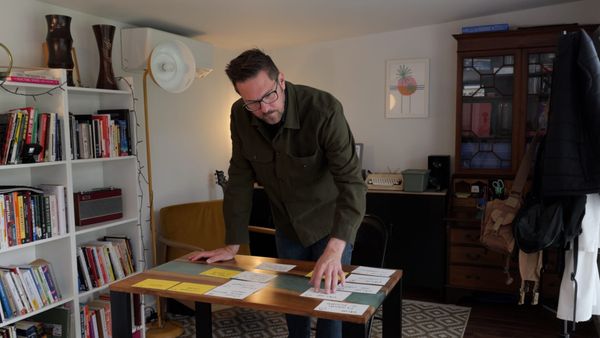
So I offered a different instruction: grab a stapler, and staple yourself to a piece of work – metaphorically, I should stress – and follow it all the way through the business. Draw the journey it takes on a wall. Step back and look at it. Have a cry at how complicated it is. Then start making that journey a little shorter, a little smoother, and a little more oriented toward the people who keep the whole thing alive – the customers paying for something worth paying for. And, above all, do it with the people closest to the work actually in the room.
I first met the idea in Dave Gray and Sunni Brown's Gamestorming: the simple act of following a single work item through a system to see where it slows, stalls, or breaks. The trade has more technical names for versions of it – value stream mapping, process mapping, swim-lane analysis – and they're all perfectly useful, and all immediately off-putting to anyone who didn't choose process improvement as a career. Which matters more than it sounds, because the language you use decides whether people bring their attention to it, or fall asleep during it.
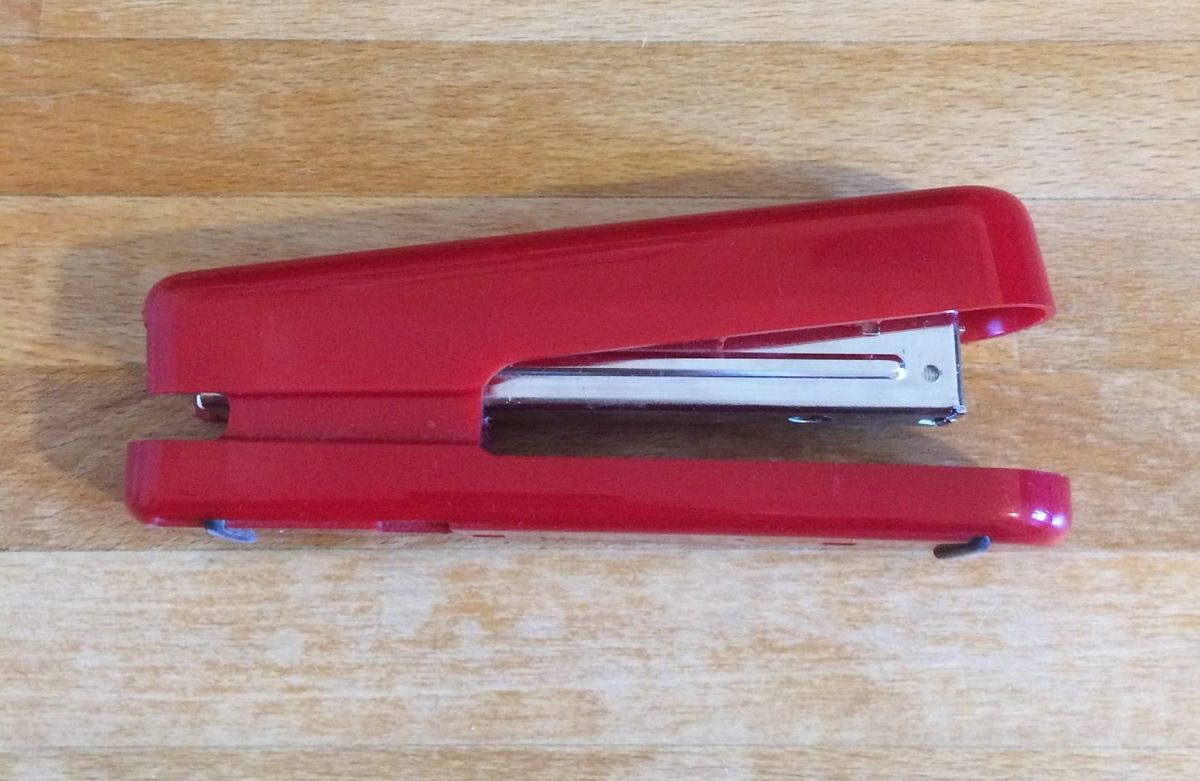
The day I stopped saying "value stream mapping" and started asking people to imagine stapling themselves to work and joining it on its journey, they leaned in, probably because everyone has deep respect for the unsung hero of the stationery world, the stapler. The stapler picture is vivid; the vivid thing feels doable; the doable things get done.
And it's worth doing, because the process is the experience. How work moves through a system decides whether a day feels purposeful or exhausting, whether a customer feels looked after or ignored, whether good people stay or retreat back from the work. You can have the right people, the right intentions and a genuinely good product and still deliver badly, simply because the system generates friction at every step.
Most of us have long since stopped noticing that friction – it just becomes "how things are here." Stapling yourself to the work is how you start seeing it again, and you don't need to be in charge to do it. You only need to be curious about why something that should be simple isn't.
The one rule that makes it work is also the one people find hardest: map what actually happens, not what's meant to. Not the process document, not the tidy diagram, not the model you'd show the board, not what you want it to be like – the real thing, with all its loops and waits and delays and rework and the approval step nobody can explain why exist.
Take a genuine piece of work — an actual onboarding of a new customer, an actual release, an actual support ticket, an actual work item — and trace every step, every handoff, every idle hour it spends sitting, every bounce back, every course correction, every return. Then lay the whole thing out on a wall where everyone can see it end to end at once, ideally with some form of time scale alongside it. That's the moment the illusions disappear. Complexity that felt normal suddenly looks absurd; delays everyone had accepted turn out to be choices nobody ever made on purpose. Those handoffs that everyone believes are cleanly done turn out to be riddled with delays and rework. A wall of index cards is also much harder for a senior person to wave away than a status report – same truth, but you can't argue with a wall. You see it. And seeing it is far more emotional than being told about it.
And when you are on the journey, study the system's processes, constraints and operations, not the people. Processes produce behaviour far more reliably than people do, and the person who looks like the bottleneck is nearly always a symptom of a design that funnelled everything through them. Look for where work stalls, bounces between teams, doubles back, or lives entirely in one person's head – and look, too, at the parts that flow beautifully, because understanding why those work is often more insightful than understanding why the rest don't. No culprits. Just the system processes and flow, seen clearly.
Only then is it worth asking the really interesting question — not "what would perfect look like," but what would better look like, for the customer and for the people in the mix of the current version.
The gap between what you mapped and what you'd like is your agenda, your goal, the work itself now. That gap is always best closed deliberately and carefully rather than dramatically at speed: small changes, tested, understood. Those large, grand redesigns dropped from a height mostly create confusion and resistance, because they ask everyone to change everything at once – and if something doesn't work still, well, you likely wont know why.
I also suggest resisting the great temptation, which is to make a broken process faster before checking whether it's doing the right thing at all. It's always better to aim for effectiveness first, then efficiency. After all, it makes little sense making something ineffective more efficient.
What stapling yourself to the work really teaches, though, is bigger than any one process – it changes what you pay attention to and how. You stop managing the abstractions like the plan and the report and the number and model and the chart, and start seeing the actual thing itself. You see how ideas and work really move, and how it really feels to be part of it, on its way to becoming something valuable. And once you can see that clearly, better decisions tend to follow on their own – not because you've gathered more data, but because you finally understand.
Which is the real craft underneath all of it. Not control. Understanding.
Where this sits in the Atlas
Orientation·Idea to Value·Communication·Creativity & Climate·Learning