Rules for a modern manager
Most leadership advice reads like it was written at an airport gate. The real work is smaller and more interesting: the good coffee, the quiet corner, the books on the shelf, whether anyone learns your name. Rules for the modern manager — none of which will trouble a competency framework.

A great deal of leadership advice reads as though it were written at an airport gate, in a hurry, by someone who'd just scanned the titles of the books in the departure bookshop. Plenty of action-orientated verbs, life coaching with a management twist, platitudes about being your authentic self (a terrible idea), and none of it tells you the things that actually decide whether people do good work: whether they're clear about what's expected and the value you're aiming at, whether they're growing in the role, whether the coffee's any good, whether there's anywhere quiet to think, what's on the shelves, and whether anyone can be bothered to learn your name.
The real work of leading is smaller and more interesting than the handbooks and motivational posts let on. It lives in the details most people walk straight past – which is positively convenient, because noticing what others miss is a fine place to spend your time as a leader or manager.
So here are some rules for the modern manager. Not a framework, you'll be relieved to hear, nor absolutes, and most certainly not a maturity model. Just reminders to hold a slightly higher standard than the world currently insists on – to pay attention, keep a little taste, and treat people's time, energy and attention as the finite, precious things they are.
Steal the ones you like. Pin them to a noticeboard, ideally a good one, in a nice font.
1/ Keep the fridge stocked. Buy good coffee with as few chemicals as possible, and avoid capsule coffee. Keep proper loose-leaf Earl Grey, or a nice Assam, around. Some decent matcha green tea too. Plus some herbal teas for the comedown. A few craft beers, like Pistonheads, in the fridge for a Friday never went amiss. And a decent Rioja works too. People hand you their best hours; the least the place can do is taste of something.
2/ Give every new starter a copy of Paul Hawken's Growing a Business on their first morning. It explains what a good business is more pleasantly than any induction deck.
3/ The stationery cupboard is a statement of belief. Stock it with Moleskines, Leuchtturms, Rhodia and Field Notes and nice pens that actually work. Plus some decent pencils. Good thinking needs a good artefact to land in. I spent an unreasonable amount of time this week considering whether stationery influences the quality of our ideas. I suspect it does.
4/ Learn everyone's name – reception, the person emptying the bins at seven, the new grad too nervous to speak. Knowing names is a sign of listening, and listening is the greatest compliment you can give someone. And say hello to people every day, especially those in your team.
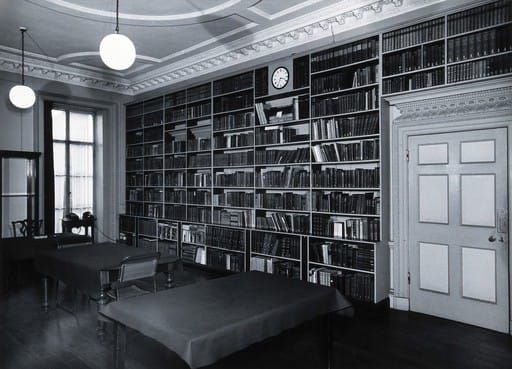
5/ Build a library. It needn't be large; well curated, yes. I've never trusted offices that don't contain books – it suggests they're more interested in efficiency than thinking.
6/ Appoint a Chief Curation Officer, even if the title lives only in your head. Someone should be paid, or at the very least thanked, for noticing what deserves everyone's attention – and removing the stuff that doesn't.
7/ Defend the quiet. If there's nowhere in the building (and the schedule) a person can think and do challenging work without interruption, or without having to wear headphones, you've designed an office that hasn't left space to do valuable work.
8/ Treat a meeting as a designed experience, never a go-to default. If there's no decision in it, it's a workshop, a conversation, or a polite waste of a morning.
9/ Guard time, energy and attention like the finite human resources they are. A morning of someone's finite resources, spent on work that was never going to matter, doesn't come back – and they can feel it going.
10/ Take the team to a museum, often. You'll learn more about pacing, attention, communication, value and how to hold a room from one good gallery than from a year of media training.
11/ Walk the tough conversation. Some things are easier said shoulder to shoulder and moving than across a desk with a box of tissues between you.
12/ Watch who goes quiet. The person who's stopped speaking up in meetings is telling you something. Saying nothing is still communication.
13/ Praise the specific thing. "Great work, everyone" lands for no one. Name the person, and name the thing they did.
14/ Keep a very low bar for wonder, if any bar at all. Be visibly delighted by a good typeface, a well-made sandwich, an old railway timetable. Curiosity is contagious; so, unfortunately, is boredom.
15/ Let leisure be time away from work. Not every lunch is a learning opportunity, and not every hobby a business in waiting. Rest is a rhythm of life. Take a day off.
16/ Write a thank-you note by hand, or on a typewriter. Four minutes, and it will outlive every town hall you ever host.
17/ Make the tea. A leader who has never once done the round has told everyone they're above it, and everyone sees it. And provide nice biscuits. And some fruit.
18/ Own your mistakes out loud. The fastest way to make honesty safe is to be honest first, starting with your own mistakes.
19/ Read the room before you read the dashboard. The numbers tell you what happened; the faces tell you what's about to.
20/ Leave people better than you found them – more curious, more capable, more themselves, more connected to the purpose. That's the actual job. The rest is admin and infrastructure.
21/ Wear nice clothes. Not for vanity, and not only because of how they affect the way others see you, but because they affect how you perform your work too.
22/ Never enter a meeting ridiculously late, or with a flurry and a level of noise that announces to all "I'm here!". The strongest leaders aren't the loudest.
23/ Take up a creative hobby like art or photography. Not only is it good for the mind, it's an astonishingly good way to develop the art of noticing.
24/ Ask more questions. And then more. Questions are a form of curiosity – but be careful, because they're also a form of measurement. What you ask questions about tells people what matters to you.
25/ Manage the idea, not the work. An project that lands on time, within budget, and meets every usual business standard, but has lost the original idea's meaning and delivers no value, is a poor outcome. We manage ideas as they change and take shape through the workplace, not tasks on a board.
26/ Learn how to do public speaking. Knowing something and being able to express it to a group of people are two different things. Speaking is sense-making in public. You'll thank me for this one.
27/ Read fairytales, stories, poems and novellas. Being able to tell a story is far more powerful than being able to build a beautiful slide deck with accurate numbers on it.
28/ Through your work write the current chapter of the business's story as you would a positive, engaging book. Because the chapter you're in is being written right now, whether you're tending to the story or not.
29/ Be generous about where new ideas come from, but careful and selective about which ideas make it through.
30/ Confusion is the real enemy of the workplace. Strive for clarity. Clarity creates the conditions for alignment to happen. Alignment creates the conditions for momentum to emerge. Momentum is how you move smoothly and quickly towards value.
31/ Create nice places for people to work. Natural materials help. Decent kit to get the job done is essential. Dedicated spaces for different kinds of thinking are wise. And good lighting. Very good lighting. It's perfectly possible that the problem with modern offices is the lighting.
None of this appears in a competency framework. Which is, on reflection, exactly how you know it matters.
Where this sits in the Atlas
Orientation·Idea to Value·Communication·Creativity & Climate·Learning