The Puzzle Workshop: A Powerful Way to Teach Business Agility and Leading Change
I use a children's puzzle to teach leaders about change. It sounds childish — but I have now run this workshop over 700 times, with teams as small as six and groups as large as 140. The pattern is always the same.

The Puzzle Workshop: A Powerful Way to Teach Business Agility and Leading Change
Yes, I use a children's puzzle to teach leaders about change.
It sounds childish. But it works — and it works precisely because it strips complexity away.
The first time I ran this exercise, I stood in a hotel conference room in Hampshire with 25 senior managers and executives. As I introduced the game, I was convinced I was wasting their time. Within minutes, they were fully absorbed — competitive, animated, and surprisingly intense about a puzzle designed for three-year-olds.
What followed was one of the richest conversations about teamwork, agility, and change I had ever facilitated.
I have now run this seminar over 700 times. With teams as small as six and groups as large as 140. In conference rooms, away days, and leadership programmes across multiple sectors. One organisation liked it so much they built it into their onboarding process — and they still run it.
The pattern is always the same. People laugh. People rush. People argue. And then, quietly, insight appears.
How the exercise works
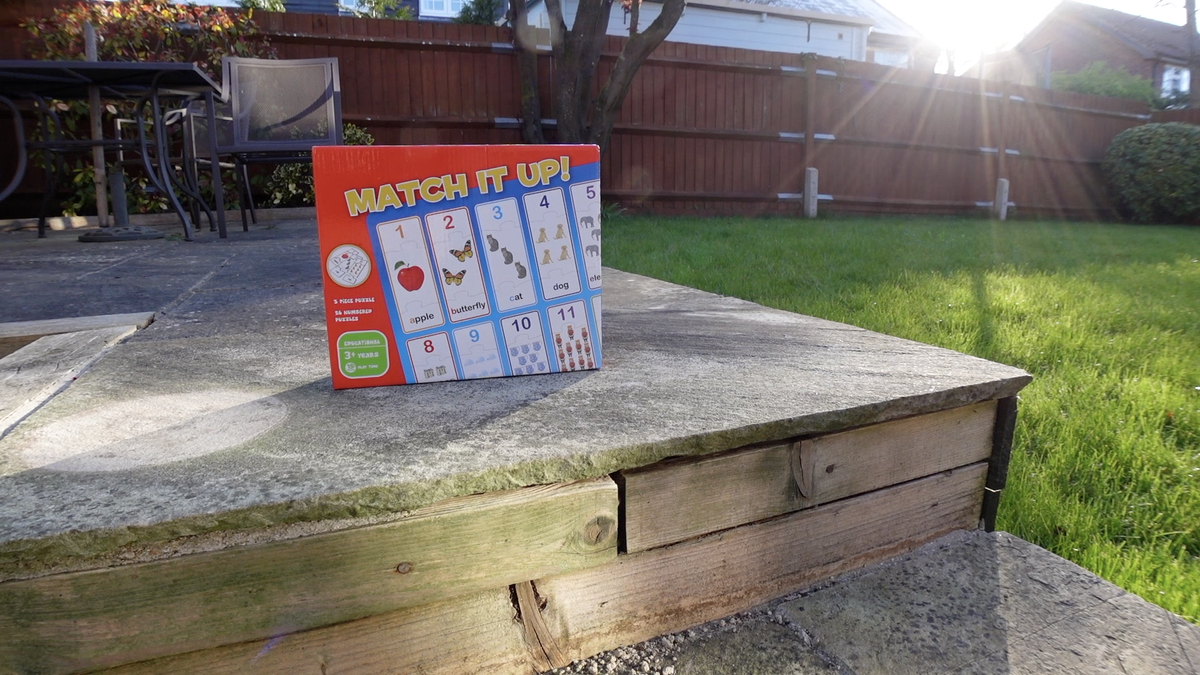
The game itself is simple. Teams of three to five people are given a set of puzzle pieces — a "Match Them Up" style puzzle where three cards must be correctly paired. The goal: reassemble the puzzle as fast as possible. The team with the fastest time wins.
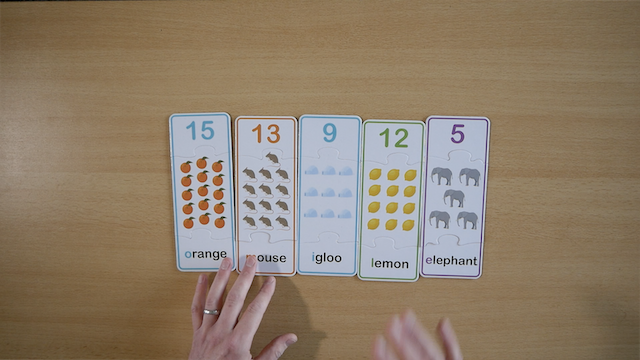
Before starting, teams are given time to discuss their strategy. Some plan extensively. Others dive straight in. That choice alone tells you something.
Crucially, not all teams receive the same puzzle. Some get easier configurations — fewer pieces, more obvious visual matches. Others get harder ones. Nobody is told this at the start. There is also another puzzle sat to the side to serve as a potential distraction for players.
The game is played across four or five rounds. Times are recorded visibly for everyone to see. Teams are asked to reflect after each round and adjust their approach before the next.
That is all. The complexity emerges entirely from the people and the dynamics — not from the game itself.
What the puzzle reveals
The exercise functions as a mirror. Familiar organisational behaviours appear almost immediately, stripped of the politics and defensiveness that usually obscure them.
Uneven work is invisible by design.
Some teams have harder puzzles. Performance differences appear quickly. Leaders instinctively compare results. Only later does the conversation surface the uncomfortable question: were the starting conditions actually the same? In organisations, this happens constantly — teams are compared on outputs without accounting for complexity, capability, or constraints.
Clarity of the end state changes everything.
Teams that can see the completed puzzle before starting consistently outperform those that cannot. The parallel to work is not subtle. When people understand what good looks like — what the finished state actually is — effort aligns. When they do not, energy scatters.
Feedback beats theorising.
Teams that experiment early, even imperfectly, learn faster than those who debate strategy at length. The time spent discussing how to approach the puzzle is often longer than it would take to simply try and adjust. This shows up in every session, in every sector.
Fun is the canary in the coal mine.
Laughter, competition, and shared purpose change how people engage dramatically. Energy rises. Collaboration improves. Work gets better — not because pressure increased, but because people were genuinely invested. When the fun disappears from a room, something has gone wrong in the system. When it returns, things start moving.
Systems improve, then plateau.
Teams get faster across rounds — then stop improving. Further gains require a different kind of change: not optimisation of the existing approach, but rethinking it. This is one of the most important dynamics in any change programme, and one of the hardest to see from inside the system.
People cut each other off more than they realise.
Ideas get dismissed before they are understood. Quiet people stop contributing. The person who moves quickest often dominates, regardless of whether their approach is best. These patterns are visible in real time — and impossible to deny when the team watches their own times plateau as a result.
Note: There are over 25 lessons that we cover in the seminar – the above are the most obvious ones.
What leaders take away
After every session, the same truths surface.
Change does not happen because leaders instruct people to change. It happens when people can see the future state, understand the current one, and are free to experiment without fear of looking incompetent.
Communication matters more than control. Consistency beats constant reinvention. Learning comes from trying, not theorising. And many of the obstacles to progress are created by the system itself — by the leaders who designed it, or allowed it to form.
A children's puzzle makes all of this visible in under an hour. No slides. No jargon. No defensiveness. Just behaviour, laid bare, in a context safe enough for people to see it honestly.
That is why it works.
The lesson is not to use puzzles at work. The lesson is to pay attention to how people actually experience change — and to design environments where clarity, focus, and genuine collaboration can emerge. When leaders do that, progress follows.
Not because people were pushed. But because the path was finally clear.
Where this sits in the Atlas
Orientation·Idea to Value·Communication·Creativity & Climate·Learning
Creative Soul Projects
There's a video that goes with this piece, on Creative Soul Projects. Same person, same observation — just followed on camera instead of on the page. Explore the channel.