The man who took out half of Sheffield
A brilliant, vastly interesting man, a telegraph pole, and half of Sheffield's phones. On the strange gift of fast feedback — and how much better work gets the moment the signal comes back quickly.

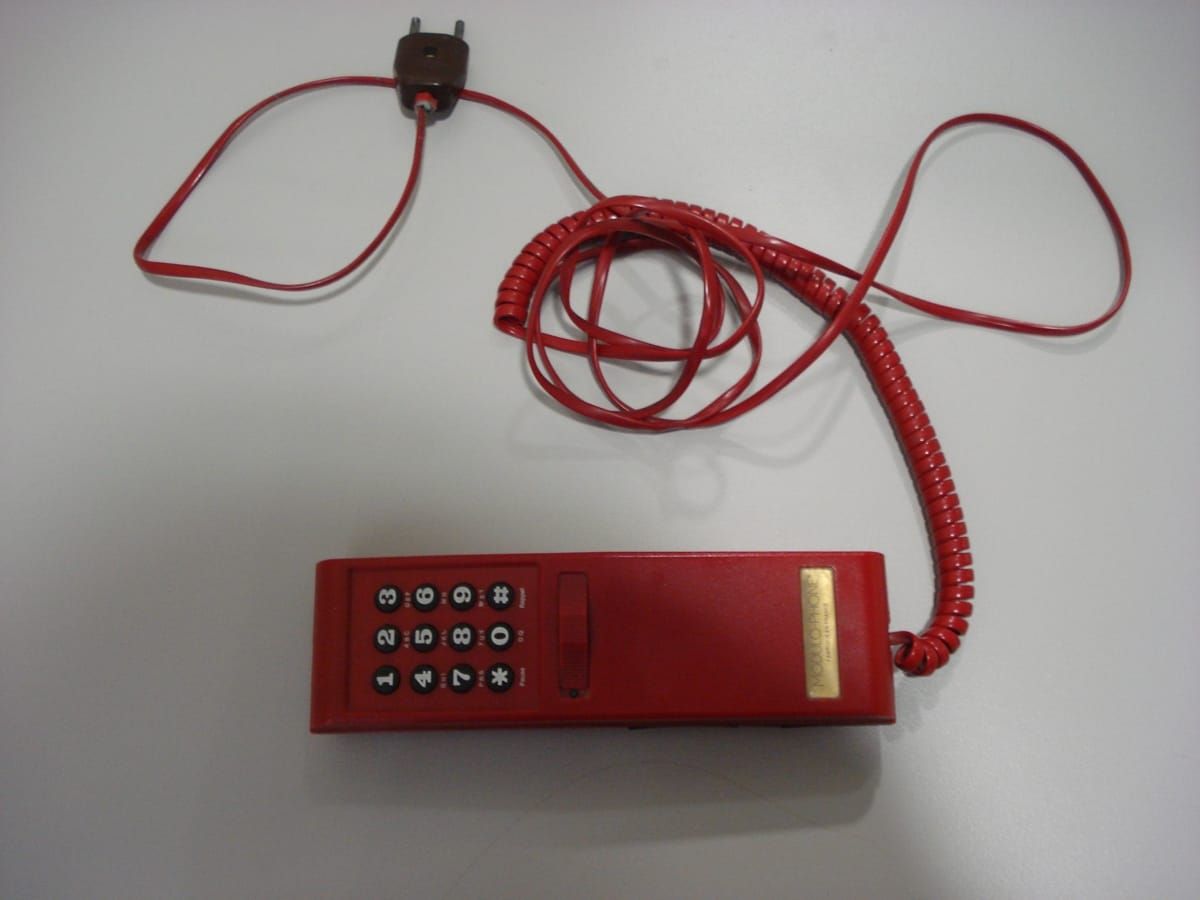
A friend of the family – I'll keep his name out of this, though a good part of Sheffield may still remember it – was one of the cleverest men I ever met, a deeply interesting man and one of the least equipped for ordinary life.
He would open crisps upside down, tearing along the sealed seam at the bottom of the packet, over the snooker table, every single week. He once ordered a tonne of cement and left it on the drive, uncovered, in the Sheffield rain, for three days. It took us two days to chip it all to pieces. He was brilliant with anything genuinely complicated, was one of the most academically intelligent people I have ever met, and completely defeated by the everyday.
Which brings us to the telephone. He wanted a second line in the house, and rather than wait weeks for an engineer he reasoned – in a technical sense – that the signal he needed was right outside his house. So, he climbed the telegraph pole at the end of his drive and wired himself in.
And took out the phone lines for half of Sheffield.
The feedback was magnificent. Immediate. Unarguable. Instant. Right there and then. He did a thing, and the consequence arrived at the speed of electricity – no committee, no review board, no quarterly slide pack, just an entire district of Yorkshire unable to phone anybody, and the phone company had a fairly solid sense of who to blame. He knew, within seconds, exactly how good his idea had been.
Almost no feedback in working life is that fast, thankfully. But it points at something worth playing with. Because the real difference between work that gets better quickly and work that doesn't isn't often talent, or budget, or strategy. It's how fast the feedback signal comes back. Shorten that, almost anywhere, and the work starts improving at a pace that feels remarkably unfair. If you choose to use the feedback that is.
There's a really interesting feel to how decisions get made in startups and small companies, and it's deeply fascinating to study.
A pricing change gets tested on a Thursday afternoon. The website copy gets rewritten over coffee and pushed live before lunch. A conversation with one customer on Tuesday morning has reshaped the pitch deck by the evening. A question about who the product is really for gets settled by asking five people on a call, not by commissioning a segmentation study and waiting for the slides.
None of that is ceremony. It's just what small teams do when the runway won't wait – every decision met with a small, quick test, and the result of the test becoming the next decision. The gap between I think this is true and I know whether this is true is measured in days. Sometimes hours. And there's a real momentum to working that way: you can feel the thing improving under your hands.
In a larger organisation, the same loop tends to stretch, sometimes for good reasons (compliance, safety etc), often because of inertia. A little distance creeps in between the person with the question and the answer to it, and a decision that might have been tested on a Thursday sets off instead on a tour of committees, project teams, and more meetings.
None of that is anyone's failing, and some may be much needed – there's a reason the phone company don't allow you to climb and pole and plug in – it's also just what happens as an organisation grows and the space of the loop widens.
But here's the cheery hopeful part: loop length turns out to be a decision far more often than a fate of nature. And a decision is something you can change, this week, sometimes without permission from anyone.
Feedback belongs at every bend in the river
As ideas move towards value, feedback ideally isn't a thing that happens at the end, or even every quarter. It's threaded through every stage of the life of an idea — and the more of those stages that carry a feedback signal, the more the work gets to teach us as it goes.
Watch an idea travel and you can see where it sits. As an idea turns into investment, the feedback is the customer conversation and the small test — the cheap, quick way to find out you're onto something before the real money goes in.
As investment turns into activity sets, it's the keen observation that we're about to invest a million but really aren't sure what we're getting at the other end, or the person who spots that the idea is still not fully formed yet we're approaching it with absolute certainty.
As activity sets morphs into the real creative action, it's the draft critique and the in-progress review, or the quick demonstration to the customer, nudging the work back before a small wobble becomes a mis-direction. It's the person looking at the original idea and noticing what's being built is nowhere near what was envisioned.
As the work turns towards shipping, it's the pre-launch test — the honest look that says yes, this is ready to meet the world. And as shipping turns into value, it's the usage data, the customer's response, the market signal that tells you the loop closed and the work landed, and the idea turned into something valuable.
At each of those bends, a signal either comes back to you or it doesn't. Where it does, the flow keeps correcting and improving itself, gently, all the way through the life of an idea. That – and not some secret sauce – is how a scrappy startup outruns a competitor ten times its size. Its loops are just shorter, everywhere, on purpose. The good news for everyone else is that this is entirely learnable.
This is why the four measures — delivery, finances, people, product — are so helpful. They aren't four boxes on a dashboard; they're four different kinds of signal, arriving at four different speeds, from four different parts of the system. The richness is a gift to us: between them, they let you hear almost everything the work is trying to tell you.
Delivery is the fastest, and the easiest to hear often. It tells you, in near-real-time, whether the work is moving at the pace you hoped – which means you get to adjust while adjusting is still cheap and rather satisfying.
Finances move more slowly, and often for dull, human reasons — internal politics, and the awkward distance between the investment and the work it's funding. External numbers lag by nature: a customer buys this month, the invoice settles next, the revenue books the month after. You can't fully cheat that nor would you want to. But within it, the sooner you see the trend, the sooner you can lean into it.
People measures tell you whether the team is doing ok whilst doing the work. These signals reward attention more than almost anything else. People are the engine of success; a warm word or a quiet check-in at the right moment is worth a hundred at the wrong one. Listen here often, and you catch the good stuff early too: the person hitting their stride, the pair who work unexpectedly well together, fun slipping out of the system.
Product and service measures tell you whether the thing you're building does what it was meant to. In digital work they're near-instant – usage, conversion, retention. Elsewhere they're slower, but still there if you look: support tickets, referrals, whether you can actually sell the thing you've made. It's the closest you get to the market telling you that the work was worth it.
Four streams, four cadences, four important sets of feedback signals. The healthiest organisations watch all four — before, during and after the work – and keep them separate but visible side by side, resisting the urge to average them into a single "performance" number.
Most feedback problems are wiring problems
Not all feedback is numerical, though, and some of the most useful never touches a dashboard. It travels through conversation – a colleague noticing a behaviour that's starting to bring the team down, a moment in a meeting when it's obvious someone is carrying too much, or doing their best work and ready for more.
Feedback needs communication to travel and right climate to work in. When these are good — where people can speak honestly, disagree without ongoing conflict, and say what they see without first pondering the political risk — the system gets access to human signals no metric will ever catch.
And this is the most optimistic and positive part of it: feedback is not blame, and it is not judgement. It's information – neutral until someone interprets it, and genuinely useful the moment it's met with curiosity rather than trying to find someone to blame. The same observation, in a business with a healthy climate, becomes a good conversation; in one without, it becomes defensiveness and silence. The observation is identical – the climate around it decides how it gets used.
Here's the fascinating part: shortening the loop costs almost nothing. It doesn't need new software or a reorganisation. It's mostly a handful of ordinary habits, built into the way the work already runs.
The first is a regular retrospective – not a formal meeting, just a dedicated space to reflect. What shipped? What didn't? What are the signals telling us about it? A team that does this broadens their awareness, and few things ahead of them come as a shock.
The second is to put the work in front of real customers. A rather positive move is to hand the work to someone outside the team — a customer, a stakeholder, an random stranger — and watch what they actually do with it. Ten minutes of that is worth an hour of internal debate, and it's usually far more fun, especially if you provide a good cup of tea too.
The third is to make the periodic review about what was actually promised, not a replay of activity or a status update. See what the team hoped for against what really happened, and ask, warmly, curiously and kindly about what you see — and the review becomes feedback on the planning itself, not about the team. The planning is often where a lot of the little improvements live.
The fourth is to let the systems you use speak. Every organisation is humming with near-real-time signals — support queues, product analytics, the sales pipeline — most of it parked in dashboards kept to the team who built them. The move isn't more dashboards. It's choosing the two or three signals that most directly tell you the work is landing, and keeping them somewhere the team can't help but see them.
And the fifth is the most human, and the most underrated: the deliberate conversation. The best leaders I've worked with hold short, informal chats across the week – not to check up on anyone, but to keep an open eye for signals to arrive through. Most feedback in any organisation travels this way first, in the corridor and over coffee, or in the posh bar over a glass of wine. Tend those conversations and you've built the fastest loop in the building.
Feedback compounds — in your favour
We tend to talk about compounding as something that happens to money, or to problems. But it happens to learning too, and that's the whole point here.
A signal caught in week one improves the work of week two. Week two, now a little better, sharpens week three. Keep the loops short and the improvements stack over the life of the work – a team that learns as it goes pulls quietly, then decisively, ahead of one that waits to be told. Nothing dramatic on any given day. Just a little better, a little smoother, week on week, until the difference is enormous.
Our family friend was an absolute gem. Sure, he had a great many failings, but slow feedback was never among them. He wired himself into the pole and knew, at once and beyond all doubt, exactly what he'd done.
We can't all find out that fast but we can build work where the signal comes back quickly, and use it for optimistic forward movement when it does. And when we manage that, the work gets better, faster, and the people doing it get to see it improving too.
Which is, when you think about it, most of the fun.
Where this sits in the Atlas
Orientation·Idea to Value·Communication·Creativity & Climate·Learning