Leadership and Work in Practice

A tech company builds a new platform. The launch is a success. Three years later the operational cost has exceeded the original investment several times over.

Overloaded systems are not capacity problems. They are flow problems. And the damage is almost always done upstream — in the rooms where leaders say yes to more than the funnel can finish.

The email arrives at seven minutes past four on a Thursday afternoon. By Monday the work is on someone's board. Nobody qualified it. This is the quiet cost of treating all demand as equal — and the discipline of filtering it against the future you have actually declared you want.

A compelling future means nothing if you avoid the present. Most organisations solve symptoms instead of causes — this piece explores how to see what’s really getting in the way.
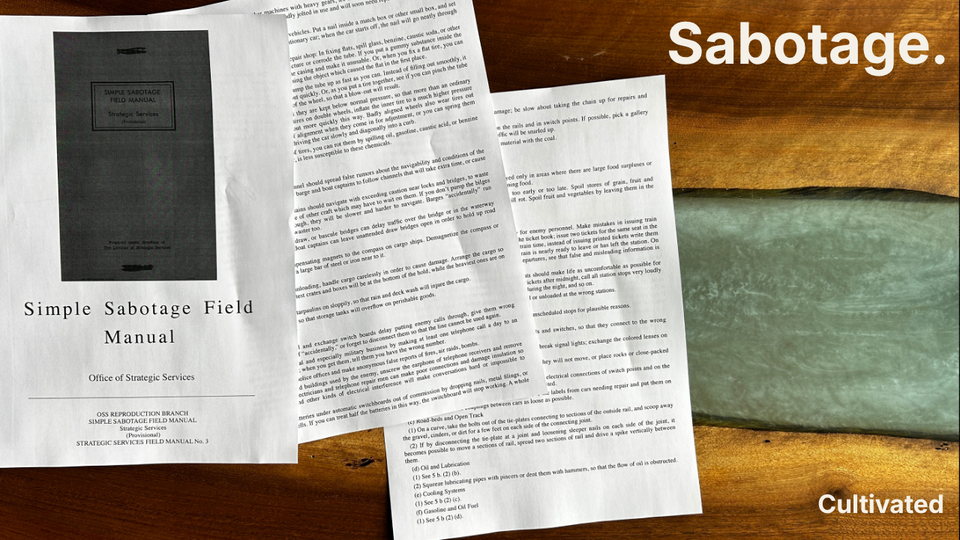
In 1944, the OSS published a manual on how to quietly sabotage organisations. Eighty years later, many of its tactics have become standard corporate practice. Read it and you'll recognise your own workplace.

Editorial space is infinite. Attention space is scarce. Most organisations get this backwards — publishing more content and creating less understanding. A practical case for designing communication for human attention rather than organisational efficiency.

When everything is urgent, urgency loses meaning. A practical exploration of the hidden human cost of competing priorities — how misalignment converts effort into exhaustion, and why clarity is an act of care rather than a management technique.

Plans, roadmaps, org charts — these are necessary objects. But the object is not the work. A thoughtful exploration of why leadership means staying close to reality rather than defending the model.

Customers whose complaints are resolved well often become more loyal than those who never had a problem. A short reflection on why problems are investments — and why trust is built not by perfection but by behaviour when things go wrong.