The answer was on the table
On the PO method, lateral thinking, and why creativity was never a gift some people have. It's a device you can pick up off the nearest surface.

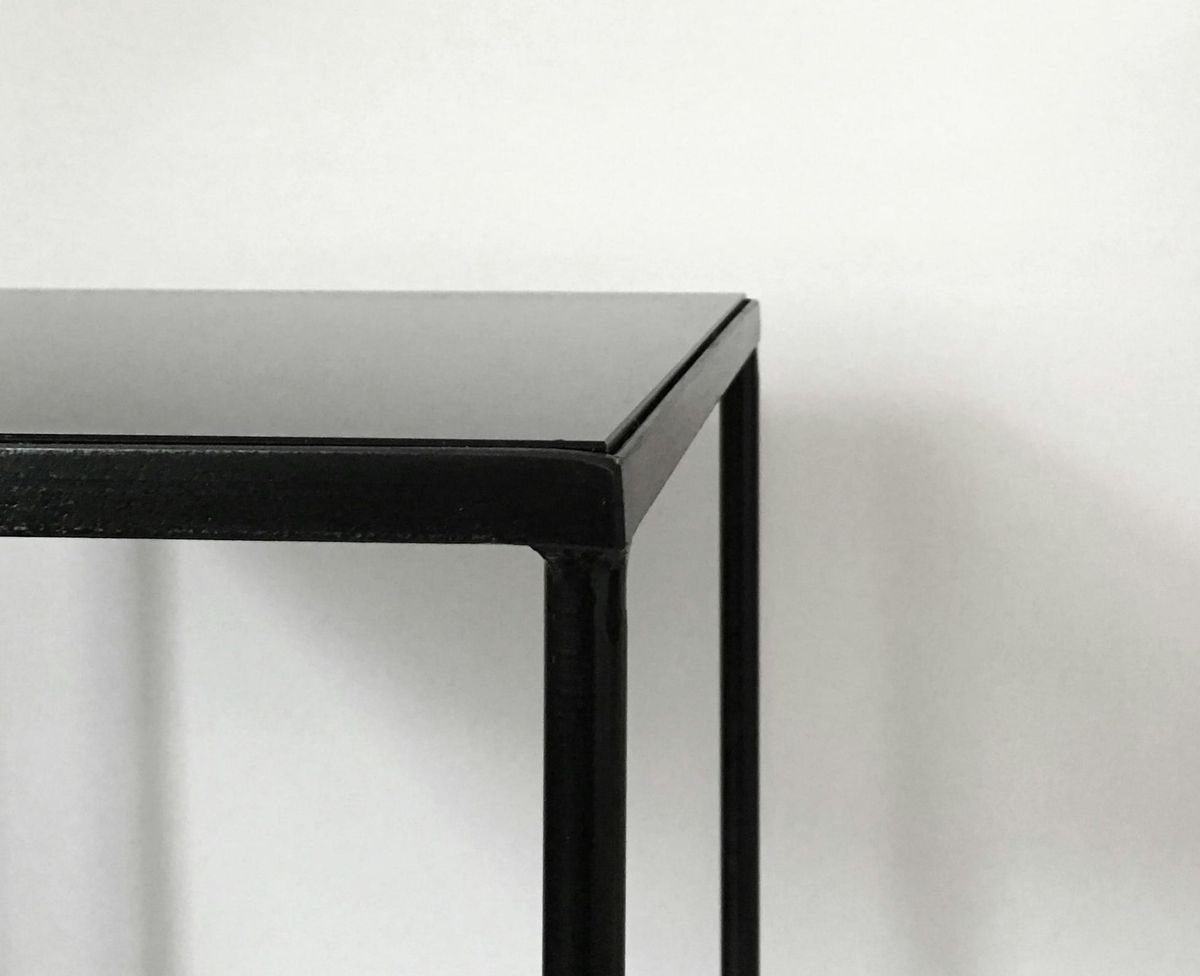
A team I was brought in to help had been navigating the same problem for months: their good people kept leaving. They'd done the sensible thing and talked it to death. Pay. Management. Workload. Progression. All the usual suspects had been examined from every angle, meeting after meeting, and each meeting had resulted in next to nothing actionable that thorough meetings often specialise in. Everyone was right, nobody was moving, and another good person had just handed in their notice.
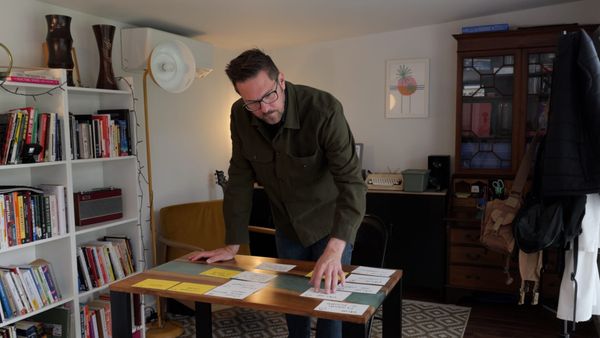
So I did something that, I'll admit, looked slightly unhinged. I asked them to describe the table we were sat around.
The actual table. The one in the room, with the coffee rings and the wonky leg and chewing gum underneath. I asked them to tell me, out loud, what a table is and what it does – and to indulge me, because I promised it went somewhere. There was the pause you'd expect, and a couple of glances that brought my thinking into question. And then, humouring me, they started.
A table has strong foundations and legs. It's stable. It holds weight. It brings people together. It gives you a surface to work on. It comes in all shapes and sizes. It holds other things up. It's made of different materials. And on and on they went, delightfully listing the things that came to mind when they looked at the table.
And here's the part I still find infinitely fascinating. We took those, one at a time, and pointed each at the problem – and the problem cracked wide open.
Foundations. When had anyone last checked whether these roles had clear foundations – clarity about what the job actually was and what it entailed, sensible succession behind, and in front of, them. Did each person get fair, ethical and consistent management? (They hadn't. Almost nobody had.)
Stability. People don't only leave for money; they leave places that feel chaotic and rudderless and meaningless – and this company had changed direction three times in a year, confusing everyone in the process. Brings people together. Did anyone actually feel part of something here, or just adjacent to a lot of other busy people? Did it feel like a team, or a bunch of people sat together?
A surface to work on. What were the real conditions and climate – the space, the tools, the room to think, the space to express themselves, a safety for them to explore their potential? All shapes and sizes. Why were we hunting for one retention answer when the thing keeping a junior person was nothing like the thing keeping a senior person? Holds things up. Did this place hold its people up – mentor them, notice them, catch them, grow them, support them, encourage them – or just leave them to fall?
Within twenty minutes, a room that had produced nothing in months had a page full of real, specific, useful thinking about why its people were leaving. Not answers, but insights and ideas to explore. And none of it, I should say, was radical. Most of it they half-knew already. What had changed wasn't the intelligence in the room. It was the table. Instead of looking at the problem with isolated fixes, they'd looked more broadly.
Which underlines something I've been writing about for years – no, not the management and HR and retention angle – the creative one. Creativity is not a personality type. It's not a gift that some lucky people were handed and the rest of us weren't. It's a way of seeing, and with a device – a thing you can pick up, deliberately, usually off the nearest surface – we can all be creative.
We insist on treating creativity as a trait, something you either have or you don't, which conveniently excuses most of us from ever trying. But the room that cracked the retention problem wasn't full of "creative people." It was full of tired, sensible ones who'd been handed a table, and the gift of seeing things differently.
The reason it works is worth understanding, because it isn't magic. Most of us are trained to converge, fast. We spot a problem and lunge at the first plausible answer, which tends to treat the symptom, solve for this afternoon, use only our own experience and manufacture two new problems for next quarter. Edward de Bono spent a career on the alternative – thinking sideways rather than head-on, widening the field of view before narrowing it again – and he gave the trick a name. PO. Problem plus Object.
You name the problem clearly first, because ambiguity here trips everything downstream. Then you grab something entirely unrelated – the more unrelated the better, because the whole point is that your mind has no ready-made path from it to your problem. You list what it does, how it works, its properties – six or ten of them, no filtering, no cleverness – simplicity and accuracy wins here. And then you force each one against the problem, absurdly and without flinching, or being embarrassed, which is easy to feel. Some of it will be total, unmitigated nonsense. Some of it will grab hold of you and stop you cold. Only at the very end do you put your ordinary judgement back into the mix and study what's revealed itself, which you wouldn't be holding had you marched straight towards a solution.
But the most remarkable reason it works isn't the sideways connections at all. It's the play. Nobody's problem or idea is on trial when everyone is simply describing a table. The defensiveness that clings to every "why are people leaving" conversation simply evaporates, because we're not talking about faults, we're talking about furniture, or toothpaste, or microwave ovens. People end up with a deep and honest answer, via the side door, playfully and with optimism, without ever having to defend it. Play releases pressure and does what pressure never can.
Not everyone loves it, mind you. Some take to it instantly. Some find it absolutely ridiculous. A few will fold their arms and announce it's a waste of time – right up until the outcomes change their minds, which they do far more reliably than any amount of explaining beforehand. In groups I tend to use a tin of a couple of hundred image cards instead of the furniture, because a random photograph jolts the frame just as well and is easier to pass around. I use it with speakers who swear they have nothing to say: write your one real skill on a card, pull an image at random, find the line between them. It works every single time. And if you've no cards to hand – well, there's always a table.
The table was never special. Neither is the camera, or the park bench, or whatever your eye happens to land on. The device is just a way of jolting a mind out of its own well-worn patterns, and it's available to anyone, in any room, in any moment they're willing to look a bit silly for thirty seconds. Creativity isn't the rare and mystical thing we've made it out to be. The most creative people in most rooms aren't a different species – they're simply the ones who, while everyone else is still staring grimly at the problem, have learned to see things differently, and reached over and picked up the table.
Where this sits in the Atlas
Orientation·Idea to Value·Communication·Creativity & Climate·Learning