A habit of buying notebooks
I own far too many notebooks, and I've downloaded every note-taking app going. On why the tool was never the system — and why a knowledge system that doesn't change your behaviour isn't doing its job.

Why I use an analogue personal knowledge management system
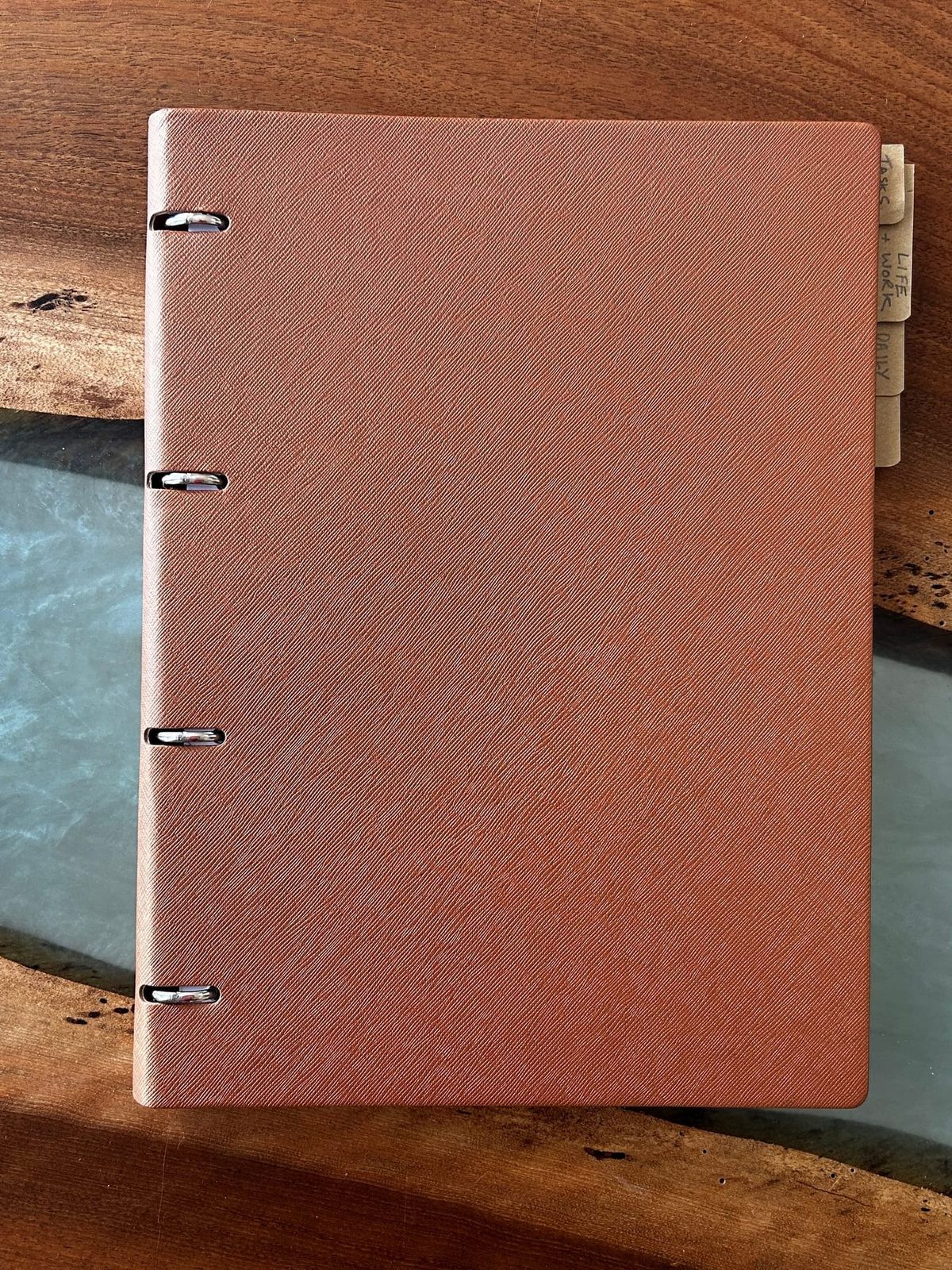
I have a habit of buying notebooks. They're everywhere in the house – on bookshelves, in drawers, in bags I haven't touched in years. Some hold useful ideas. Others hold shopping lists, and one or two contain optimistic plans for world domination.
Every so often I resolve to move the lot into a single digital system, the way the personal knowledge management industry keeps insisting I should. It's an industry that has persuaded a whole generation that the secret to a better life is choosing the correct note-taking app — which is rather like telling an aspiring novelist that the secret is the right pencil. So I dabble. I download the thing. I fall for it for a fortnight. Then I buy another notebook.
I tell you this to make a point it took me an embarrassingly long time to reach: the tool was never the system. My own has crept along for years, from loose scraps and half-filled notebooks toward something a little more deliberate, and the useful word in all of it is personal. These things have to fit your mind, your habits, your energy. Worth studying how other people organise their thinking, certainly – but only so you can keep the bits that suit you and cheerfully bin the rest.
Because here's what the app-of-the-month crowd tends to skip past. The point of a knowledge system was never to capture everything. It's to change how you think and act. If what you learn never shows up as better judgement, or a decision made differently, or an idea worth handing to someone else, then all you've built is a very tidy storage system.
And that's the trap I sat in for years while feeling ridiculously productive. Digital made me faster, and I mistook faster for better. I was capturing more and learning less – hoarding links and highlights and clippings, trusting that storing a thing was the same as understanding it. It isn't, and it never was. A knowledge system that leaves your behaviour exactly where it found it isn't doing its one job.
What fixed it wasn't a better app. It was slowing down, on purpose, mostly onto paper – not because paper is romantic, though it is, but because learning was never a volume problem in the first place. It's an integration and assimilation problem. Reading fewer things properly and then actually doing something with them has done far more for me than racing through a book a week ever did; the whole "hundred books a year" meme rather misses what reading was for.
And the friction of writing by hand drags an idea across the page, and through my own head, and back out in my own words, which is the moment it stops being someone else's information and starts being my knowledge.
There's a great deal more to say about why paper does this to thinking, and about the specific notebooks I keep as separate rooms for separate kinds of thought – but both have essays of their own, and I won't re-run them here. This piece is about the thing underneath both: analogue is where I think, digital is where I keep the archive, and the two only earn their place when the result is learning that actually changes behaviours.
The mechanics of how that flows – capture, curate, crunch, contribute – live in How I Manage What I Learn, which is the canonical version. Take this as the shorter companion: the confession of a man with too many notebooks who worked out, slowly, that the notebook was never the point. What you do differently afterwards is.
Seven reasons I work mostly analogue
Where this sits in the Atlas
Orientation·Idea to Value·Communication·Creativity & Climate·Learning
Creative Soul Projects
There's a video that goes with this piece, on Creative Soul Projects. Same person, same observation — just followed on camera instead of on the page. Explore the channel.
A video on my analogue knowledge management system