Using DISC to Understand Yourself, Others, and Energy at Work
DISC is a simple framework for understanding behaviour, communication styles, and energy at work — and for designing teams that play to human strengths rather than fight them.
Editor’s note: This essay sits within the Cultivated library on communication, learning, and how people and systems shape each other. Related pieces explore energy, behavioural design, and the conditions for good work.
Using DISC to Understand Yourself, Others, and Energy at Work
Over the years, I’ve found that most friction at work is not caused by strategy, tools, or structure. It is caused by mismatched expectations about how people think, decide, and communicate.
DISC is one of the simplest frameworks I’ve used to make those differences visible. It is not perfect, nor is it a diagnosis. But it is often uncannily useful as a starting point for understanding behaviour, communication, and energy.
What DISC Actually Measures
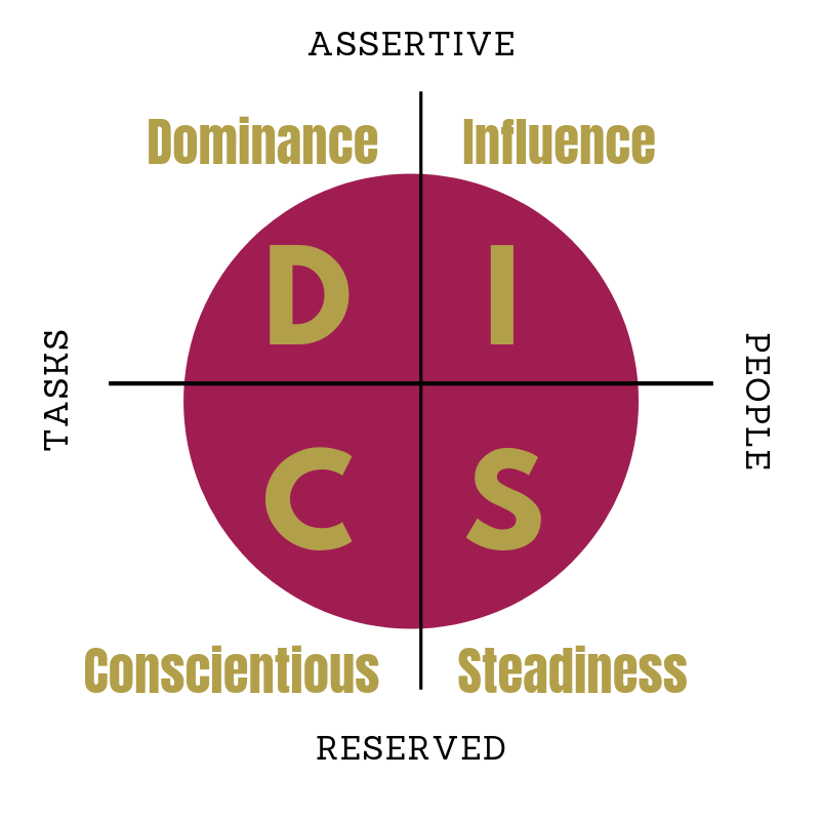
At its core, DISC looks at two dimensions:
How people respond to their environment — task-focused or people-focused
How people express personal power — assertive or reserved
From this, four broad behavioural tendencies emerge:
D — Dominance: direct, results-oriented, decisive
I — Influence: social, motivating, expressive
S — Steadiness: supportive, calm, dependable
C — Conscientiousness: analytical, precise, structured
Most people are a blend, with one or two dominant tendencies. The point is not categorisation. The point is awareness.
The DISC model
Knowing Yourself, Without Pigeonholing
When I first took DISC, I was strongly "I" — people-focused, communicative, energised by influence and connection. Running a business later required me to develop more D behaviours: decision-making, structure, and commercial responsibility.
DISC is not a box to live inside. It is a map of preferences — and a reminder that we can flex when needed without losing ourselves. DISC is a helpful way to understand our own career and personal growth too.
Behaviour and Energy
One of the most practical uses of DISC is understanding energy.
Different behavioural preferences draw energy from different activities. A high C may thrive in structured, analytical work and feel drained by constant social engagement. A high I may thrive in influence and collaboration and feel drained by detailed administrative tasks.
Misalignment between behavioural preference and daily work is a quiet source of burnout. People can work reasonable hours and still feel exhausted if their work consistently fights their natural tendencies.
DISC in Leadership and Teams
I once ran a DISC workshop for a leadership team in a telecommunications company. Almost everyone was a high D — fast-paced, direct, action-oriented. The CEO, however, was a high C — reflective, data-driven, and deliberate.
The mismatch created constant friction. Meetings felt rushed, decisions felt blunt, and the CEO was exhausted from performing outside his natural style. At one point, he realised he had been trying to become a D to survive his own team.
The solution was not for him to change his personality. It was for the team to change the system.
By hiring complementary behavioural styles — particularly I and S profiles — the leadership dynamic shifted. Meetings slowed down, decisions balanced, and the CEO stopped burning energy trying to be someone he was not.
Behavioural diversity became a structural advantage.
Working With Behaviour, Not Against It
Used thoughtfully, DISC becomes a practical lens:
Know your preferences and energy patterns
Flex communication toward others
Avoid using personality as an excuse
Design teams with behavioural diversity in mind
Align tasks with natural tendencies where possible
The goal is not harmony for its own sake. The goal is conditions where people can do good work without constant internal friction.
Final Thoughts
DISC is a simple entry point into self-awareness and team design. Its value is not in labels, but in the conversations it enables.
When people understand how they and others work, energy increases, communication improves, and unnecessary conflict dissolves. The system becomes more humane — and more effective.
A Note on DISC Tools
There are many DISC assessments available, including free versions from organisations like Tony Robbins and others. Any reputable DISC-based questionnaire can be a useful starting point, though results should always be treated as indicative rather than definitive.
Explore the work
This piece forms part of Cultivated’s wider body of work on how ideas become valuable, and how better work is built.
To explore further:
→ Library — a curated collection of long-form essays → Ideas — developing thoughts and shorter writing → Learn — practical guides and tools from across the work → Work with us — thoughtful partnership for teams and organisations
The link has been copied!
Your link has expired. Please request a new one.
Your link has expired. Please request a new one.
Your link has expired. Please request a new one.
Great! You've successfully signed up.
Great! You've successfully signed up.
Welcome back! You've successfully signed in.
Success! You now have access to additional content.