The Power of Appearance: Simple Clothing Choices That Change How You Perform
We like to believe what we wear doesn't matter. It does — and not only in how others read us, but in how we perform ourselves. On the research into clothing, confidence and "enclothed cognition", and the small wardrobe of triggers I use to change gear.

How clothing affects first impressions, what people think and how we perform
There's a Ted Baker blazer I always wear for keynotes. It's pretty old but I happened to be wearing it the first time a workshop of mine won "best tutorial" at a conference. Since that day the blazer has stopped being just a nice jacket, and become a switch.
When I put it on something in me becomes sharper, more focused, more aligned with the talk I'm about to give. I don't wear it for the audience, although it's a nice blazer, I wear it for me. I perform better in it, and that, in many respects is for the audience in the end anyway.
Which kind of goes against what we tend to believe about appearance and clothing. We often assume caring about our appearance is vanity – and done for other people. I understand the instinct, and I think it's wrong. What we wear doesn't only change how others read us — it changes how we perform ourselves.
Appearance is a lever we can pull, and a surprisingly powerful one at that. When we pull the lever it shifts things in two directions at once: outward, at the people looking at us, and inward, at our own minds. Both are worth understanding, so let's take them in turn – with the usual Cultivated health warning that none of this is gospel; treat it as an invitation to experiment with, not a set of rules.
Before you say a word
The first direction is the obvious one: other people. First impressions count, we all know that – what's less obvious is how much of the impression is made before you've opened your mouth.
Clothes, posture, expression, eye contact, smile: all of it is broadcasting, whether you meant to switch it on or not. In fact, it is impossible to not communicate. We are always communicating even when we don't actually say anything at all. It's the same principle I come back to in the effective workplace communication workbook – all communication has a purpose, an audience and a context – and clothing is simply communication you're doing with fabric.
The shirt or the jacket or the smart trainers you pulled on this morning are signals, and other people are decoding them instantly, through their own filter of social rules and cultural norms and personal bias.
You may call me old fashioned but it's why you wouldn't wear jogging bottoms to a wedding, and probably wouldn't rock up to a friends informal barbecue in a three-piece suit. Context sets the rules; within them, clothing speaks volumes.
And the research is fairly consistent about what it tends to say. People shown others in professional, trendy or casual dress reliably linked the professional look with competence, intelligence and success – while the more casual wearers scored lower on status but higher on being friendly and approachable (Angerosa).
It's a study with real limits though – it leaned on students, for one, and I was a student once and not convinced I had the most robust outlook on life – but it echoes a wider body of work.
A study of salespeople found that the more professionally dressed weren't just seen as better educated and more ambitious; even their products were rated as higher quality and more ethical (Stuart and Fuller, 1991). The lesson there is a useful and helpful one: it's the whole ensemble that does the talking, not any single item. It's not the tie, or the pocket square, or the nice shirt; it's all of it combined to create an outfit. I find this myself, when I put on a suit, it changes how people engage with me – and, as we'll get to, how I engage with myself.

I'm not one to claim things that aren't true. So, one important caveat sits underneath all this. How others read you is never fully in your control; they're decoding through filters you don't control. Their upbringing, beliefs, expectations, thoughts, history, experience. What you can control though is the alignment to purpose, audience, context, and your own comfort.
Formal clothes tend to signal competence and authority; casual clothes tend to signal warmth and openness; both are genuinely useful depending on what the moment needs. But the golden rule is authenticity and personality. Clothing is an extension of how we express ourselves (University of Ljubljana et al., 2014), and if you feel like a fraud in the outfit, that will ooze out of you faster than any well-chosen belt can cover.
The bit that surprised me: it changes you
Here's where it gets rather interesting, and where the blazer comes back in. Because clothing doesn't stop at how others see you, it also affects how you see yourself.
Researchers found that people dressed more formally reported a measurable rise in what they called "felt power" – an inner sense of authority that, in turn, sharpened their focus and lifted their performance on cognitive tasks (Slepian et al., 2015). The clothing wasn't just changing other people's impressions of them. It was changing their own thinking.
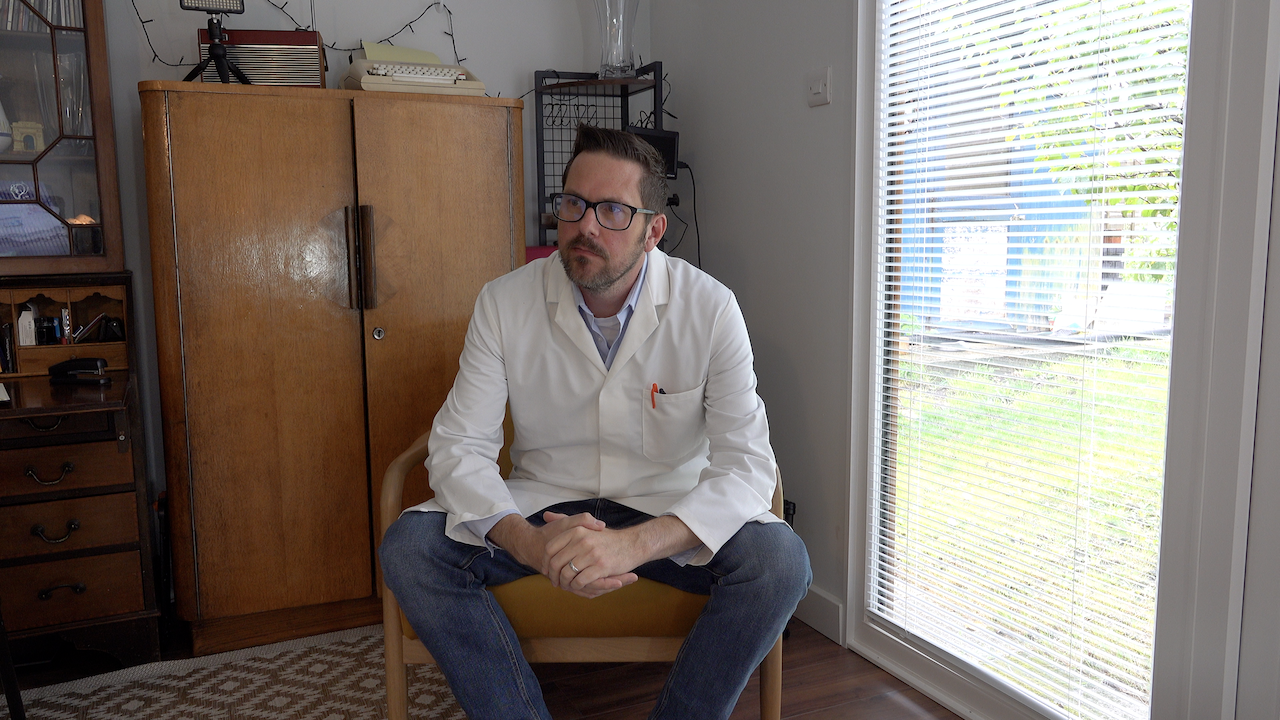
And then the study I find very interesting indeed. Participants were asked to wear a white lab coat and given tasks demanding close attention. When they were told it was a doctor's coat, their performance improved. When they were told the very same coat was a painter's coat, it didn't (Adam and Galinsky, 2012). Same garment. Different meaning.
They named the effect "enclothed cognition", and its lesson is a wonder marvel: the influence isn't really in the cloth, it's in the symbolism we've stuck to it – and it only works on two conditions. The clothing has to carry a meaning, and you have to actually put it on. Which is why uniforms are so potent: they don't just tell the world what role you're in, they tell you, and the role reshapes your behaviour.
I'll be honest about the science here, because it's the sort of thing that gets over-claimed on Instagram easily: several of these studies are small, and the lab-coat effect in particular has proved remarkably slippery to reproduce cleanly.
So hold it all lightly. But the direction of travel is intuitive, and easy enough to test on the only subject you fully control – yourself.
My wardrobe of switches
Which is exactly what I've done, with more enthusiasm than dignity, after all, I am a sartorial disaster. Over the years I've built up a little set of outfits that each mean one thing, and putting them on becomes a magical switch.
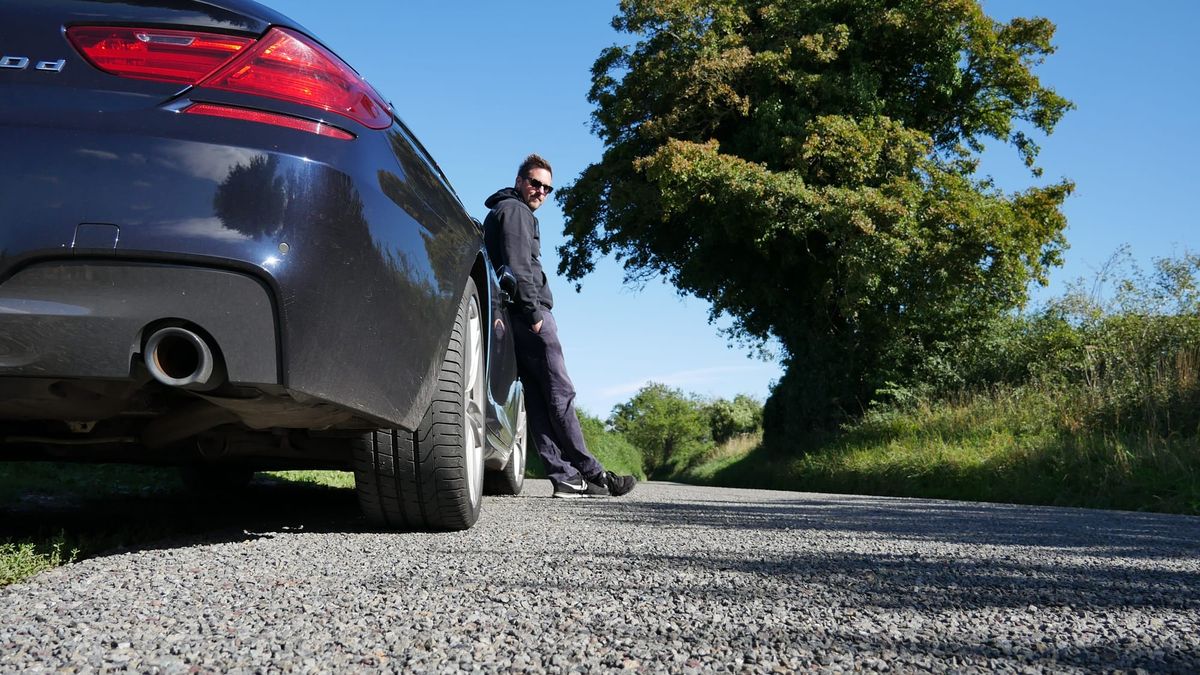
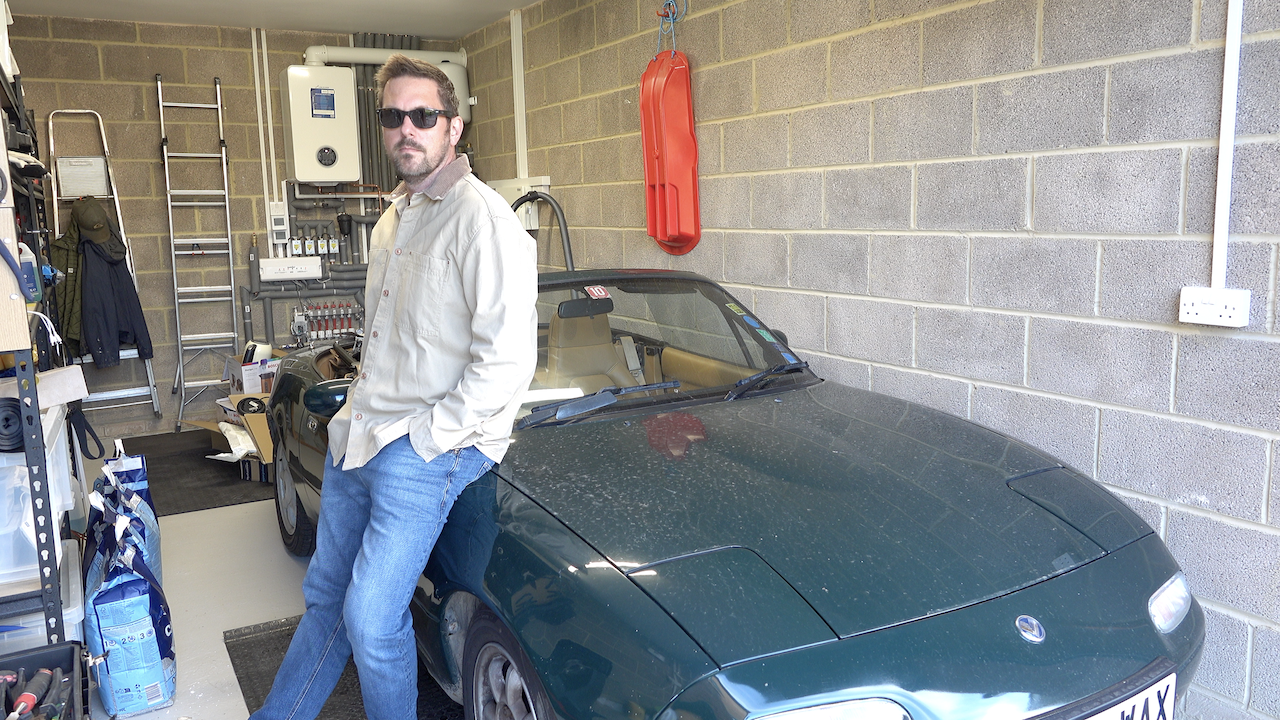
There's the presentation blazer, the "best tutorial" one, which puts me straight into high-performance speaker mode the moment it's on. There's a driving outfit – a jacket, jeans and a pair of brown Converse – that somehow sharpens my focus behind the wheel; make of that what you will.
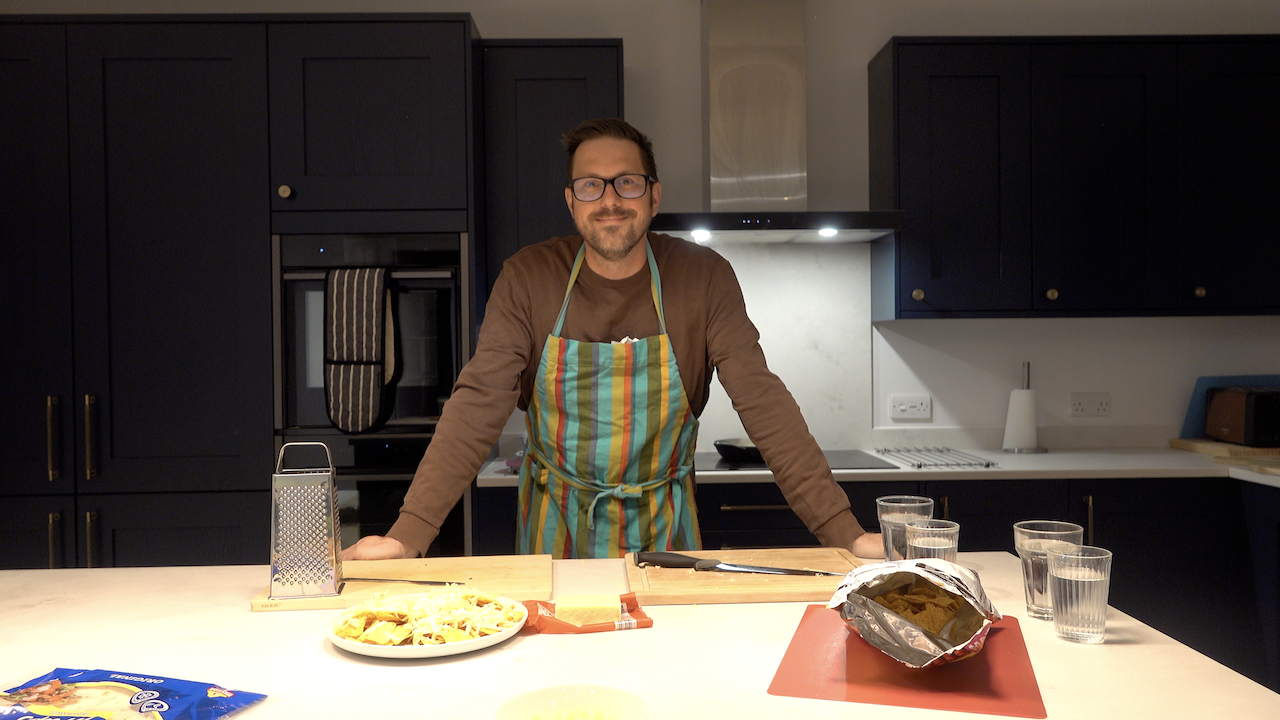
For a day of DIY it's Dickies work trousers, steel-toe boots and an ancient Sainsbury's jumper that's seen several renovations. This outfit announces "work mode" before I've picked up a single tool. Gym clothes mean "no excuses" – the outfit makes saying yes to working out easier. When the apron goes on, yes, I use an apron, my attention narrows to boiling an egg and not burning the toast.
Sales and business development call for something more formal, which helps me show up with a bit of authority and, conveniently, helps the other person trust me a little sooner. And for journaling, I wear a lab coat. (I'm joking. Or am I?)
Every one of them is a cue, a kind of environment affordance but through clothes. And the wonderful thing about a cue is that it compounds: each time you pair the outfit with the behaviour, the association deepens, until one day putting on the blazer stops being preparation for the work and starts being the work switching on. (If wrestling a talk into shape is the work in question, that whole business – dressing for the talk also – is the subject of Zero to Keynote.)
Dressing with purpose
Thankfully, this is not about fashion, which is a relief because I'm not sure you should take style advice from me. It suggests that you treat clothing as a form of behavioural design. As such, I thought it worth relaying three principles that might prove helpful.
Match the context and the purpose – and when you're genuinely unsure, I suggest leaning a smidge more formal than less, because it reads as competence. It's also easier to relax down formal into more warmth by shedding a few formal items, which is a much easier move than scrambling the other way trying to make informal look smart.
Use clothing to support your confidence, which means wearing what feels authentically like you; the confidence comes from alignment, never from a fashionable costume.
And build yourself a few symbolic uniforms -- assign a consistent outfit to the handful of activities you most want to do well, and let repetition turn them into reliable triggers for focus. It works in exactly the same way a dedicated space does: the writing desk that invites writing, the blazer that invites the keynote, the chair that invites reading, the workout outfit that invites lifting weights. Cue, then behaviour, then, eventually, automatic. It's a ritual.
So, the next time you're facing something that matters – an interview, a talk, a workout, or just a day when you've got epic stuff to do – it's worth asking the small, slightly silly, genuinely useful question: what outfit gives me the best chance of showing up at my best?
The answer will be different for each of us, which is a relief, and different for each task too. But the principle holds for everyone. Dress to impress if you like – but more usefully, dress to express, and dress to perform.
And in the spirit of this, and being a fashion disaster, here are some stills from the video that accompanies this over on Creative Soul Projects.

Where this sits in the Atlas
Orientation·Idea to Value·Communication·Creativity & Climate·Learning
Creative Soul Projects
There's a video that goes with this piece, on Creative Soul Projects. Same person, same observation — just followed on camera instead of on the page. Explore the channel.
Bibliography
Adam, H., Galinsky, A.D., 2012. Enclothed cognition. Journal of Experimental Social Psychology 48(4), 918–925. https://doi.org/10.1016/j.jesp.2012.02.008
Angerosa, O.N., n.d. Clothing as communication: how person perception and social identity impact first impressions made by clothing. https://www.academia.edu/35552038/
Slepian, M.L., Ferber, S.N., Gold, J.M., Rutchick, A.M., 2015. The cognitive consequences of formal clothing. Social Psychological and Personality Science 6(6), 661–668. https://doi.org/10.1177/1948550615579462
Stuart, E.W., Fuller, B.K., 1991. Clothing as communication in two business-to-business sales settings. Journal of Business Research 23(3), 269–290. https://doi.org/10.1016/0148-2963(91)90034-U
Todorović, T., Toporišič, T., Pavko Čuden, A. (University of Ljubljana / University of Primorska), 2014. Clothes and costumes as form of nonverbal communication. Tekstilec 57, 321–333. https://doi.org/10.14502/Tekstilec2014.57.321-333