Two people invented the telephone
On the same February day in 1876, two men filed patents for the telephone, hours apart. Which tells you something about genius: the idea was never the rare part. On why the lone-genius story is almost always a team with the room cropped out.

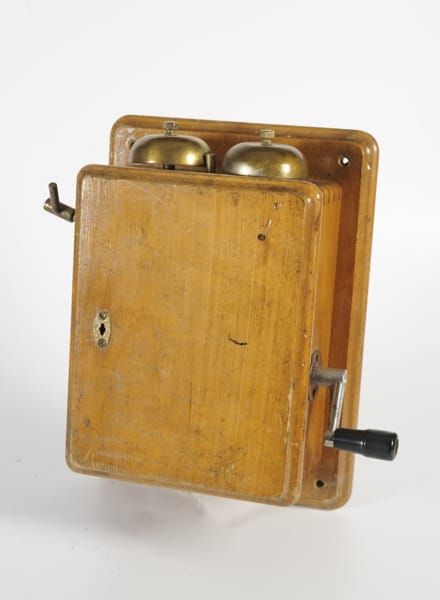
On the 14th of February 1876, two men turned up at the United States Patent Office to lay claim to the telephone. Alexander Graham Bell filed his application; Elisha Gray filed a caveat for a strikingly similar device. Hours apart. The same invention, the same morning, from two people who weren't collaborating and barely knew of each other. Bell got the credit, the fame, and eventually the company. Gray got a footnote and potentially a lifelong sense of grievance.
The remarkable thing is the timing. How had the telephone become so ready to be invented that two people arrived at the patent office with it on the same February morning?
And it isn't a freak event either. Newton and Leibniz built the calculus independently, then spent years feuding over whose it was. Darwin sat on natural selection for two decades until a letter arrived from Alfred Russel Wallace. He was in the Malay Archipelago, sketching more or less the same theory. The pair of them ended up presenting it together. Oxygen was discovered two or three times over. The history of ideas is full of these; the sociologists of science call them "multiples," and there are hundreds of them on record.
Which tells you something rather uncomfortable about the whole idea of genius. Because if the same insight keeps arriving to different people at the same time, then the insight was never the rare and magical thing in the first place. And they likely weren't the sole geniuses either. The ideas was, in a sense, just there – in the air, in the accumulated knowledge, in the problems that had become visible to anyone paying attention. The idea wasn't scarce. What was scarce was the noticing, and the doing.
We prefer the other story, of course. We love a lone genius. We picture the solitary figure struck by a lightning bolt of inspiration nobody else could summon. The inventor alone in the workshop, the artist alone in the woods, the founder who saw what no one else could see. It's a wonderful story. It's just, on close inspection, almost never true.
Look properly at nearly any celebrated act of creation and the lone genius retreats into a crowd. The Beatles are four names on a record, but there's a fifth in every meaningful sense – George Martin, arranging, editing, translating what they played into what you actually hear – and behind him a studio with engineers and specialists. Edison, the very icon of the solitary inventor, ran a laboratory of thirty-odd people at Menlo Park; "Edison invented the light bulb" is a headline draped over a team. Every auteur's film, and my favourite is La Haine by Mathieu Kassovitz, is the work of hundreds of people whose names scroll past while you're getting your coat. And every solitary scientist is standing, whether they say so or not, in a conversation with plenty of others – borrowing, extending, arguing, building on the person before.
What we call genius is, far more often than we admit, noticing, seeing, coordination, borrowing, persistence and a great many people – followed by a story we tell afterwards that focusses on one face by cropping the rest out of the photograph.
Even the word rather gives the game away. Genius comes from the Latin – a genius was originally a guiding spirit, a generative force that flowed through a person from somewhere outside them. Not a possession. Not a personal trait you either had or didn't. Something larger, more ephemeral, moving through you. Over the centuries we shrank it into a rare and intimidating gift owned by a special few, which is a pity, because the older meaning was closer to the truth: the good stuff was always coming from beyond the single person.
And this matters far more than a pub-quiz answer, because the myth is overly discouraging. If genius is a rare gift handed to a chosen few, then creative work is, by definition, for other people – the anointed, the special, not you. But if it's a practice – something made between people, in the right conditions, out of borrowed, half-formed and combined ideas, and things seen – then it belongs to anyone willing to do the work.
Rick Rubin describes creativity as a state anyone can reach by slowing down and paying proper attention; Steven Pressfield has it as insights circulating constantly, available to whoever will pull the idea down, sit down, overcome resistance and do the work of bringing them into form. Both are really saying the same generous thing: the ideas are there, the door isn't locked, and it never was.
Which shuffles where creative power lives. It isn't in the extraordinary individual it's in the climate – built for combining insights, ideas and thoughts. The collision of different backgrounds, skills, experiences, insights and personal temperaments. The willingness to say the potentially silly thing out loud knowing it's safe to do so. That last one isn't a fluffy sentiment by the way; it's the driving mechanism. When people are afraid of being wrong too early, they share only the finished, defensible, likely boring idea – and the fragile, half-baked, ambitious ones, which are almost always the better ones, stay locked in people's heads where they stay.
A creative group is simply one where the unfinished idea is safe enough to be shared, diverse enough backgrounds of people are in the room to combine it, and somebody is willing to do the wholly difficult work of building it before anyone's sure it'll pay off. Bands work like this. So do writers' rooms, and laboratories, and the good startups, and – on a good day – every company.
So genius isn't a person. It's a room, a space, a place. It's what happens when people notice together, borrow freely, argue well, discuss with curiosity and build the thing before they're certain of it – in the right climate and with the right conditions to do so. Not lightning striking the chosen one. Not lone figures touched by spirits. Not the chosen one selected by a deity. Just good conditions, a great many hands, and the willingness to bring an idea into the world knowing you might get some of the credit and none of the certainty.
Two men invented the telephone at around the same time, and filed the patent on the same February day. We remember one of them as a genius – but neither was a solitary spark. The lone-genius story flatters exactly one person and hides everybody else. The truer story is less flattering and far more pleasantly generous – because it has room in it for you.
Where this sits in the Atlas
Orientation·Idea to Value·Communication·Creativity & Climate·Learning