Every Organisation Has Someone's Initials On It
A wall in Winchester bearing initials dating back to 1772 offers a reminder that every organisation is built on decisions made by people who came before us.

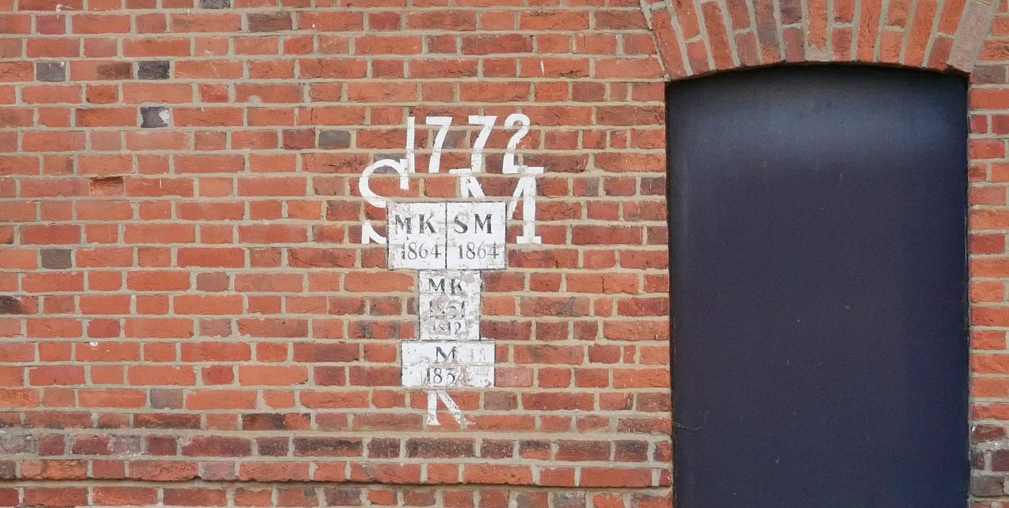
The Wall in Winchester
I was wandering around Winchester with a camera looking for interesting things for some b-roll, when I found a wall that had been accumulating initials since 1772.
The film was about design — specifically the idea that design isn't just what things look like, it's how things work.
How you structure a team, run a meeting, build a process, ship your products / services to customers. The often invisible (or under studied) architecture of organisations.
Editor's note — where this sits in the Atlas
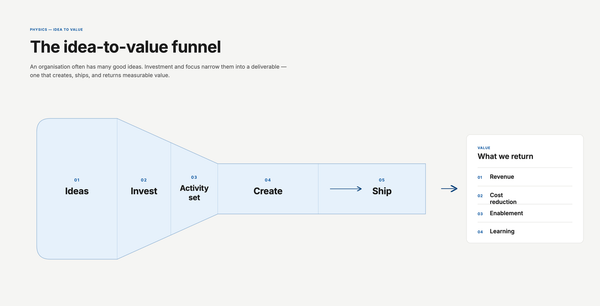
The Idea to Value system — five layers
Read all articles →
Design with intent
This wall had markings going back to 1772. Initials and dates, each set added by whoever owned or managed or was responsible for this corner of the city at the time.
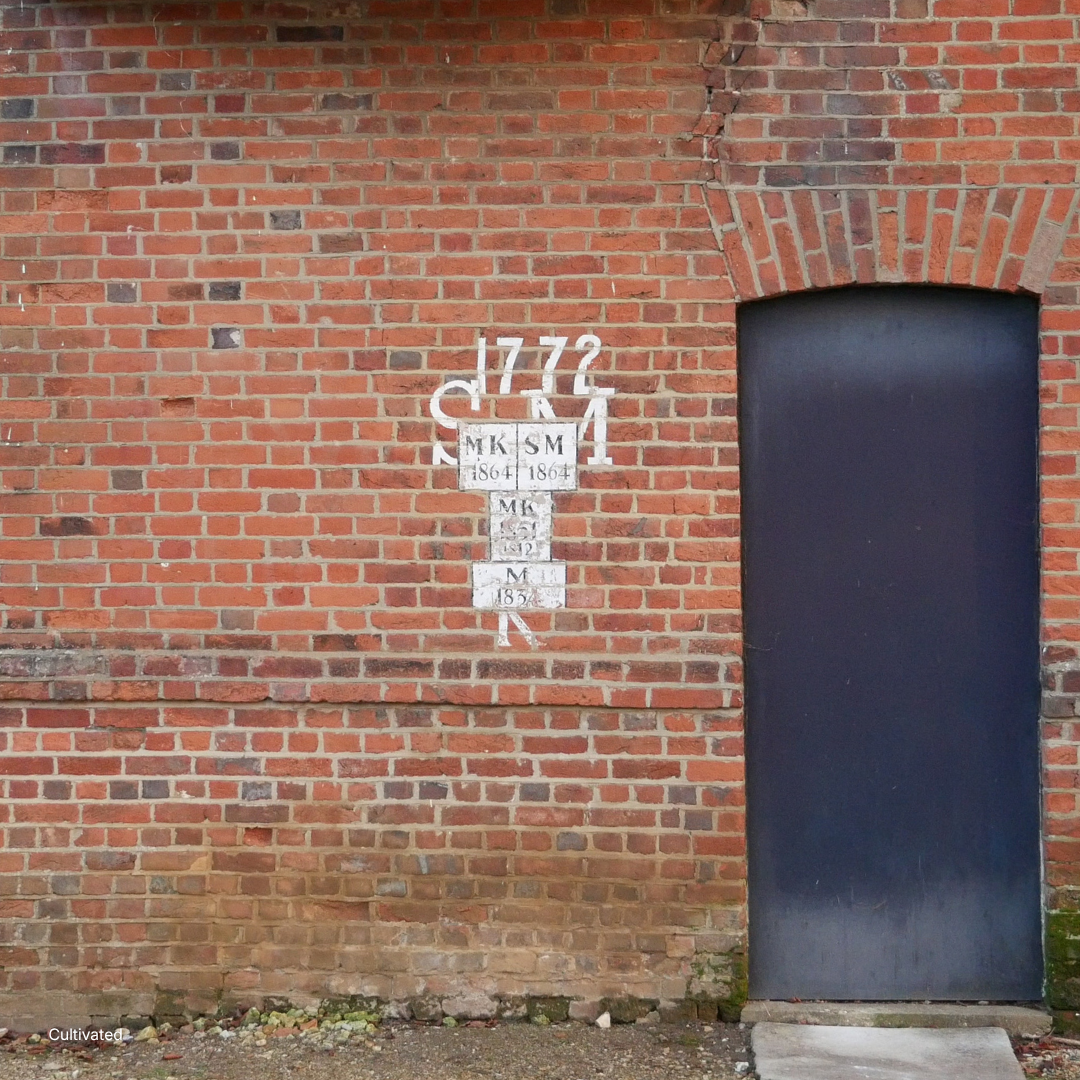
MK, SM. 1864. Then again, later. Then again. Someone kept adding to it, presumably because someone before them had started it and it seemed like the thing to do.
The door next to the wall — that blue, that arch — somebody chose that too, at some point. It fits so perfectly you'd assume it was always there.
I stood there for a while longer than necessary for a B-roll shot, so much so someone came up to me to ask if I was OK. And what I was looking at. And why I was so intrigued by it. And whether I was ever going to move on.
The markings were visible signs of history, made public.
On Custodianship
Every organisation has someone's initials on it, maybe not from 1864. Someone made a decision, it worked well enough, and now it's just how things are done.
The processes that you follow. The meetings that often don't feel productive, but have just been the way things happen for years. The reporting lines, the organisational structure, the approval chains. Even the office layouts, locations, choice of furniture and orientation of different spaces, were all someone's stamp on the business.
None of these appeared naturally. Every system is designed — either by intention or by inattention.
Most design decisions in organisations are invisible in exactly this way. We often inherit much more than we design. Until you go looking. And when you do go looking you get to ask whether it should be like this still, or whether something needs to change.
It struck me that one day someone may add another set of initials to that little corner of Winchester. The question, I suppose, is what marks we're leaving behind in the places we're responsible for. And what does it mean to be a good custodian of what we are responsible for?