When a Meeting Isn't a Meeting
Most meetings that fail aren't badly run. They produce agreement instead of alignment — and the difference between the two is what people do on Thursday.

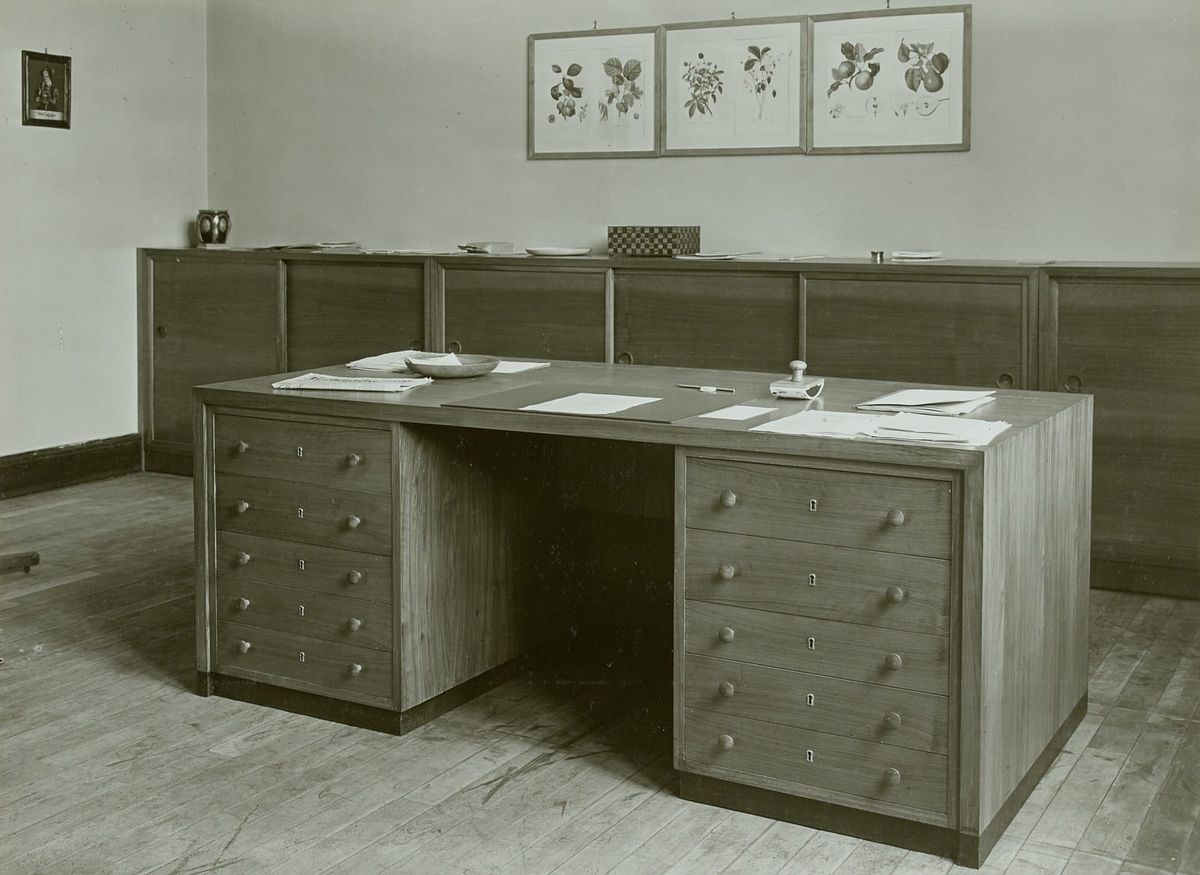
In the room that day were four people making a decision that would shape the business for years.
Three Vice Presidents of Technology — one of them me — and the Senior Vice President we all reported to. On the table: which cloud platform a multi-million-pound financial service would be built on. In the wider department were five hundred people who'd build inside whatever we chose, taking the seed of an idea and turning it into something of value.
By the seventh meeting on the subject, roughly five thousand pounds of salaried time had gone into that room alone. And two teams were building on two different platforms.
I think about that room often. What I couldn't name at the time is that the meeting was never doing the thing a meeting does. It had a title, an invite list, a recurring slot and a room. It had everything except the real work.
Editor's note — where this sits
This piece looks at meetings as communication events — with a purpose, an audience, and a context — and at what happens when the ritual outlives the reason. It sits in the Wiring layer of the Idea to Value system — the layer concerned with how meaning moves between people, and how clarity either holds or fragments. It also touches the Physics layer: clarity enables alignment, alignment enables momentum, and momentum is what turns an idea into value.
The Idea to Value system — five layers
What a meeting actually is
A meeting is a dedicated time and space set aside because a thing can no longer be settled by one person alone. That's the whole reason the form of a meeting exists. If somebody could make the decision alone, there would be no need for a meeting.
Which makes it a communication event — and like every communication event, it has a purpose, an audience and a context.
The shape is consistent whatever the meeting is called. Information goes in. A decision gets made — in the meeting or after it. Clarity is what the meeting builds along the way. And alignment is what it exists to create: not just among the people in the room, but carried by them to everyone who wasn't there.
Clarity is what allows alignment to happen. Alignment is what allows the work to move. The work moving is what turns the idea into value.
A job interview works exactly this way, and it's the cleanest example I know because both sides are visibly doing it.
Two parties arrive with a decision to make. Over the conversation, clarity comes through — about the person, the role, the company, the work. Alignment happens afterwards. The hiring team align with each other, or find they don't. The candidate aligns their own thinking and says yes, says no, or quietly withdraws.
Nobody would describe an interview as a status update. Nobody would run one without knowing what they were trying to decide. Nobody would invite fifteen people who had nothing to contribute.
We know how to do this. We just stop knowing it the moment the meeting acquires a name.
When the ritual outlives the purpose
I've had agile practitioners tell me a stand-up must run a certain way. You can't sit down. Standing is what keeps it short.
That may well be true. The mechanic may work. But the purpose of a daily stand-up is clarity and alignment about the immediate work. Standing is a device in service of that.
When the device becomes the rule and the purpose goes unexamined, you can run a technically perfect stand-up that leaves ten people with ten different ideas about what happens next. I've seen beautifully run stand-ups with twenty-five people, throwing a ball to the next person to check they're paying attention, and giving nothing but status updates — the same updates already visible on the Kanban board.
Quarterly planning goes the same way at scale. I've sat in sessions with more than two hundred people that were, in substance, a long sequence of status updates. Not because anyone intended that. Mostly because the real status information didn't exist anywhere else, so the room became the place it got assembled — and the decisions the quarter actually turned on never got made. Two hundred people leaving misaligned, frustrated, with a hefty cost line on the P&L for the privilege.
That's the common substitution. A meeting that should produce alignment produces a status update instead. Or a discussion, which feels productive and ends with nobody committed to anything. Or a meeting that becomes another meeting because nothing important was actually discussed, or the information wasn't there, or nobody in the room was clear on what was being talked about. Or, as in that boardroom, a decision that was actually a choice.
If you can't see the current state of your delivery, your products, and your services from the data you already have, that's a real problem. A meeting isn't where it gets fixed. Standing meetings held to transmit status tend to grow watermelon reporting: green on the outside, red underneath. Data should absolutely surface in a meeting — as the material a decision gets made from, rarely as the meeting's output.
And the quality of a conversation rarely rises above the quality of what's brought into it. Thin or partial information doesn't stop a room reaching clarity. It just means the clarity points the wrong way. Alignment built on wrong clarity still creates momentum. That's what makes it expensive.
This is the Wiring layer of Idea to Value — how meaning moves between people, and what happens to an idea when it doesn't.
The false decision
Back to the room.
One VP had built his career on Amazon Web Services. The other had built hers on Microsoft Azure. Both had earned their positions through real technical achievement, and both had good reasons for the preference they carried — a preference is what deep experience leaves behind, and neither was wrong to have one.
Both cases were well made. Researched, argued, honest about the trade-offs, clear about whether the platform met the need now and in ten years. When they asked me, I said I thought both would work. I've never been a technologist first. I care about whether we're building the right product and whether it serves the customer, not whether it uses a specific technology. I've seen products built on the latest tech fail to return the value expected.
From where I sat, the options met the need, sat in the same cost frame, and didn't differ enough to justify what the room was about to spend on the argument.
The SVP considered it, said Microsoft Azure, and we left. My team opened Azure accounts. The Azure team did the same. The AWS team started building on AWS.
He called another meeting. The AWS case had been sharpened, and the SVP switched to AWS for everyone. I asked him twice whether he was sure. I asked the room whether everyone agreed. I asked the Azure advocate directly, more than once, whether she was moving her team across. She said yes. The SVP said yes. We re-oriented.
Her team stayed on Azure.
Something was settled in that room seven times over and nothing was ever decided, because the room kept producing agreement instead of alignment.
Agreement is what people say. Alignment is what they do on Thursday.
The meeting had inputs. It had clarity over the issue at hand. It had a conclusion. It just never had the output.
The bill arrived slowly. Two platforms, a divided estate, migrations harder than they needed to be, duplicated licensing, support and maintenance running in parallel for years, and several hundred people watching an argument they had no part in.
Whatever momentum those teams had was spent inside the disagreement rather than on the work that would have turned the idea into value.
Mottainai
There's a Japanese word I keep coming back to: mottainai. A respect for the worth of a thing, and the regret you feel when that worth never becomes what it could have been.
I don't use it here to prosecute anyone in that room. Everyone in it was capable. Everyone was acting on something they'd earned. What I could see — and what I've seen since in a hundred rooms with different names on the invite — was the distance between what those teams were capable of and what the arrangement around them allowed.
Two strong cases. Two committed teams. Real care on all sides. And none of it becoming what it could have been, because the room never produced the one thing it existed to produce.
Alignment.
Looking at your own meetings this way
Take any meeting in your week — a stand-up, a governance session, quarterly planning, a leadership meeting, a board. Set aside what it's called and look at it as a communication event.
Different questions arrive.
What's the purpose? What decision are we making, and why now? What information do we need in order to make it? What clarity do we need in the room?
Who's the audience? Who genuinely needs to be here? Who's the alignment for — the people in the room, or the people they'll carry it to?
What's the context? A decision the business turns on demands a different standard of evidence than a routine one. A season of growth sets a different tone and importance than a season of contraction. Context sets how much clarity has to be reached, and how strictly aligned everyone needs to be when they leave.
And then the question that closes the loop: what does alignment look like afterwards? What will people do differently on Thursday? What other paths are removed once we decide and align?
Sometimes the answer is that it can't be settled today. That's not a wasted meeting — it's the room noticing that something is missing, that the data isn't trusted, that clarity hasn't come through, and alignment isn't yet available. Saying so out loud is a real output. Seven meetings without ever saying it is a different matter.
What agendas can't reach
Agreeing in a room and then doing something else is not solved by a tighter agenda or better minutes.
Tools, frameworks, agendas and minutes all serve clarity and alignment. They're worth having. None of them can manufacture either. What produces alignment is behaviour: honest feedback, hard conversations held kindly, the discipline to act on what the room reached rather than what you'd have preferred, trusted data, and someone willing to say we agreed something different last week.
Treating meetings as communication puts the attention exactly there — on what people do with what they said.
In the end, I consulted my own team, listened to what they told me, and aligned with whichever of the two colleagues was working most openly at the time. Not the better technical case; I'd already said both would work. The better working relationship, because that was the only alignment actually available to me.
You can nearly always improve the clarity. Ask what the meeting is for. What we're deciding. Who needs to be here. And what we'll all be doing differently by the time we leave.
Clarity is what lets people align. Alignment is what lets the work move. And the work moving is what turns the seed of an idea into anything of value at all.
A room that has clarity tends to produce something people can align around. A room that doesn't produces ten people, ten interpretations, and ten different next steps.
From the Cultivated library
The Communication Superpower Workbook
162-page workbook · PDF download
If this piece resonated — that meetings live or die on whether people leave the room aligned enough to act — the workbook is the practical companion. A self-paced way to sharpen how you say what you mean, and make sure it's the alignment you carry out of the room, not just the agreement.