Conflict at work is rarely about the work itself. The Drama Triangle offers a practical lens for understanding how behaviours and communication patterns create friction.
Editor’s Note: This piece sits in the Leadership & Work in Practice layer of the Cultivated library. It introduces the Drama Triangle as a practical lens for understanding conflict, behaviour, and communication at work — without turning it into therapy or theory.
Understanding the Drama Triangle at Work
The Drama Triangle is a simple but powerful way to understand conflict and the roles people slip into during tense moments at work.
I use it as a behavioural lens, not a psychological model.
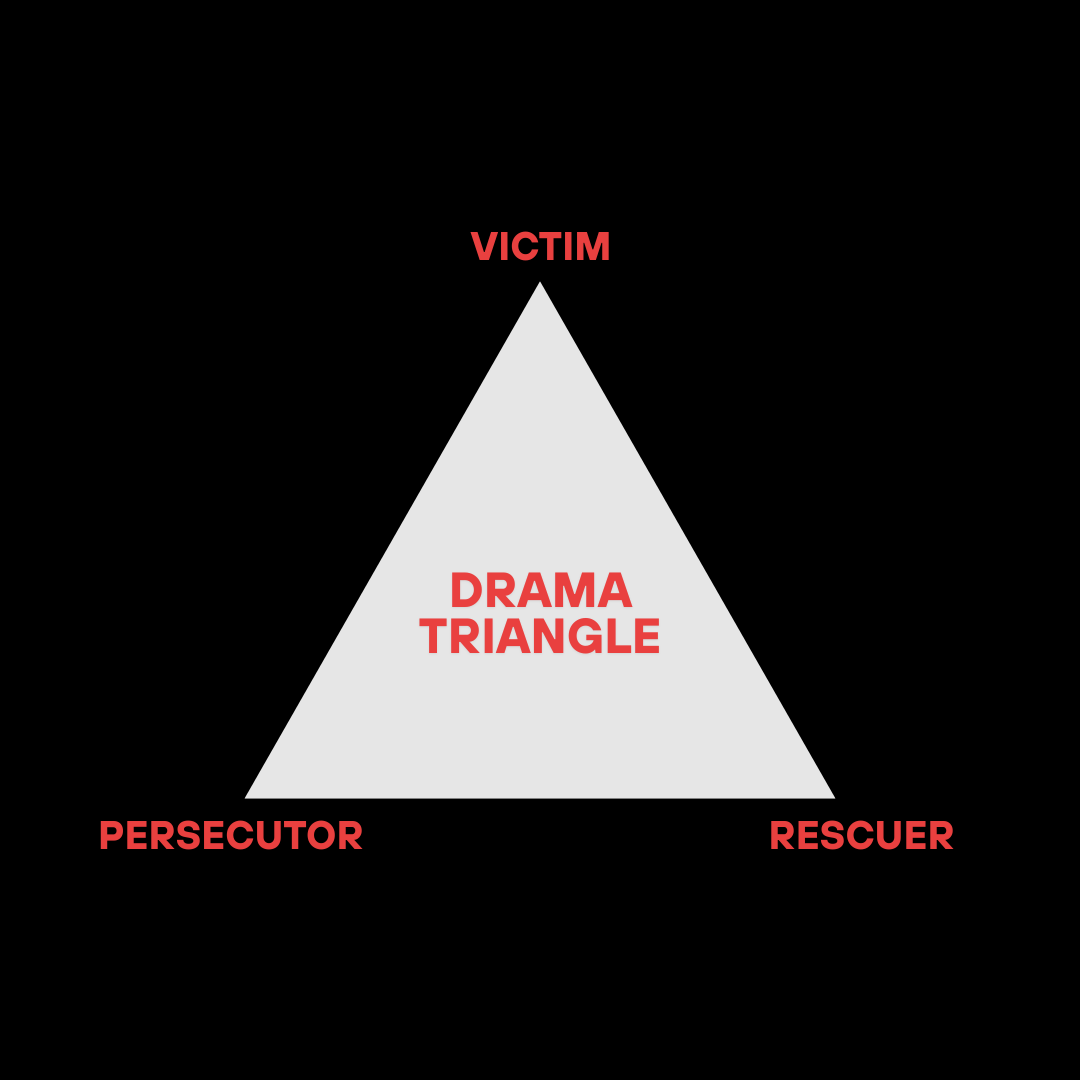
At its core, the triangle describes three roles that appear in moments of friction:
The Persecutor, who criticises, controls, or assigns blame. The Victim, who feels powerless and avoids responsibility. The Rescuer, who steps in to fix everything, often at their own expense.
What matters is not the labels themselves, but how fluid they are.
In a single conversation, people move between these roles — often without noticing. A Victim becomes a Persecutor. A Rescuer becomes a Victim.
The triangle spins, the work stalls and relationships deteriorate.
The Triangle at Work
In organisations, the Drama Triangle is everywhere.
Leaders feel persecuted by peers, then pass pressure down to their teams. Teams feel victimised by leadership decisions, then seek a rescuer in HR, consultants, or external coaches. Those rescuers are soon pulled into the same dynamics.
The pattern repeats. Energy moves into politics rather than progress.
The triangle is not a personality issue. It is a behaviour and communication issue.
What Actually Breaks the Triangle
In practice, two things matter most.
Behaviour. Unhelpful behaviours — blame, avoidance, control, over-helping — pull people into the triangle. These behaviours are observable. They can be described, reflected on, and nudged. They are the culture.
Communication. The triangle thrives on vague language, poor listening, and emotionally loaded responses.
Clear, purpose-driven communication reduces misunderstanding and prevents escalation before it becomes drama.
Responsibility Without Rescue
The temptation in conflict is to look for a rescuer. In organisations, that rescuer is often a manager, coach, consultant, or policy.
But the triangle breaks when individuals take responsibility for their own role in it — how they communicate, how they behave, what they choose to escalate, and what they choose to resolve.
People usually have more agency than they realise. The work is helping them see it.
The Drama Triangle is not a moral framework. It is a mirror. It shows how easily good people fall into patterns that create friction, and how deliberately shifting behaviour and communication can release energy back into meaningful work.
The Drama Triangle
Explore the work
This piece forms part of Cultivated’s wider body of work on how ideas become valuable, and how better work is built.
To explore further:
→ Library — a curated collection of long-form essays → Ideas — developing thoughts and shorter writing → Learn — practical guides and tools from across the work → Work with us — thoughtful partnership for teams and organisations
The link has been copied!
Your link has expired. Please request a new one.
Your link has expired. Please request a new one.
Your link has expired. Please request a new one.
Great! You've successfully signed up.
Great! You've successfully signed up.
Welcome back! You've successfully signed in.
Success! You now have access to additional content.