Images don’t argue or persuade — they present. This essay explores why photographs and visuals help humans make sense of complexity faster than language, and why visual thinking remains an overlooked form of intelligence at work.
Editorial Note: This essay sits within the Cultivated canon on communication, creativity, and sense-making. It explores why images often reach understanding faster than language — and why visual thinking remains one of the most underused forms of intelligence in modern work.
Why Images Speak Before Words
“A picture tells a thousand words.”
It’s a phrase we repeat casually, rarely stopping to test whether it’s true. Yet experience suggests something close to it is.
A strong image arrests attention immediately. Not because it explains — but because it presents.
It doesn’t ask permission. It doesn’t queue behind language. It simply arrives.
Think of iconic album covers. Photographs that defined eras. Images that linger long after the words around them fade.
They don’t argue. They don’t persuade. They show.
And in showing, they allow meaning to form.
Cultivated Notes are short visual companions to the work. Some are reflective — filmed in quieter, everyday spaces. Others are practical — filmed in the studio and focused on methods and ways of working. You can watch the note below, or read on where there’s more to explore.
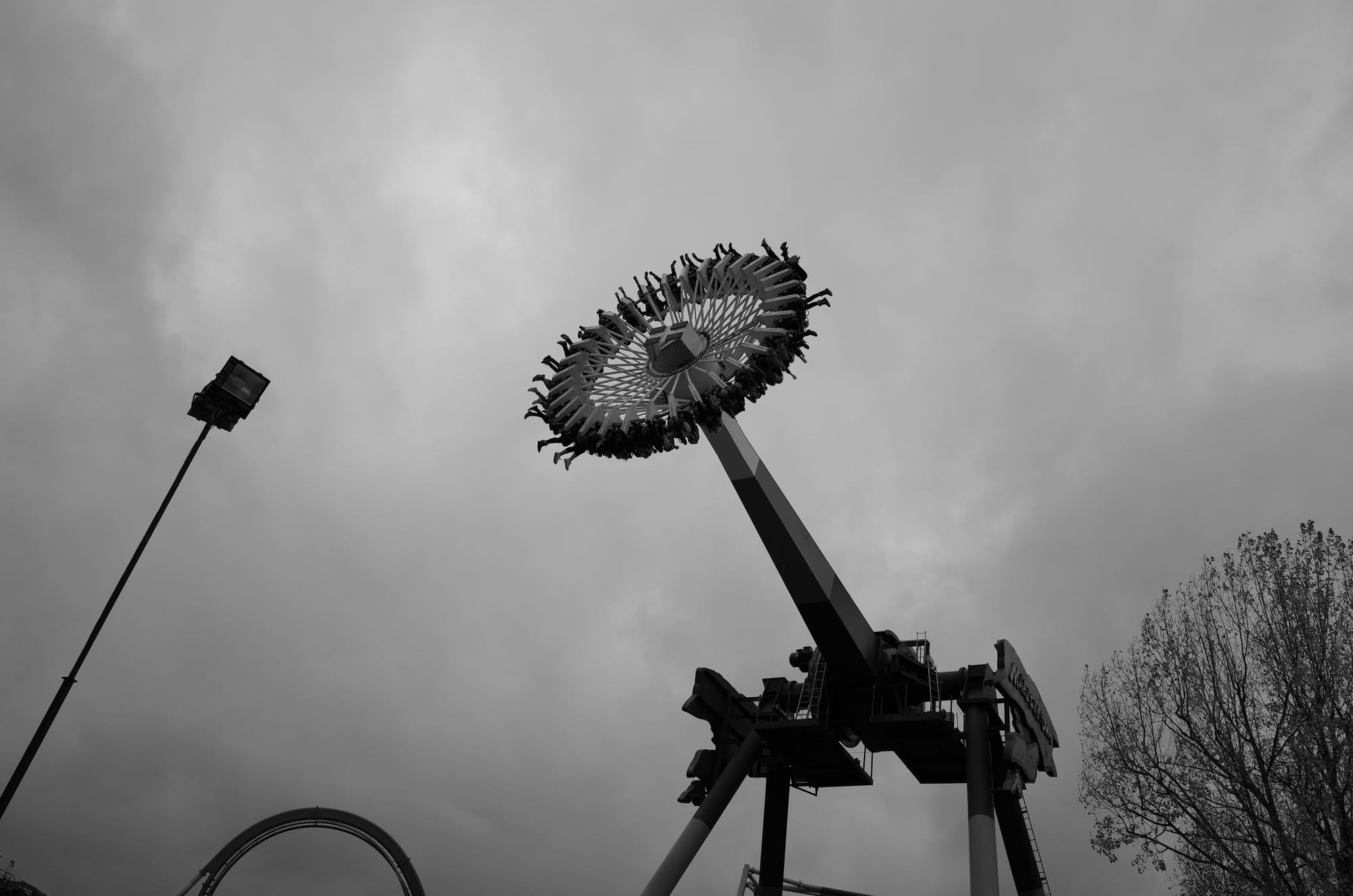
Danger loving people on a wild ride - photo by Rob
We drown people in slides, documents, frameworks, and messages — all competing for cognitive space. Language stacks on language. Explanation piles onto explanation.
Images behave differently.
They cut through. They land whole. They give the brain something to hold.
This is why visual artefacts — photographs, sketches, diagrams — have quietly underpinned every serious attempt I’ve seen to bring clarity to complexity.
Words ask us to follow. Images invite us to see.
Seeing What Is There — And What Isn’t
When we encounter an image, we do two things at once.
First, we register what is literally present. The shapes. The subjects. The light. The arrangement.
This is observation.
Then — often without realising — we begin to imagine what sits behind it. The story. The intent. The emotion. The moment before or after the shutter clicked.
This is interpretation.
The power lies in the gap between the two.
What is there grounds us. What might be there opens thought.
A photograph holds both without resolving them.
Some cows in Cornwall - photo by Rob
Why This Matters at Work
Most organisational problems aren’t technical. They’re interpretive.
People see the same situation differently. They hold unspoken assumptions. They struggle to articulate what feels obvious but slippery.
Language often hardens these differences. Positions form. Defences rise.
Images soften them.
Because an image doesn’t insist on a single meaning. It gives people something shared — and lets interpretation surface safely.
What emerges is not consensus first, but understanding.
And understanding precedes alignment.
Images as Thinking Devices
We tend to treat images as decoration. Illustration. A way to “make things nicer”.
That’s a mistake.
Images are thinking devices.
They slow us down just enough to notice. They bypass habitual language. They allow emotion, memory, and intuition into the room.
They help us talk about things that are hard to name directly:
Risk
Change
Tension
Direction
Possibility
Not by defining them — but by letting people recognise them.
The Discipline of Looking
There is a discipline here.
Not in taking better photographs. But in looking more carefully.
Seeing before explaining. Noticing before judging. Separating what is present from what we assume.
This discipline is rare in organisations obsessed with speed.
Yet it’s precisely what prevents people from solving the wrong problem well.
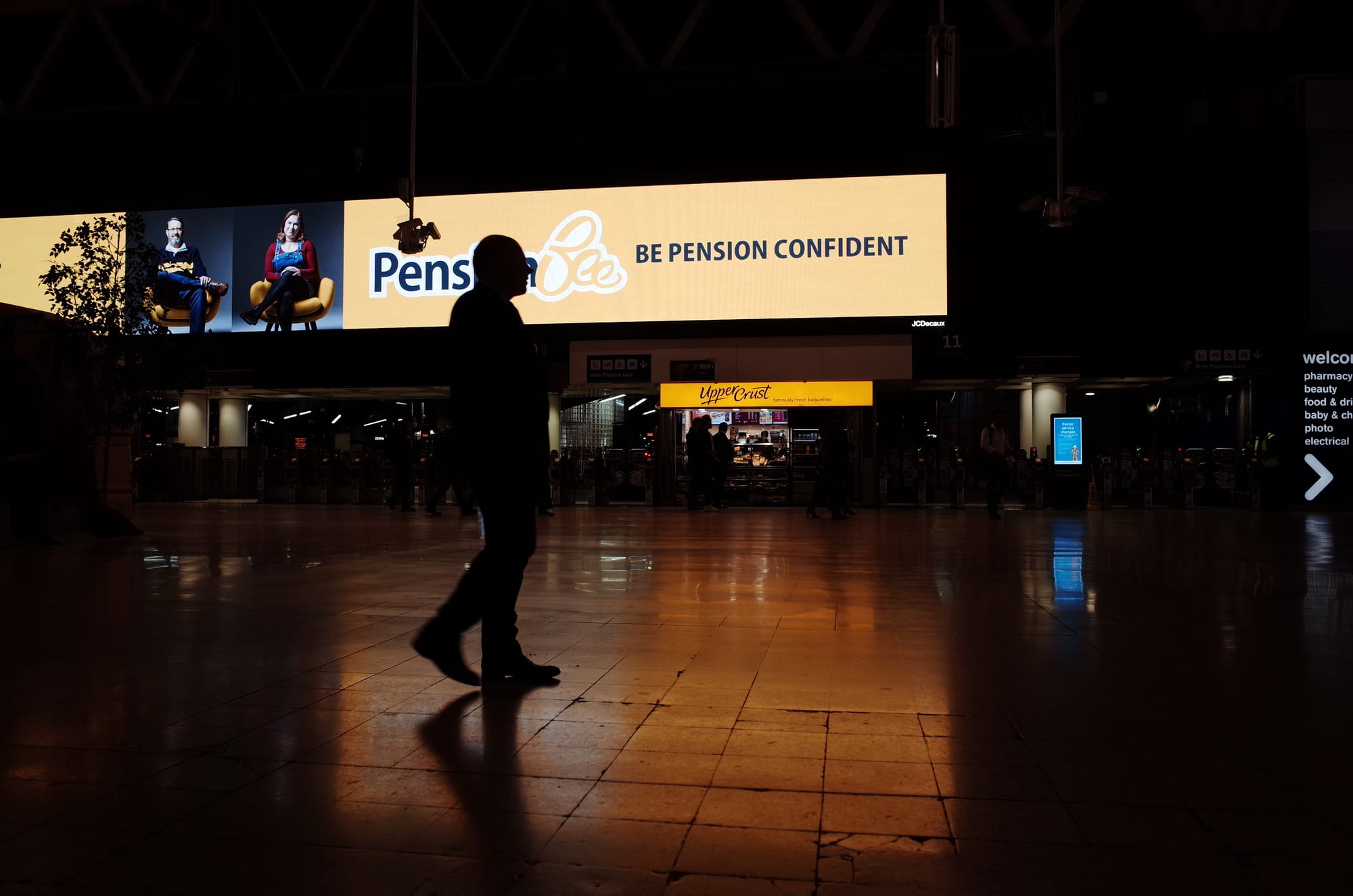
Waterloo Station, London - photo by Rob
Beyond Language
Language is powerful. But it is not neutral.
Words come preloaded with culture, hierarchy, expertise, and confidence. Some voices dominate. Others retreat.
Images level the field.
They don’t care who you are. They ask only that you look.
And in doing so, they give quieter forms of intelligence space to surface.
A Closing Thought
We live in a world overloaded with explanation and starving for sense-making.
Photographs — and images more broadly — offer a different route in. One that begins with attention. Moves through observation. And arrives at insight without forcing it.
They don’t replace language. They prepare the ground for it.
Sometimes, the most effective way to move thinking forward is not to say more — but to show something worth seeing.
Explore the work
This piece forms part of Cultivated’s wider body of work on how ideas become valuable, and how better work is built.
To explore further:
→ Library — a curated collection of long-form essays → Ideas — developing thoughts and shorter writing → Learn — practical guides and tools from across the work → Work with us — thoughtful partnership for teams and organisations
Bibliography
Bakhshi, S., Shamma, D., Kennedy, L., Gilbert, E., 2015. Why We Filter Our Photos and How It Impacts Engagement. Proceedings of the International AAAI Conference on Web and Social Media 9, 12–21. https://doi.org/10.1609/icwsm.v9i1.14622
Bell, B.T., 2019. “You take fifty photos, delete forty nine and use one”: A qualitative study of adolescent image-sharing practices on social media. International Journal of Child-Computer Interaction 20, 64–71. https://doi.org/10.1016/j.ijcci.2019.03.002
Burkholder, C., 2016. On Keeping Public Visual Fieldnotes As Reflexive Ethnographic Practice. McGill Journal of Education 51. https://doi.org/10.7202/1038609ar
Ruijter, J. de, 2017. How a Random Image can help you to generate creative ideas. HatRabbits. URL https://hatrabbits.com/en/random-image/ (accessed 7.29.24).
Schifanella, R., Redi, M., Aiello, L.M., 2015. An Image Is Worth More than a Thousand Favorites: Surfacing the Hidden Beauty of Flickr Pictures. Proceedings of the International AAAI Conference on Web and Social Media 9, 397–406. https://doi.org/10.1609/icwsm.v9i1.14612
Sung, Y., Lee, J.-A., Kim, E., Choi, S.M., 2016. Why we post selfies: Understanding motivations for posting pictures of oneself. Personality and Individual Differences 97, 260–265. https://doi.org/10.1016/j.paid.2016.03.032
Xia, H., Pan, X., Zhou, Y., Zhang, Z. (Justin), 2020. Creating the best first impression: Designing online product photos to increase sales. Decision Support Systems 131, 113235. https://doi.org/10.1016/j.dss.2019.113235
The link has been copied!
Your link has expired. Please request a new one.
Your link has expired. Please request a new one.
Your link has expired. Please request a new one.
Great! You've successfully signed up.
Great! You've successfully signed up.
Welcome back! You've successfully signed in.
Success! You now have access to additional content.