I have always found job descriptions rather intriguing. Not for what they say, but for the organisation they invent — a place that doesn't really exist, described with a straight face, and lots of nice sounding words. I should know, I was guilty of doing this too.
There's the job title. The responsibilities. The essential skills, then the desirable ones, as though anyone could defend the content of either with any confidence. The "what you'll get in return." The obligatory twenty years of experience in a technology that's been around for just two years. Everything reassuringly obvious, somewhat dull, woefully under-representing the role and the company, and identical to pretty much every other advert.
The other day I saw one that was exactly like all the others except for a single line, tucked right at the bottom, clearly added to make the thing stand out.
"This is a fast-paced environment."
Which, in my mind, translated as: things are going to happen to you, and you will feel permanently overwhelmed.
Underneath the accidental honesty there's a wonderful idea worth playing with. That advert was doing what nearly all of them do. It was describing a slot. A gap of a fixed shape, into which a person of roughly matching dimensions would shortly be slotted. Someone has left, there's a hole, go and find a person that fits.
But organisations aren't dishwashers. There's a clue in the word itself – organisation – they are organic. And the person you hire never simply occupies the space left by the person who went. They change the space. And everyone standing near it.
They change who talks to whom. What gets noticed. Which decisions get made in ten minutes and which acquire a steering group with ten members. What work gets done, and how well. Which problems disappear – and which problems demand an elaborate team dedicated to nothing but building and refining PowerPoint.
I believe hiring is not really recruitment but more akin to organisational design. Not because it needs another clever HR framework, or a new department headed by a Chief Organisational Designer, or COD as they would be affectionately known. Quite the opposite. Because it's far more interesting than that, and far too important to hand to a recruitment form.
Here's a wonderful little thought experiment I use with clients needing a little nudge to improve the hiring and culture.
Imagine you could add just one person to your organisation – not as a replacement for anyone, purely as an addition – with zero extra cost to the company. Who would you add?
It's a surprisingly good question, because it takes you away from budgeted vacancies and onto the whole of what the business really could do with.
You might wander the path of looking for someone who can sell, or build connections across disparate parts of the business that really need to talk to each other but don't. Or maybe someone who truly understands customers, or could make sense of the chaos everyone else has just put down to "business as usual".
But you might also notice something stranger: that you don't need another pair of hands to do the work at all. You need someone who changes how the work gets done.
And that is a completely different question.
Picture two organisations with precisely the same strategy, technology, customers, budget and headcount. Identical on paper. Now put different people in them. You get two entirely different companies. One feels light and quick – decisions happen, problems surface early, people seem to know what actually matters and importantly, they care enough to make it happen. The other might hold seventeen meetings about the problem, convene a steering group for everything that feels too hard, commission dashboards to measure everything, and fill a SharePoint site with dross nobody will ever open again.
Same strategy. Different people. We reflexively look for the explanation in the structure. Sometimes the explanation is sitting at a desk, sipping a nice coffee and working through a packet of rich tea biscuits.
The organisation isn't the org chart
We love an org chart, because it makes an organisation look comprehensible and simple to understand. Boxes. Lines. Names. A rather lovely organisational family tree of who answers for what. Useful things, in their way. But they tell you almost nothing about how work actually happens, or where value truly comes from.
Spend a week inside almost any company and you discover the real map, and it's far more interesting – and far more human.
There's the person everyone goes to when something's stuck. The one who actually knows how the customer uses the product. The one who can get a decision made before lunch. The person nobody asks any more, because they have that rather amazing gift for making everything more complicated. The person who can walk into a difficult meeting and somehow get everyone behaving like adults – and the one who can walk into a simple meeting and have everyone behaving like children.
None of that appears on the org chart. None of it shows up in the job advert. And all of it matters more to the place than half the boxes on the org chart do.
The formal organisation tells you who reports to whom. The real one tells you how things happen – and people are the wiring that carries it. Every person plugs something into the system. Judgement. Energy. Caution. Curiosity. Nerve. A bit of joy, or a bit of status anxiety. Patience, ambition, the odd flash of temper. A tolerance for ambiguity – or a complete inability to leave any meeting without generating an action list and several upset employees.
Which is the rather unusual truth about recruitment.
We tell ourselves we're assessing whether someone can perform a role. We are also, like it or not, choosing what kind of organisation we're going to be. Hire the person who keeps asking "what problem are we actually trying to solve?" and, given enough time, everyone else starts asking it too and the whole organisation starts focusing on what matters most.
Hire the person who answers every challenge with a fresh approval step, and before long you've built a sign-off process so magnificent you've well and truly started sabotaging yourself.
Hire someone who makes the people around them better, and you've raised the whole organisation's ability without adding a single head.
This is why culture is so much more interesting than the values painted on the wall, or the bullet points in the spec, or the requirements in the job description. Culture is, in large part, just what happens when one person's behaviour slowly becomes everyone else's normal habits.
The strange economics of people
There's also a financial part of this to ponder.
A person is an investment. An investment in their potential to add more potential to the business. That investment costs something – a salary and benefits – but the salary isn't really what a person costs, or what they're worth. The interesting figure is what happens around them. A brilliant hire can make five other people more effective. A badly-placed one can make five people less effective and drain ten hours a week from a manager, endlessly putting out fires they started.
One person removes meetings, and gives everyone their mornings back for work that actually matters. Another manufactures meeting like they're the thing that actually creates value for the business – they're not.
One person makes a decision at 10am and has people moving by 11. Another turns the same decision into a three-week consultation involving colleagues who hadn't been aware there was a decision to make and would rather not have been involved at all.
Which is why some of the most expensive people in any organisation never appear on the payroll. They appear in everyone else's calendar. And some of the highest-value people aren't the ones with the biggest visible output at all – they're the ones who improve the business and the climate in which everyone else's output happens. That's a wonderful way to think about who you're really hiring.
The hire changes the job
Here's the lovely paradox running through it though. We write the job description and advert before we've met the person. But a good hire always changes the job, usually within the first month.
You bring in a product manager to improve a product. Six months on, they're improving the relationship between product and sales, or rebuilding how customer feedback gets gathered, or radically improving a team in the corner who asked for help. Or they've exposed a rather uncomfortable knot in how decisions get made and cut three weeks out of the process. They are improving the business, the people around them and the ability to generate value across the company. The advert said product manager. The skills list was mostly product. The organisation got something else entirely.
That's why rigid role definitions mislead and job adverts whittle out the really good people. A good hire doesn't just fit the organisation – they reveal part of it. Sometimes they surface an ability you didn't know you were missing. Sometimes they surface a problem you'd lived with so long you'd stopped seeing it. And every so often they reveal that the job you thought you were hiring for wasn't the real job at all.
Which makes me think the usual interview question is mildly wrong. "Can they do the job?" — yes, obviously, keep asking that. But I'd add another: what happens to the organisation if we put this person in it?
Not in a sinister, culture-fit, personality-test way. Please, no psych profiles. Something far more practical, and more honest.
What are they actually like to work with? Are they a good person? Will things get clearer around them, or foggier? Will decisions get easier? Will customers be better understood? Will people learn faster? Will this person create capacity around them – or dramatically consume it?
You can't answer all of that in an interview, and you shouldn't pretend you can. But holding the question changes what you look for, and that's the useful part.
"Hire for the person, not the position"
– Paul Hawken, Growing a Business.
I've spent a long time thinking about how ideas turn into value. We like to imagine it as a tidy line – idea, then process, then outcome. The reality is messier and much more human than that.
Ideas don't travel down a pipe and plop out at the end automatically generating magnificent value. They pass through people, working in the climate around them, and those people interpret them, improve them, misunderstand them, champion them, ignore them, argue them into something sharper, or spin off three better ideas in the process. Or, in some cases, kill the idea until little of value emerges anywhere.
People are managing the ideas, not the process and the work. And people are the engine of success.
So, when you hire someone you're not filling a vacancy. You're deciding what your organisation becomes – and what happens to every idea that passes through the organisation after them.
That's an astonishingly bigger decision than filling a hole with someone who matches the size and shape of the hole, and a far more important one to ensure you make it well.
So, the next time someone plonks a job description on your desk and asks you to go and find them a person, it's worth pausing before you reach for LinkedIn. Look past the title and the essential-versus-desirable skills and the twenty years of experience, and ask what you're actually adding. Not to the vacancy. To the organisation.
And if the advert happens to mention that it's a fast-paced environment, well – at least you'll know what you're getting.
Where this sits in the Atlas
Orientation·Idea to Value·Communication·Creativity & Climate·Learning
Hero Image Source from Europeana:
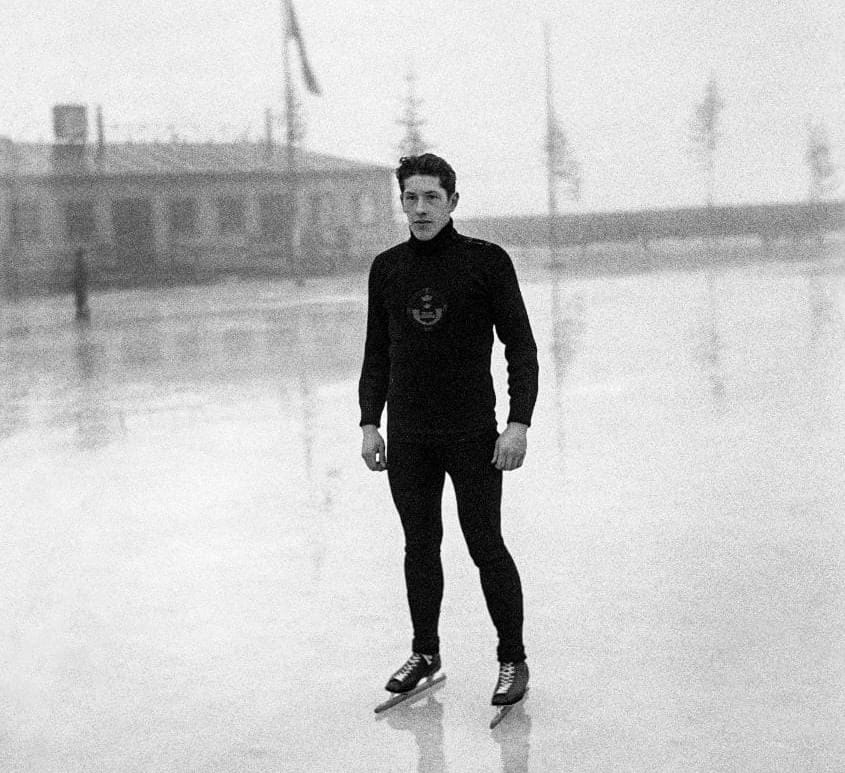
— Speed scater by Sundström, Hugo - Finnish Heritage Agency, Finland - CC BY.