communication

The words we choose matter. How we behave matters more. Culture, leadership, and trust are shaped by what we do — not what we say.

Hierarchy is often blamed for dysfunction at work. In reality, most problems come from behaviour, capability, and responsibility — not structure itself.

Most workplace communication fails not because messages are unclear, but because feedback is missing. Sent does not mean received — and without feedback, meaning does not travel.

In organisations, power is not positional. It flows through communication channels — through who controls distribution, repetition, and meaning.
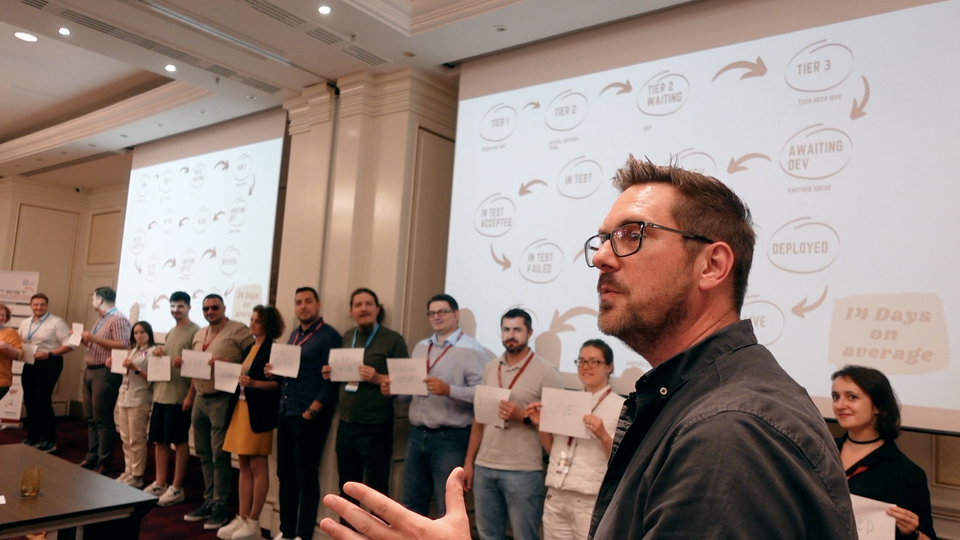
Running a workshop is not a performance or a checklist exercise. It is a craft — one that demands preparation, care for learners, and respect for the learning journey.

Good leaders do not wait for the future to arrive. They anticipate it, decide which version matters, and communicate it clearly enough for others to help bring it to life.

Most organisational problems are not technical failures, but failures of clarity, alignment, and communication. This essay explores why clarity creates alignment, alignment generates momentum, and momentum is how ideas become value.

Creativity in organisations is not about generating more ideas. It is about seeing problems differently. This essay explores lateral thinking and Edward de Bono’s PO method as a practical way to unlock new paths to value.

Business storytelling works not because it is persuasive, but because it helps people make sense of complexity, evidence, and change. When grounded in facts, stories move people where data alone cannot.