One of the most powerful ways to improve a system is to follow a single piece of work as it really moves. This essay introduces a simple, human method for seeing how value is created — and lost — inside organisations.
Editor’s note: This essay forms part of Cultivated’s core work on how value is created inside organisations — not through frameworks alone, but through understanding how work really moves.
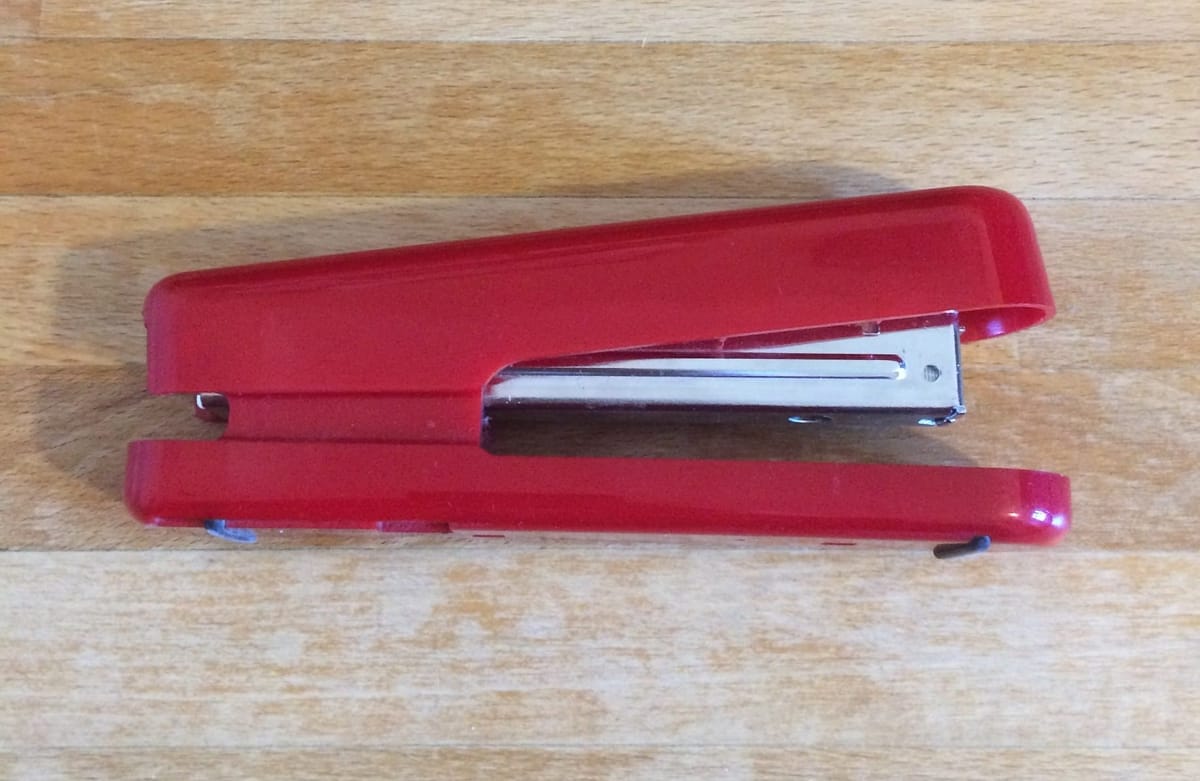
Staple Yourself to the Work
A powerful way to improve any process is to visualise it, find the friction, and change what matters.
That sounds simple.
In practice, it rarely is.
Over the years, one technique has proved more useful than almost any other. I call it:
Staple yourself to the work.
Not literally, obviously — though sometimes it feels like it.
The idea is simple: take a single piece of work and follow it as it moves through the system. Step by step. Person by person. Delay by delay.
Watch how work actually flows — not how the process map says it should.
It is surprisingly revealing.
Why the metaphor works
I use the phrase “staple yourself” because people can picture it.
It is far more engaging than terms like process improvement or value stream mapping, which sound abstract and managerial.
Language matters.
When people can visualise an activity, they bring energy and attention to it. And energy and attention are the real fuel of improvement.
When I shifted from technical jargon to this simple metaphor, something changed. Teams leaned in. They became curious. They began to see their own work differently.
Good systems work starts with good sense-making.
Process improvement is a leadership responsibility
Improving how work gets done is not a side activity.
It is one of the central responsibilities of management and leadership.
Processes shape experience. They determine whether work feels smooth or exhausting, meaningful or pointless.
If leaders are not improving the system, what are they really leading?
And the only way to improve a system is to understand how work actually moves through it.
Not in theory. In reality.
Step one: get the right people
The best source of truth is not a diagram.
It is the people doing the work.
They know where it sticks, loops, stalls, and breaks.
Bring them together. Ask them to explain how work really flows through their part of the system. Encourage stories, not just statistics.
This is not about blame.
It is about seeing clearly.
Step two: prepare the space
You need room to think visually.
A wall. Post-it notes. Index cards. Or a shared digital board if you are remote.
Book proper time. Rushed mapping produces shallow insight.
Include managers as well as practitioners. Leaders own the system and must sponsor the change.
Step three: follow a real piece of work
Choose a genuine work item: a customer case, a hire, a sale, a change request.
Then trace its journey from start to finish.
Capture every step:
Handoffs Wait times Rework Approvals Interruptions
Focus on what actually happens, not what should happen.
This is where illusions fall away.
Step four: make the work visible
Lay the process out from left to right.
When people see the whole system at once, something shifts.
Complexity becomes obvious.
Delays stand out.
So do unnecessary loops and handovers.
Visibility creates shared understanding — which is the foundation of improvement.
Step five: study the system, not the people
Now analyse what you see.
Where does work stall? Where does it bounce back and forth? Where is knowledge trapped in individuals?
Look for patterns, not culprits.
Systems create behaviour far more reliably than personality ever will.
Step six: draw the future
Then ask a better question:
What would great look like?
Not perfect. Better.
What would make life easier for customers and for the team?
This contrast between current and future state shows you where to act.
Step seven: change deliberately
Translate insight into action.
Small improvements, tested carefully, outperform grand redesigns imposed suddenly.
Smooth is fast.
Effectiveness before efficiency.
Fix the system first. Optimise later.
What this really teaches
Stapling yourself to the work does more than improve processes.
It changes how leaders see organisations.
You stop managing abstractions.
You start managing reality.
And when you understand how work truly becomes value, better decisions follow naturally.
That is the quiet craft of good management.
Not control.
Understanding.
Video
Editor’s note: This essay grows from an earlier exploration in another medium. The thinking remains central, even as the format has changed.
Explore the work
This piece forms part of Cultivated’s wider body of work on how ideas become valuable, and how better work is built.
To explore further:
→ Library — a curated collection of long-form essays → Ideas — developing thoughts and shorter writing → Learn — practical guides and tools from across the work
The link has been copied!
Your link has expired. Please request a new one.
Your link has expired. Please request a new one.
Your link has expired. Please request a new one.
Great! You've successfully signed up.
Great! You've successfully signed up.
Welcome back! You've successfully signed in.
Success! You now have access to additional content.