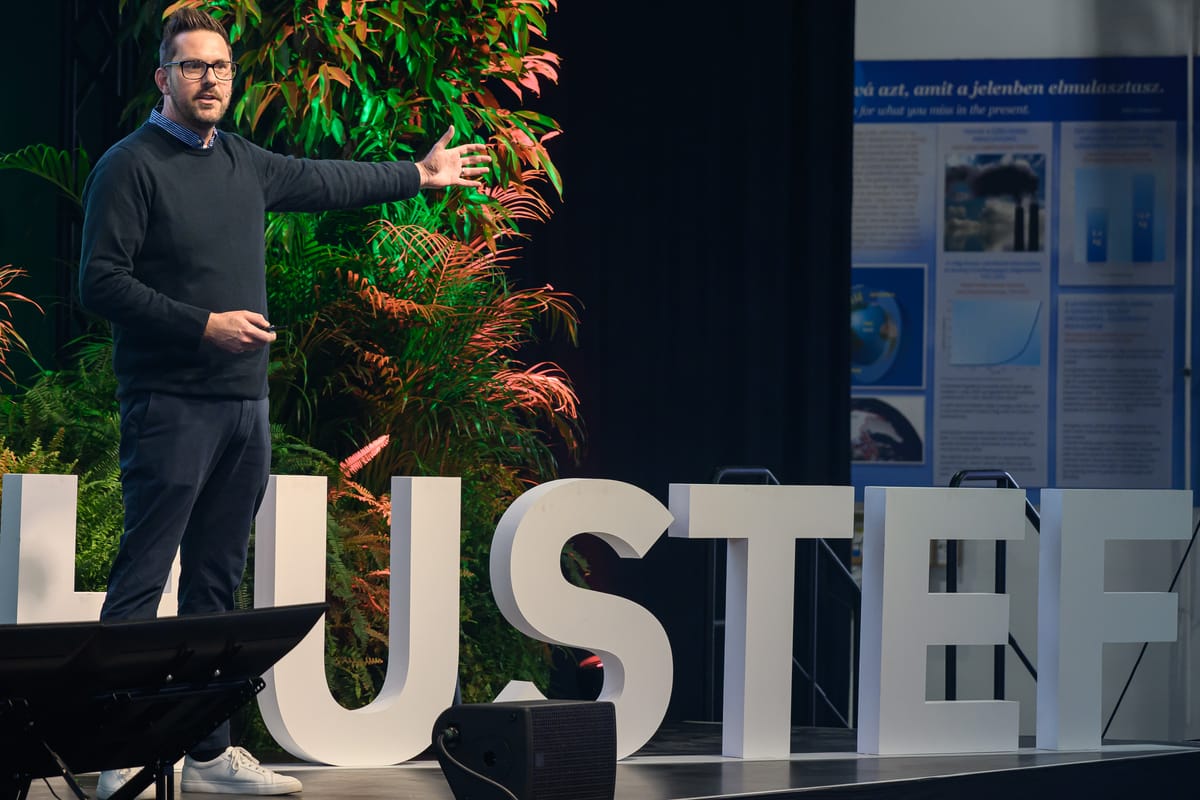
Editor's Note: This essay sits within the Cultivated canon on Communication and Leadership. It explores public speaking not as performance, but as a form of meaning-making, influence, and organisational movement.
Speaking as Sense-Making
Most people fear public speaking.
That fear is understandable. To speak is to stand in front of others and offer something of yourself — an idea, a story, a belief.
It invites judgement.
It risks rejection.
And yet, as careers unfold, speaking becomes unavoidable.
Leaders speak.
Managers speak.
Those who influence without the authority job title speak.
Public speaking is not a career accessory.
It is how ideas move.
In organisations, decisions rarely follow the best data.
They follow the clearest story.
Numbers persuade spreadsheets; stories persuade people.
Speaking is how alignment forms, how strategy becomes shared, how intent becomes collective creative action.
Being good at the work is not the same as being good at explaining the work. Many technically excellent people fail to move organisations because they cannot translate complexity into meaning. Others, less technically gifted, shape outcomes simply because they can name what matters.
Facts alone rarely move people.
Context does.
Emotion does.
Narrative does.
Speaking is not performance in the theatrical sense.
It is interpretation — helping others see what you see.
It is sense-making in public.
Further ReadingIf this essay resonates,
Zero to Keynote explores speaking as a craft — from shaping an idea to delivering it in a room that matters. It’s a practical companion for anyone who wants their ideas to travel further.
There is also a temptation to imitate. To borrow the cadence, gestures, or persona of admired speakers. But borrowed voices ring hollow.
Presence is not technique; it is coherence between thought, belief, appearance and delivery. People recognise when words and convictions align.
Perfection is another myth that quietly paralyses. Speaking is not about flawless delivery. It is about familiarity with your own thinking. Practice does not eliminate mistakes; it builds resilience when they occur. A talk is never finished — only shared.
Enthusiasm matters, though not in the performative sense.
It is the signal that something matters.
In organisations where neutrality is mistaken for professionalism, emotion becomes suspect. Yet emotion is often the only honest indicator that the subject is worth attention.
Every talk, whether in a boardroom or on a stage, carries intent.
To inform, to persuade, to inspire, to unsettle.
Clarity of purpose shapes clarity of speech.
Without purpose, speaking becomes noise.
Public speaking is not about charisma.
It is about coherence.
It is about making meaning visible.
It is about helping others see, and therefore act.
In that sense, speaking is not optional for leaders.
It is the medium through which leadership happens.
This piece forms part of Cultivated’s wider body of work on how ideas become valuable, and how better work is built.
To explore further:
→ Library — a curated collection of long-form essays
→ Ideas — developing thoughts and shorter writing
→ Learn — practical guides and tools from across the work
→ Work with us — thoughtful partnership for teams and organisations
The link has been copied!