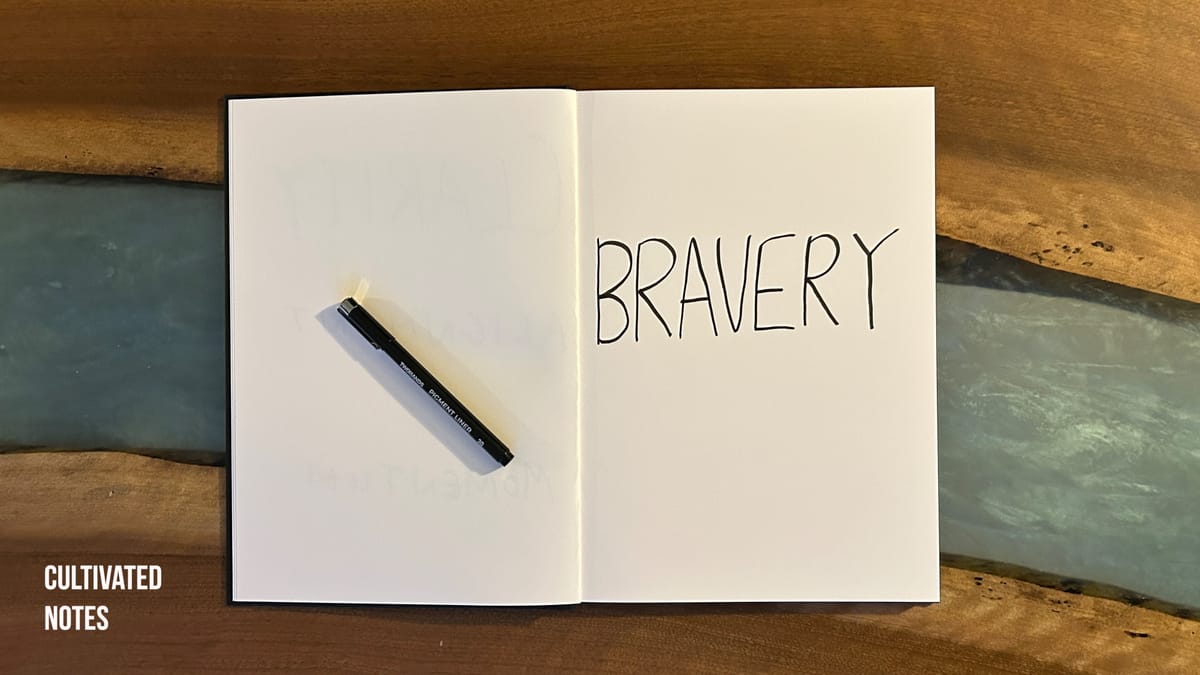
Bravery and Conformity — A Behaviour That Shapes Organisational Culture
Why bravery in organisations is not about bravado, but about challenging conformity. A Cultivated Notes reflection on behaviour, culture, and how ideas become value.
Editor’s Note: This Cultivated Notes essay explores bravery as an organisational behaviour. It reframes bravery not as heroics or bravado, but as the quiet act of challenging conformity in service of better work. The piece connects behavioural change to the broader Cultivated canon on Idea → Value, communication, and organisational culture.
Bravery as a Behaviour
Most conversations about organisational culture focus on values, rituals, and frameworks. In practice, culture is shaped by behaviour — the everyday actions people take, tolerate, or avoid.
One behaviour that consistently provokes reaction is bravery. It is often misunderstood as boldness, fearlessness, or confrontation. But bravery, in organisational life, is quieter and more consequential.
Robert Anthony once suggested that the opposite of bravery is not cowardice, but conformity.
In organisations, conformity is often the default. “We’ve always done it this way” becomes a gravitational force, quietly shaping decisions and constraining creativity.
Cultivated Notes are short visual companions to the work. Some are reflective, others are practical. You can watch the note below, or read on where there’s more to explore.
Challenging Conformity
Bravery shows up when people challenge this gravitational pull. It is present when someone questions an outdated process, surfaces inconvenient data, or calmly challenges behaviour that undermines the organisation’s values.
This is not reckless disruption. It requires judgement, communication, and an understanding of context. Bravery involves reading the room, understanding consequences, and choosing when and how to challenge.
Yet the cost of conformity is often higher than the cost of challenge. When organisations normalise confusion, duplication, or toxic behaviour, the pain of silence overwhelms. Bravery, practiced thoughtfully, interrupts this overwhelm.
From Behaviour to Value
Challenging conformity is not only a moral act; it is a systemic one.
When people are encouraged to surface insights, question assumptions, and try new approaches, organisations reduce the friction between idea and value.
Bravery becomes part of the behavioural infrastructure that enables clarity, alignment, and momentum. Over time, it shapes cultures where people feel able to think, speak, and act in service of better outcomes.