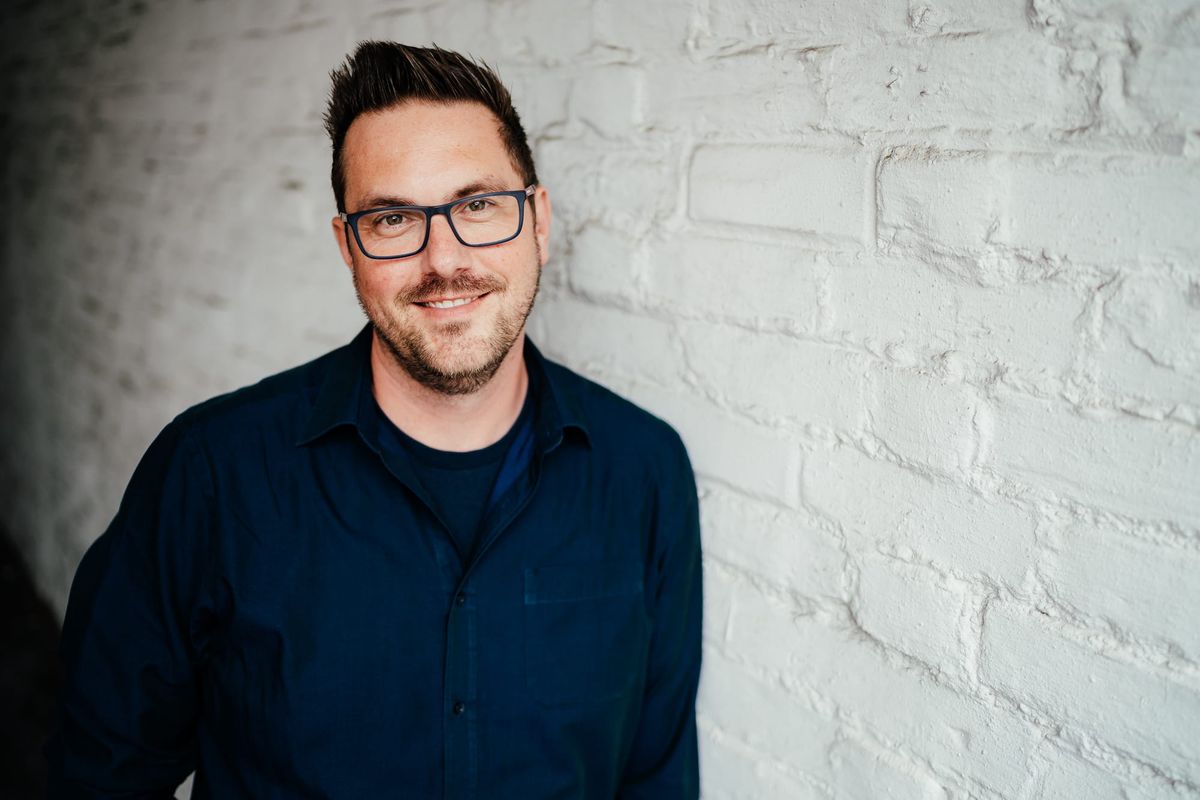
I get paid to be curious.
I spend my time noticing how ideas, people, places and work behave – and turning what I find into essays, photographs, films, books, courses, workshops, talks and, when someone needs an extra mind in the room, advisory work.
The publishing is at the centre. The commercial work grows out of it. They are different forms of the same practice.
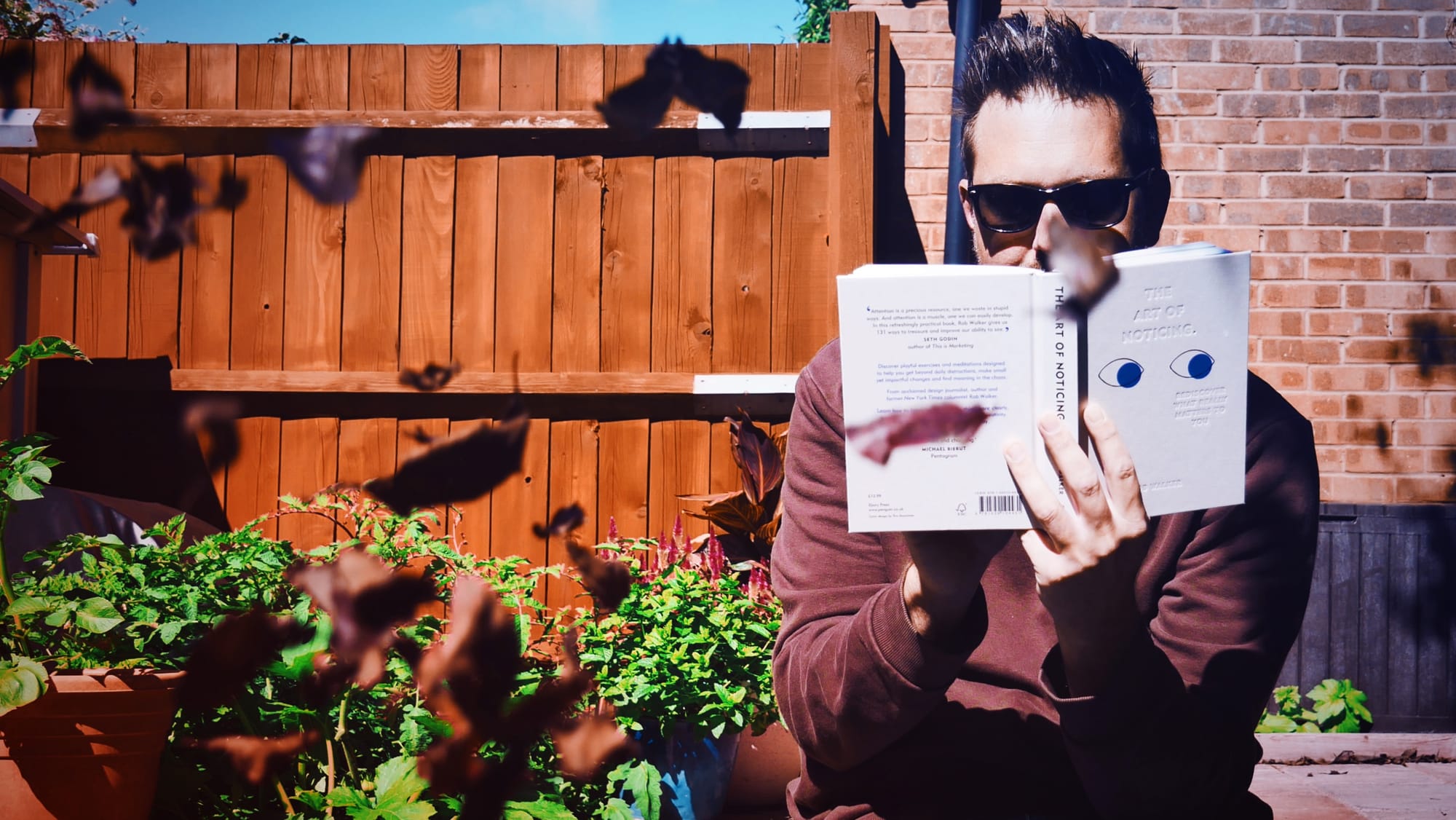
The question
When I was about eight, I wrote a story I thought might be funny, took it into school and read it out.
People laughed.
I remember the surprise more than the laughter. Something that had existed only in my head a week earlier was now doing something in the world.
I've been mildly obsessed with that journey ever since.
Twenty-plus years ago, that curiosity followed me into organisations, where it became a more specific question: whether an idea becomes the value it should, and whether it's any good to be part of the work that gets it there.
Both halves have always mattered to me. An idea becoming useful and valuable is one thing. What it costs the people involved, and what kind of climate it creates along the way, is another.
The apparent weirdness of my CV – Media Science, journalism, technology, VP of Engineering, VP of HR, film-making, communication, consulting, business agility, helping scale a company from its earliest days to a £400M+ exit – is not, in fact, particularly strange.
It is one long interest in the same thing: how something that exists as an idea becomes something valuable in the world, how meaning travels between people and systems, what helps or hinders that journey, and whether being part of that work is worth it.
What Cultivated is
Cultivated is an independent publisher, studio and teaching practice, although those labels are probably less interesting than what happens here.
I spend my time noticing things, thinking about them, taking them apart and eventually making something from what I find. Sometimes that becomes an essay or a photo series. Sometimes it becomes a Field Note, a book, a film, a course, a Field Guide, or a workshop. Sometimes it becomes a talk, an edition of The Department of Interesting Things, or a few days spent alongside an organisation that needs another mind in the room to solve a tricky problem.
The form changes. The practice underneath it doesn't.
Some of what I make is for the person reading on their own with a decent coffee. Some is for people trying to bring an idea into a team, a company or their working life. I don't see much reason to separate the two. Interesting things tend to travel further when they can move between worlds.
Learning to see
A surprising amount of the world of work runs on borrowed seeing.
Someone somewhere does something that works. It becomes a case study. The case study becomes a framework. The framework becomes a course. The course becomes a certification. Eventually we find ourselves looking at our own work through somebody else's eyes.
I'm less interested in that.
What works in one place may be entirely wrong in another. Different people have different histories, different constraints, different ambitions and different moments. Context matters. Nuance matters. Judgement matters. Taste matters. Above all, the work in front of you matters.
So much of what I do begins with seeing what is actually there before reaching for an answer.
That sounds simple. It isn't.
Once you start paying attention to the journey ideas take, you begin to notice it everywhere. In the postbox outside Winchester Cathedral. In a well-made notebook. In a railway timetable. In a conversation overheard in a café. In a museum where a curator has used space to change the meaning of an object. In a city where thousands of small decisions have accumulated into a distinct character. In a publishing house where a thought becomes words, the words become pages, and the pages eventually find their way into somebody else's thinking. And in the work we do everyday.
The same journey, in different rooms.
It's all about learning to see what is really going on.
And eventually, this comes back to work
It seems highly fashionable now to tell people to quit their jobs. Build a side hustle. Grind on your dreams. Escape the office. Become your own boss. Follow your passion.
I understand the appeal. I've written some of it myself.
But most of us still have to work. Most of us can't or won't leave. Most of us turn up on Monday, do our best, come home, and do it again on Tuesday. That's not a failure of ambition. It's simply most of adult life.
And the work could be better.
Not necessarily through escape, but through the slower and more useful work of seeing our own work differently and improving it: the meetings we sit in, the ideas we're carrying, the people around us, the conditions we operate inside, the decisions we make every day about what deserves our attention.
One person seeing their work differently can change what happens around them. Not always. Not immediately. But often enough to matter. This is how companies get better.
That is why almost everything here, however far it wanders through postboxes and notebooks and Berlin bookshops, eventually finds its way back to work.
Because work is where an enormous amount of our time, energy, attention, ability and potential gets spent.
It seems worth paying attention to.
The map underneath it all
Spend enough time studying anything and, eventually, a pattern tends to introduce itself.
Mine is called Idea → Value.
It is not a methodology to follow, or a proprietary process to sell. It is simply the map I have ended up using to make sense of what I see: how an idea moves from somebody noticing something, through meaning and attention and people and conditions, towards becoming something useful in the world.
Sometimes that thing is a business, or a new feature, or a new release of something valuable. Sometimes it is a book, a product, a conversation, a workshop, a photograph or a decision.
Sometimes it never gets there at all.
The interesting bit is the journey.
Over the years I've given different parts of that map names – Map, Physics, Wiring, Engine and Flywheel – because names are useful when you're trying to explain something complicated.
But the underlying question is always the same: What happens between an idea and the value it could create?
And what happens to the people making the journey along the way?
That second question matters more than it might first appear. There is a Japanese word I keep coming back to: mottainai. It is often translated simply as "what a waste", but there is something richer in it: an acknowledgement that things have worth and potential, and a reluctance to let that worth go unrealised.
I think about work in much the same way.
When I look at an organisation, I'm interested in what is already there as much as what is broken. People, ideas, creativity, experience, attention, materials, opportunities, potential.
What might happen if some of it were given more room?
Mottainai is the argument underneath a lot of what I do.
Ways into the practice
Sometimes the best way into an idea is a book. Sometimes it is a workshop. Sometimes it is a conversation. Sometimes you need somebody in the room while you're trying to work something out.
The Life of an Idea is the calmest place to start: an exploration of how ideas twist, change and take shape as they become something valuable, and what that journey means for the people trying to make it happen. The entire Idea to Value way of seeing, the five layers and 26 calm principles seeing what's happening – and making work better.
Idea to Sustainable Work takes the same thinking into the working lives of independent people – writers, designers, consultants, founders, teachers, makers and others trying to turn what they know and notice into a sustainable way of working.
The Practitioner's Handbook is the deeper version for people doing this every day inside organisations. It sits alongside the working notes, seminars, films and essays in Studio. It's the practitioner handbook for anyone actively consulting or working inside an organisation to turn ideas into value, shorter the space between the two and improve the climate of work for all involved.
There's Zero to Keynote, Workshop Mastery and the Effective Workplace Communication workbook.
Then there are talks and workshops, where the ideas leave the page and people get to do something with them. Increasingly, that means making something they can keep – a film, a podcast, a set of posters, a printed guide – because learning is information in action. Don't just read it or listen to it. Use it.
And there is advisory work, when an organisation has a complicated idea and wants another mind in the room while it works out what to do with it.
Different forms. Same practice.
A few true things
I've broken almost every bone in my body – including a leg, laughing too hard at a Jasper Carrott sketch.
I played semi-professional basketball for exactly one year, until I worked out that everyone else was taller and stronger than me. I'm six foot three.
I drive an old, increasingly rusty Mazda MX-5 around the countryside. Driving is a form of meditation, and an excellent way to generate ideas and solve problems. I make films. I fill notebooks at an alarming rate. I type letters on an old Olivetti. I co-host a stationery podcast with my friend Helen Lisowski, which is a rather enjoyable thing to do.
I live in Winchester with my wife and three sons. Most of the writing happens in the studio lined with books, music equipment and an old writing bureau. Some of it happens in cafés or bars in Edinburgh, Berlin, Paris, Oslo and Norfolk, because the practice travels with the person.
A few things I believe:
Work should leave us more human, more skilled and more experienced than it found us. It should enrich, not sap.
Communication is the infrastructure through which ideas and meaning travel.
Creativity belongs to everyone, including people who have spent years telling themselves they aren't creative.
Every office should contain a library. And good stationery.
Books remain one of humanity's greatest inventions.
Good Earl Grey tea, and the occasional craft beer, helps.
If any of this lands – if you suspect your work could be better and are willing to look at it clearly enough to do something about it – Cultivated is written for you.
The writing is where most of the thinking lives. The rest happens in workshops, conversations, books, films, photographs and the occasional coffee shop.
Start Here is the guided tour.
Thank you for spending a few minutes here. If you've made it this far, we'd probably get on. If you fancy a virtual cup of tea, don't hesitate to get in touch.
— Rob