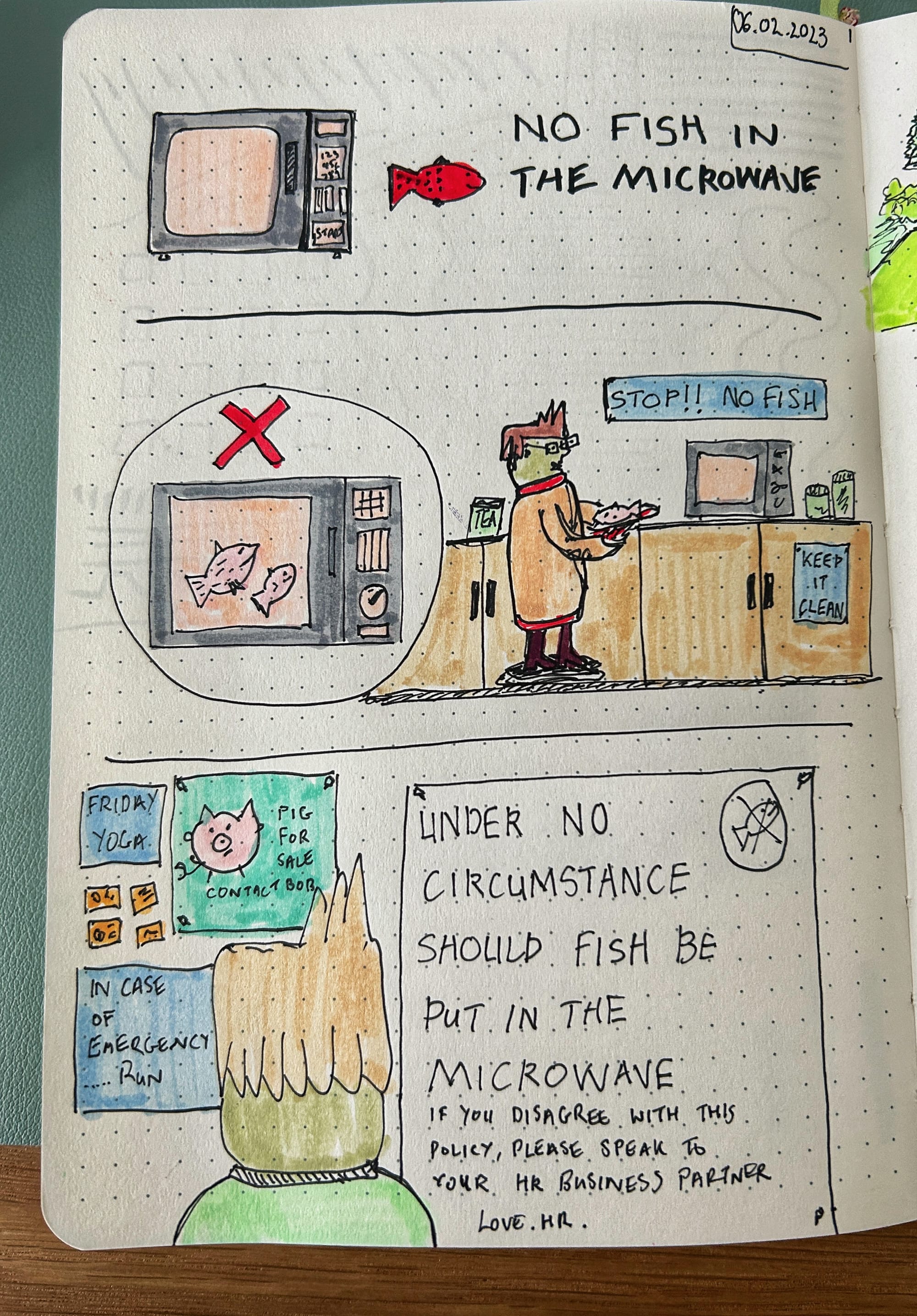
Editor’s note: This essay sits within the Cultivated library on work, environments, and behavioural design. Rules are explored as a quiet form of infrastructure — shaping focus, respect, and how spaces are used.
10 Rules for Working in My Studio
I’ve always liked rules. Not rigid bureaucracy — but simple guidelines, constraints even, that help people do good work and respect the spaces they inhabit.
Most workplaces rely on unwritten norms. But there is something powerful about stating rules explicitly. They create clarity, reduce friction, and set expectations.
These studio rules were inspired by Tom Sachs’ 10 Bullets — a reminder that constraints can create freedom.
Explore the Cultivated Studio - a physical and conceptual space where ideas are explored, shaped, and turned into value
The Studio Rules
1. Treat the building with respect. This space is a privilege. Respect keeps it functional and meaningful.
2. Keep the space clean. Order clears mental clutter.
3. No shoes in the studio. Small rituals reinforce care.
4. Organise around outcomes. Every object should serve a purpose.
5. Do not squander the space. Use it intentionally. Avoid drift.
6. Don’t get distracted. This is a space for thought, creation, and focus.
7. Everything goes back in its place. Entropy is real. Reset daily.
8. It’s not all about work. The studio should support reflection, play, and restoration.
9. Keep evolving the space. Your work changes. The environment should too.
10. No fish in the studio. Some rules are universal.
Why Rules Matter
Well designed rules create structure, and structure enables freedom.
Clear boundaries reduce cognitive load. They signal respect — for the space and for yourself. They make behaviour easier by making expectations visible.
In environments designed with intention, productivity is not forced. It emerges.
Final Word
Your workspace is not neutral. It teaches you how to behave.
A few explicit rules can turn a room into a tool for thinking, creating, and living well.
And seriously — no fish.
Video
Editor’s note: This essay grows from an earlier exploration in another medium. The thinking remains central, even as the format has changed.
Workplace rules
The link has been copied!
Your link has expired. Please request a new one.
Your link has expired. Please request a new one.
Your link has expired. Please request a new one.
Great! You've successfully signed up.
Great! You've successfully signed up.
Welcome back! You've successfully signed in.
Success! You now have access to additional content.