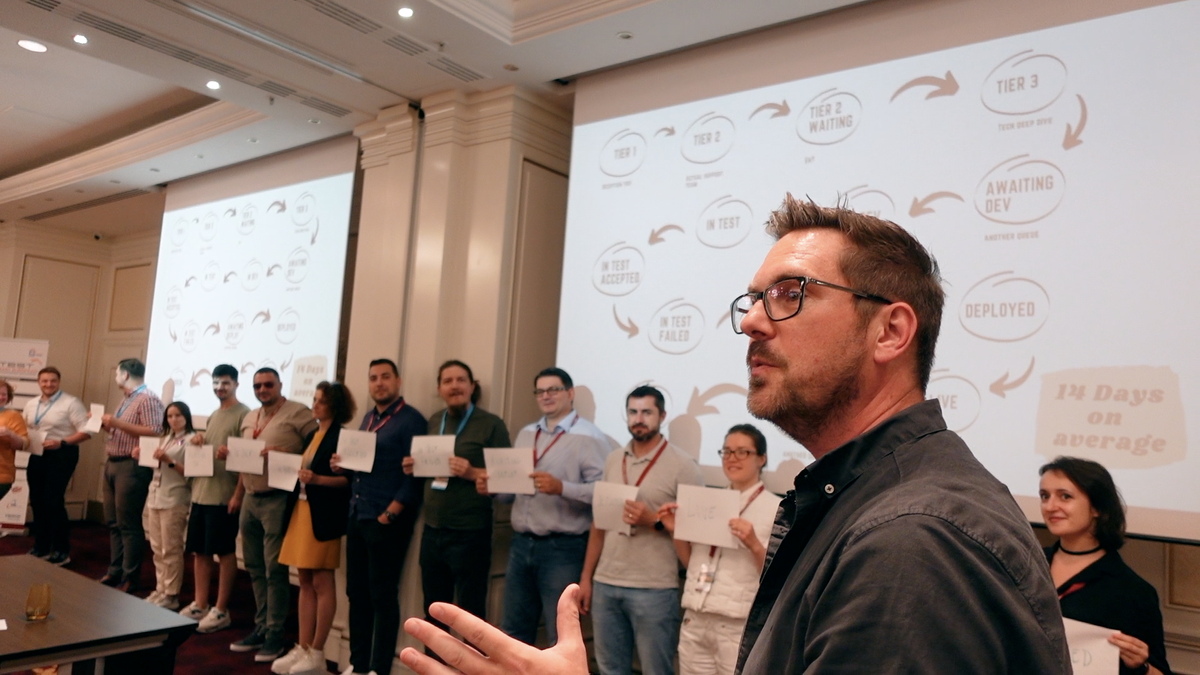
Running a workshop is not a performance or a checklist exercise. It is a craft — one that demands preparation, care for learners, and respect for the learning journey.
Editorial Note: This essay is part of the Cultivated canon — a body of work exploring how learning, clarity, and communication shape the quality of working life. It treats teaching not as performance or facilitation technique, but as a serious craft with ethical and practical responsibility.
Teaching Is a Craft
Running a teaching workshop — whether at a conference, inside a company, or as part of a learning programme — is not a matter of turning up and hoping for the best.
It is a craft.
Over the years, I’ve run workshops across conferences and organisations. Some have been recognised as “best workshop” by participants and hosts alike. Not because of charisma or performance, but because of something far more dependable: preparation, intention, and care for the learner.
A good workshop is not about the facilitator.
It is about the journey you take people on.
This essay can also be explored in audio form. You’re welcome to listen — or continue reading below.
Start With the Learning Journey
Every workshop should begin with a simple question:
Where are these people now — and where should they be by the end?
Teaching is movement. Your responsibility is to move people from Point A to Point B with clarity and confidence. That requires more than expertise. It requires design.
Plans matter here. Lesson plans matter. But the plan is not the goal — learning is. A plan exists to protect the essential ideas, pace the session, and ensure that energy is spent where it matters most.
Prepare the plan. Practice it. Then stay alert enough to adapt when learning demands it.
Constraints Are a Form of Care
Good workshops are bounded.
Limits on group size, scope, and subject matter are not restrictions — they are acts of respect. Without constraints, workshops drift. Attention fragments. Learning degrades.
If you are teaching at an advanced level, say so. If the scope is narrow, hold it. Expertise does not mean teaching everything you know. It means teaching the right things, at the right depth, for the people in the room.
Clarity is kindness.
The Environment Teaches Too
Before a single word is spoken, the room is already influencing teaching.
Light, layout, materials, seating, and visibility all shape how people engage. Turning up early to prepare the space is not logistics — it is pedagogy. It signals seriousness, care, and intent.
The same is true online. Digital workshops demand even more deliberate design. A poorly prepared space — physical or virtual — taxes attention before learning even begins.
You Will Never Get the Balance Perfect
There is no ideal ratio between lecture and interaction.
Some people want more structure. Others want more discussion. You will never satisfy everyone. Accept that.
What matters is not balance, but vitality. Dullness is the cardinal sin of teaching. Not seriousness — dullness. Learning requires energy, variation, and movement. Attention must be earned and kept, not assumed.
Energy does not mean theatrics. It means presence. It means caring enough to notice when attention dips and doing something about it.
Instructions Are a Leadership Skill
Every interactive exercise is a test of clarity.
If instructions are vague, learning stalls. If outcomes are unclear, activity becomes theatre. Good workshops do not keep people busy — they make people think.
Clear instructions create space for learning. Poor instructions consume it.
Expect Problems — Then Teach Through Them
Things will go wrong.
Technology will fail. Time will compress. Questions will derail the plan. People will arrive tired, sceptical, or distracted.
This is not a failure of teaching — it is part of it.
Good teachers absorb disruption without panic. They adjust pace, trim content, and redirect attention without losing the thread of learning. Over time, these moments become part of the craft — a repertoire of responses built through experience.
Teaching Should Feel Alive
Learning is serious work. But it should not feel joyless.
The best workshops have a quiet sense of aliveness — moments of insight, challenge, laughter, disagreement, and recognition. Not forced fun. Not performance. But the pleasure of understanding something more clearly than before.
If people leave tired but sharper, stretched but energised, you’ve done your job.
The respectful response is not to entertain them, but to take their learning seriously. To prepare. To care. To teach as if it matters — because it does.
Teaching is not an accessory to work.
It is one of the ways work becomes better.
Video
Editor’s note: This essay grows from an earlier exploration in another medium. The thinking remains central, even as the format has changed.
Explore the work
This piece forms part of Cultivated’s wider body of work on how ideas become valuable, and how better work is built.
To explore further:
→ Library — a curated collection of long-form essays → Ideas — developing thoughts and shorter writing → Learn — practical guides and tools from across the work → Work with us — thoughtful partnership for teams and organisations
The link has been copied!
Your link has expired. Please request a new one.
Your link has expired. Please request a new one.
Your link has expired. Please request a new one.
Great! You've successfully signed up.
Great! You've successfully signed up.
Welcome back! You've successfully signed in.
Success! You now have access to additional content.