Leadership and Work in Practice
A foundational guide to aligning who you are, what you want, and how you act — so your effort compounds in the right direction. Through structured reflection on direction, obstacles, foundations, and communication, this field guide helps you move from drift to deliberate growth.
A simple calligraphy pen introduced friction, boundaries, and intention into my thinking. This note explores how small physical tools can subtly change the pace, texture, and quality of our work — not through optimisation, but through boundaries, surface and friction.

Careers don’t move by charisma or luck alone. They move through systems of value, clarity, relationships, and behaviour. A systems view of how advancement actually happens inside organisations.
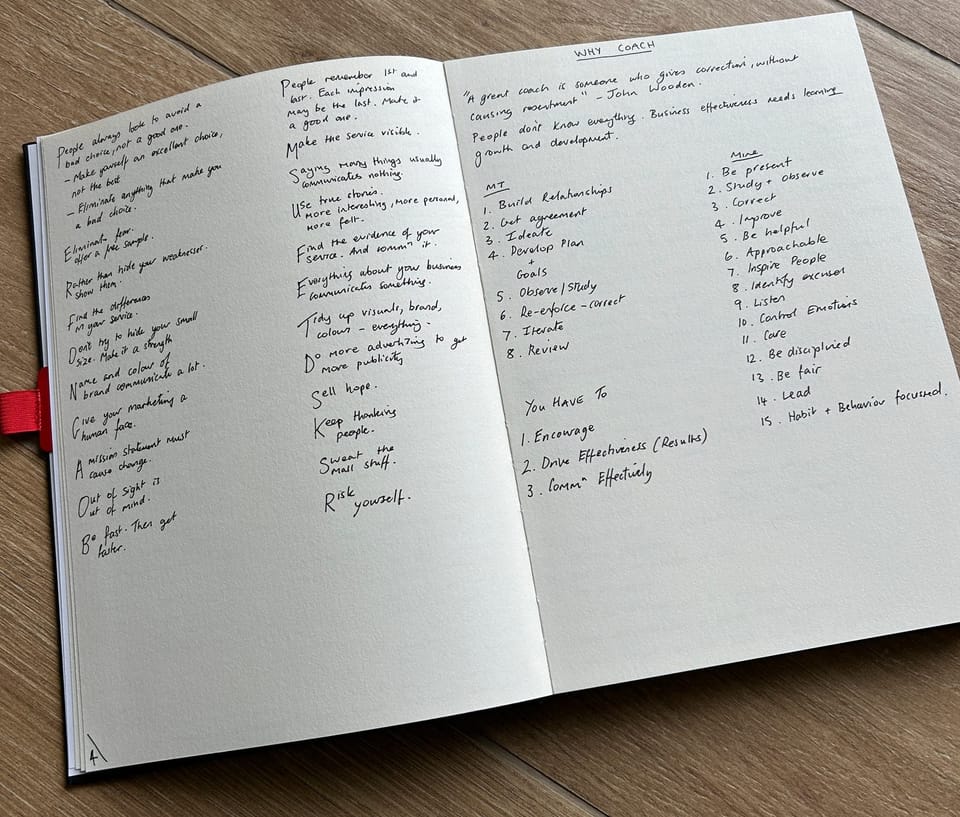
A reflective Studio note on personal knowledge management, learning systems, and the instruments that help ideas become understanding.

A 1944 CIA sabotage manual reads like a modern corporate playbook. This essay explores how organisations unintentionally slow themselves down — and how leaders can release the friction that kills value.
Most organisations have unlimited space to communicate — but people have limited attention. This essay explores why less communication can be more effective and how to design messages for human attention, not organisational capacity.

A long-form essay on noticing, movement, and making sense of complexity — through travel, work, and the quiet principles that make both more humane.

When everything is a priority, nothing truly is. This essay explores how competing initiatives erode trust, exhaust teams, and stall value — and why clarity is one of leadership’s deepest acts of care.

Plans, org charts, operating models and roadmaps help us explain work — but they are not the work. This essay explores the gap between the diagram and the day, and why leadership becomes more effective when it stays close to lived reality.