How to run effective meetings
In this article I share some simple advice on how to run effective meetings.

In this article I share some simple advice on how to run effective meetings.
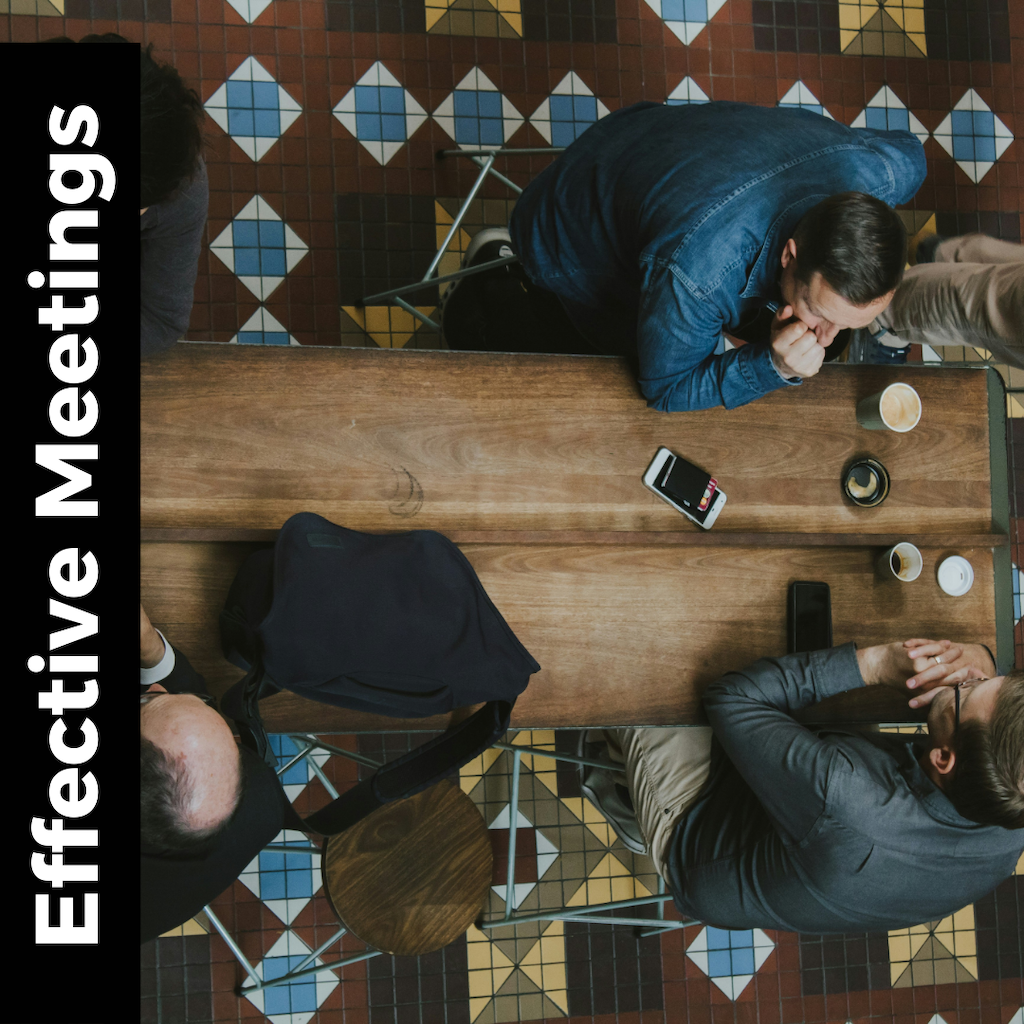
Effective meetings don’t seem to happen very often. Or is it just me?
Sad as this is, but many companies still run wholly ineffective meetings. If you’re not happy with how you run meetings, or you want to run meeting that make people go “wow” (and yes, I’ve had people respond this way!) then this article is for.
When I run my Communication Workshop we have a section on meetings and how improved communication skills can yield amazing results. During this section I always ask the attendees to raise their hands if they’ve ever been in an effective meeting.
Sounds mad right? But every single time, only a few hands will go up!!
When I ask why their meetings are so ineffective, attendees pretty much list the same sorts of reasons. Typically these are; they are too long, the wrong people are there, not discussing anything important etc.
Meetings are a waste of time – mostly. So if you do run meetings, it makes sense to run them effectively. In this article I share guidance on how to run effective meetings.
First let’s poke some fun at meetings – and then we’ll dig in to plenty of strategies for running amazing meetings.
10:00am – You pitch up for the 10am meeting eager to get stuff done, only to find that the previous meeting is over running.
10:02am – After standing outside the meeting room making over enthusiastic “watch checking” gestures you decide to make a coffee.
10:05am – You return with your coffee. The meeting room is still busy with the previous meeting. No other attendees have turned up for your meeting yet.
10:06am – The Project Manager from the over running meeting holds up his index finger to indicate he will be no longer than one minute. You resist the urge to hold a different finger back at him.
10:10am – The previous meeting finally finishes. Attendees leave the room, scowling at you for making them end their meeting before any decisions were made.
10:15am – Still no one has turned up for your meeting. On a positive note though you’ve bagged the best seat at the back where you can “people watch” through the window.
10:17am – With no-one yet turning up for this meeting, you decide to make another coffee.
10:18am – Whilst making a coffee you suddenly become overwhelmed with a streak of mischievousness. You decide to unscrew the lid from the sugar pourer, so it looks like the lid is still on but it’s not really. Hilarious. The next person’s going to get more sugar than they thought.
10:20am – You return to the meeting room to find all the attendees there waiting for you. You’re now the last one to arrive. You are gobsmacked but make your apologies for being late. You now only have the choice of one chair. The one at the front.
10:21am – The Product Owner (PO) decides to make a phone call and leaves the room.
10:23am – The PO returns but the “decision making exec” decides she now wants to leave the meeting.
10:24am – The project meeting finally kicks off. First agenda point is raised; how to eliminate waste and unproductive activity in the project.
10:24:20am – You bite your lip and keep your late meeting comments to yourself, after all, everyone now thinks you were the late one.
10:26am – You start to throw rolled-up balls of paper at the tech lead.
10:27am – Apparently the defect count is down.
10:27:10am – Smiles and “hurrahs”
10:28am – The low defect count is because nobody is doing any work as the IT systems have crashed the servers. General feeling of disappointment floods around the room.
10:36am – After more pointless stats, cost models and other illusions of productivity, the urge to go to the toilet is high.
10:45am – The PO announces, after checking emails on his phone during the meeting, that the CEO has just had a sugar-shaker full of sugar dumped in his coffee, and demands that the child responsible for this behaviour steps forward.
10:45:10 am – You face turns grey. You feel faint.
10:45:20 am – You start humming with nervous energy.
10:45:30 am – You are asked top humming.
And to sit still.
And to stop throwing bits of paper at people.
And whether you are ok because your face is really grey.
10:48am – The discussion moves to team morale.
10:49am – A blame session erupts and heated exchanges are made. Even though it is “not a blame culture”, it is definitely the product lead’s fault.
10:52am – Someone suggests a coffee break, someone else suggest we just abandon the meeting. The PO suggests we press on.
11:09am – The meeting ends after being harangued by the next meeting room attendees. The group disperse. You charge to the toilet. The only decision made was that the team need another meeting.
11:15am – You turn up late to your next meeting, an ironically scheduled training session from HR......on….time management.
Effective meetings are not generic, nor are they a one-size fits all. Take what is useful for you from this article, experiment carefully and see what works for you.
There are plenty of competing stats to reference but here are some that are somewhat frightening – and I suspect on the low side! (bear in mind – these are from the US alone). Stats like these could explain why there are so few effective meetings.
A meeting, as I define it, is a gathering of people to make a decision.
If it was possible for a single person to make a decision there wouldn’t need to be a meeting. A meeting is a place to share, discuss and decide. The decision part of that statement is very important.
Effective meetings are about deciding on something (ideally in the shortest time possible).
If it’s not possible for a single person to make a decision with the information they have – there is likely a meeting needed – and sometimes this is good. Meetings are important, but many could be avoided by simply creating a workplace where people can make decisions about their work.
Groups can often make better decisions than individuals – especially if there is a known answer to a question or problem. More suggestions, ideas and potential solutions may come forward on how to solve your problem or make that decision. With more people you have more brains available to answer a known problem or question.
However, large groups can often struggle when there is no known answer or it’s not clear who gets the final decision making rights.
Brain storming can be effective with large groups, but large groups can also mean it’s decision by consensus (which may not lead to the best outcome) or there is an element of group think going on which can be hard for one or two people to challenge constructively.
If there is no decision to be made then I wouldn’t classify this as a meeting. I see a big difference between a creative workshop and a meeting.
I believe a meeting is at least two people or more (I suppose you could have a meeting with yourself 🙂), with the goal of making a decision about something each individual couldn’t make on their own.
A strategy brainstorming session is not a meeting – it’s a workshop. An Interview is a meeting (you’re making a decision). A decision about the new strategy based on the inputs from the workshop – that’s a meeting. I don’t classify 1:1s as meetings as they’re not about making decisions.
So, effective meetings should be about making a decision by using specialists/decision makers because it’s no longer possible for a single person to make that decision. I like that.
The downside of meetings is that they can cost a lot of money (in time) – especially when no decision is to be made, nor is it clear what problem you are trying to solve.
Another common downside of groups is something called Group Think where the group can make terrible decisions as they strive to keep the peace, maintain the status-quo and keep harmony.
There can sometimes be group pressure if the vocal and loud people in the meeting are commanding and dominating the decision making, even if their ideas are terrible.
So I would suggest you start by deciding whether you need to even have a meeting in the first place, or could you move forward with a decision on your own?
If you’re sure you need a meeting then the following 6 simple ideas for running effective meeting will be helpful.
The success of any meeting is ensuring people know what the purpose of the meeting is, why they are involved and what they need to bring to the meeting.
It’s generally accepted that the quality of a meeting will be no higher than the quality of the information presented.
If you want a high quality meeting you need high quality information in the meeting. This comes from having the right people in the room who know why they are there, and what they are expected to contribute.
Invite the right people to the meeting
Have you ever been in a meeting and wondered why you were there? I have. Many times.
Equally, have you ever had a meeting that needed to be abandoned because a key person (with key bits of information or decision making rights) hadn’t been invited? I have. Many times.
Both of these examples are likely because the meeting organiser didn’t put much thought into the invite.
They potentially invited the wrong people and left out the very people who hold the information or decision making powers. This often stems from not understanding that meetings are about making decisions.
Ensure you only have the people you need in your meeting. If you have people in the meeting who you don’t need, then you’re adding more dynamics, more voices and more potential opinions to the mix.
If you don’t have the right people in the meeting, you won’t have the right information present or someone who can make a decision, and the chances are you’ll get a poor decision, or no decision at all.
Keep the meeting short
Ever been in a meeting that was an hour long, but really should have just been 10 minutes? Yes. Me too.
Good communicators don’t book hour long meetings. The hour time frame is pretty much a norm in the workplace – meetings are 1 hour long.
Effective meetings are no longer than they need to be.
Break that norm.
Parkinson’s Law states that work expands to fill the time available. Same with meetings. Book shorter meetings and run them more effectively. Decisions will still get made and a lot less time will be wasted.
If you can change the default meeting allocation in your email/calendar tool of choice – do it! And if you finish the meeting early, declare victory on it and give people their time back. Effective meetings in action.
Send all required information and expectations
Don’t make the audience jump through hoops to attend the meeting and gain clarity over expectations – so include all relevant information in the invite or supporting emails.
Including the right information and ensuring people know what’s expected of them is a foundational aspect of effective meetings.
Always include an agenda when sending out the invite, stating the purpose and structure of a meeting. It’s fine to send placeholders to book slots, but be sure to go back and fill that out when you know more.
Here are some ideas:
Again, sounds basic but in some companies, meeting invites fly around with little to no information about what they are about. No wonder people turn up unprepared – if at all – and the meeting has to be re-run.
Effective meetings have a purpose and the attendees know what they are expected to contribute.
Reject any meeting that does not have an agenda. It’s not as hard as you would imagine.
I always use the following response to any meeting with no agenda:
” Hi, Thank you for inviting me to this meeting.
Please could you provide an agenda as it’s not clear what my involvement in this meeting will be.
It would be useful to see what we are discussing so I can prepare for the meeting appropriately.“
Trust me – the above text works.
Ha. Rules in a workplace about meetings? Really?
Yep – absolutely.
Effective meetings run like clockwork and the foundations of this are meeting rules.
Your culture is nothing more than what people do everyday – group habit. Therefore it’s important that the group habits, when it comes to meetings, are good, positive and effective.
Call them rules, principles, agreements – whatever – just be sure that people live them otherwise it’s just words on a page.
It’s not easy to run effective meetings. Rules can help.
We’re not talking draconian rules or meetings that are sterile and unwelcoming. Far from it. We’re talking about rules that help everyone get work done, use as little time in meetings as possible and get the outcomes the business needs – no-one in their right mind would argue with that? Right? 🙂
Be aware of psychological safety though when coming up with norms / standards / rules. This is where a group is so connected and in tune with each other that they can exhibit seemingly counterintuitive behaviours but they lead to positive outcomes.
For example, one team I managed were so comfortable and trusting with each other that they would often raise their voices, interrupt and sometimes pull each other’s ideas down.
Observing this from afar would be alarming – but they got the job done, trusted each other and knew how far to push each other. Until you get to that point though, some basic rules can be helpful.
Here’s the rules I use for effective meetings:
Start on time
Always start on time. Make it clear to anyone turning up late that the meeting has started already and you will continue with the agenda.
Don’t restart the meeting or go back because they are late. Believe it or not, some people like to show how busy they are by turning up late.
I used to work with someone who waited for the meeting to start so they could make a dramatic entrance.
Hold the high bar and continue with the meeting. Keep going with your meeting and keep moving ahead. They’ll catch up. It’s your meeting.
Participate and be honest
Take part in the meeting.
If you’re the facilitator your role is to draw the meeting to a conclusion or decision. Sometimes this is achieved through consensus where everyone agrees. Sometimes people will disagree but someone needs to make a decision. Good communication skills will help here too.
Disagree and commit is a good mantra to live by.
If you're invited to a meeting then participate. Don't dominate the meetings, or derail or sidetrack the agenda - but contribute. If you're in a meeting and you don't know why - then did you ask for an agenda? See points above.
No passive compliance
Passive compliance is when people nod and say “Yes. Golden idea. Love it. Genius.” then head back to their team and tell them how it’s doomed and pointless and won’t work.
Don’t do it. If you don’t think it will work, say so in the room.
As a facilitator read the room and look for non-verbal clues that show people aren’t engaged, bought in or onboard with the idea.
Some people may feel they cannot challenge when everyone else agrees (group think!) but sometimes challenging the group/herd mentality is much needed.
Effective meetings get to the right outcome whether you (or the attendees) feel THEY are right.
Focus on what will work
Too many meetings are focused on what won’t work. Problems. Challenges. Doom and gloom. This may be essential and the bad side of work should never be overlooked, but sometimes focusing on the solutions, what will work or how to move forward, can be much more rewarding.
Consider running an appreciative inquiry meeting.
However, for most meetings you’ll benefit by asking the most powerful question you can in business “what problem are we trying to solve?”.
Almost all effective meetings start with posing a problem to overcome or a clear purpose. A powerful question indeed.
Don’t be defensive
Sometimes the blame, focus and spot light can move to you. Sometimes it can be welcome and positive, sometimes it could be digging or a way for others to deflect their own problems on to you.
Don’t be defensive. Hold your thoughts and respond, not react.
Use silence, it shows you’re in control. We cover many techniques to stay calm under pressure in the course.
If you’re facilitating the meeting watch for people being defensive or disengaging in the meeting, and try to handle this in a suitable way.
It’s never a blame culture nor a witch hunt. Focus on defusing and coming back to a neutral point. That’s not to say there shouldn’t be hard conversations, but good outcomes rarely come from a place of defensiveness.
Phones away, no laptops
Ban phones and laptops. Tough one this.
I see loads of meetings where people are doing email or on Facebook or even, in one case, watching Netflix. Of course, with remote meetings we can’t ban laptops but we can encourage cameras to be on and watch for people clearly multi-tasking.
For in-person meetings, there is no need to have digital tools – and if people are using them to make notes – suggest they revert to pen and paper/remarkable to take better notes 🙂 It’s better for the brain.
Of course, some people really will resist - that's why it's important to set group rules for meetings. If people are using laptops, then there should be guardrails that people are willing to sign up to - like no email, no surfing etc, if they must use their laptops for note taking.
You’re in the meeting for a purpose – that purpose rarely lies within a laptop, so try to be present in the meeting and encourage others to do the same. It will run smoother.
Effective meetings require engagement and inputs from the right people – and this starts with people paying attention to the meeting.
Capture actions, minutes and notes
Someone needs to capture the notes.
These notes and actions should be distributed after the meeting to all involved.
If someone is capturing notes and minutes, then they’re unlikely to be able to take a very active role in the meeting. Use your judgement as to whether you need an extra person for notes and minutes, or whether it is overkill.
HR related performance conversations would benefit from neutral note taking. A chat about which internet provider to use for the business – maybe less so. Although you never know.
Disagree and commit
This is a core value of mine and one I encourage in others.
Disagree with the plan / idea if you do indeed disagree.
Disagree with evidence, data and insights – and in a calm and assertive manner.
But if the decision goes against your plans, then commit to making it happen. You have made your case professionally but it’s not going your way. In which case, commit to make it happen.
No openly discussing people issues
You’ve been in a meeting like this I suspect. A meeting where someone is openly discussing people issues or someone else’s behaviours that should not be discussed with this audience; a direct report who is having a hard time, a disagreement between departments or someone who’s on a fast road to exiting the business.
It may be a meeting to discuss these issues in which case, that's fine, but I hear too many people discussing people issues in the wrong forum.
Don’t discuss people in a meeting that is not designed to be about that topic.
In the workshop we deep-dive in to choosing the right environment for your meeting.
A large meeting, will by nature, provide fewer opportunities for people to discuss anything without lots of voices and opinions.
Smaller meetings are often more informal but you may lack the right people in the room.
Choose the right environment (not too distracting for example) for the meeting – and ensure there is enough room, the appropriate resources and suitable arrangements.
People tend to confront those opposite them
If you have two people who are often confrontational with each other, use your creativity to seat them next to each other.
People who sit next to each other tend to form alliances. People opposite each other can often conflict.
It’s why there is the concept of a round table – no-one is technically the head of the table and people aren’t sat directly opposite each other.
This is why meetings without tables are often better. Try removing tables or finding some sofas opposite each other. You’d be surprised at how effective this.
You know those people at work – who have genuine presence. They enter a room and people pay attention.
Then there are those who disappear into the background, take up very little room and shy away from the meeting.
There are those who draw attention through sitting weirdly, or walking around at crucial moments, or standing at the back of the room, or making loads of noise.
Meetings will have all sorts of these people in them. I would suggest you try to learn effective communication skills so you can be the one who has presence.
That doesn’t mean you dominate the conversation, in fact people with presence often say little. It doesn’t mean you dominate other people’s space, although confident people don’t curl up and consume as little room as possible.
People with presence don’t shout, dominate or make drama. So how do they do it?
Sit wide and use up your space comfortably. Try not to take up other’s space by pushing your laptop over theirs, or sitting too close.
The middle seat is often described as the power seat. The head of the table is a common phrase and nods to the seat of those in power - it's typically at the end of rectangular table - in the middle.
You can often tell the most influential person in a meeting by how others sit around them – they often end up in the middle seat as people flock beside them.
Think about Alan Sugar in The Apprentice or The Head of the Table in almost any business. They sit at the head. If you’re not the power person in the room be cautious about sitting in the power seat 🙂 If you are, take that seat. What if you don’t know? Apply caution and sit where you like – just not opposite someone you disagree with regularly.
Remember: People who sit next to each other tend to form alliances. People opposite each other can often conflict.
Sit well in your chair. The general advice is to push your bum to the back of the chair and lean slightly off with an upright back. This will keep your spine straight and give you a sense of presence and attentiveness (leaning forward). We cover this in much more detail in the workshop.
Keep eye contact, take notes (this shows you’re listening and learning), open your palms to show you’re open to discussion.
Ponder the conversation and contribute insightful stuff. No garbled words, no chain talking, no dominating. Try to ask more questions than you make statements. Listen intently. Keep eye contact.
Ask for people’s opinions, bring in quieter people to the conversation and try to stay calm under pressure. Humour is a good ice breaker, mood lifter and show’s confidence.
Generally speaking, those who contribute early in a meeting are often seen as more trustworthy and confident – but don’t talk for the sake of it. No point in contributing early and then rambling on about pointless stuff.
If you have something salient to add, don’t leave it until too late in the meeting. I used to work with someone who would add really critical insights right at the end of the meeting, throwing it all up in the air – usually resulting in another meeting to deal with these new insights – don’t be that person.
Try not go off topic. Pause, use clear language, speak as clearly as you can. Say what you have to say, support it, be quiet.
Keep your own notes. This way you will have information and observations to call upon. Your own notes should then tally with the meeting notes. The Cornell note taking method is a good choice.
Clarify any generalisations and don’t use them yourself.
A generalisation can always be unpicked. There is always a time when the generalisation won’t be true, or won’t hold up against good critical thinking.
Para-phrase what is being said for extra clarity. Rephrase and repeat back what others have said in your own words. This is not only active listening but it helps to elicit deeper thoughts from people and clarify your own understanding.
So there you have it – loads of ideas and guidance on how to run effective meetings.
When I started to practice what I include here, I started to run very effective meetings. The world needs more effective meetings – and a lot of it comes down to following the above guidance and adding your own contextual flavour.
Start with the purpose of the meeting, then the audience - and don't forget the context. Sounds like the basics to the Communication Super Power Course - it is.