Humbled by fractional indices
I'm humbled by fractional indices and would make a poor engineer. But one thing I can do is decide — and I've learned that's rarer, and more useful, than it looks.

Choosing vs deciding: why commitment creates momentum
I was helping my sons with their studying the other week. We were sitting around the kitchen table on a weekday evening, with a GCSE maths past-paper laid between us, and two of my sons looking at me with that wild-eyed hope that their dad is about to show his expertise and wisdom.
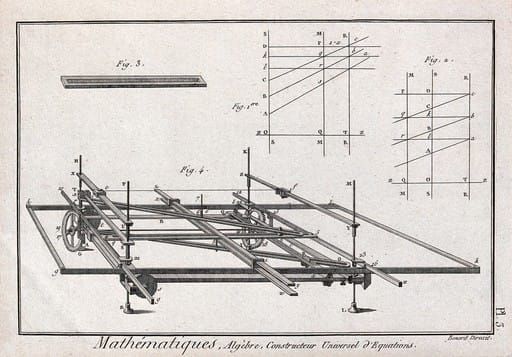
I remember thinking how hopeful they looked, a look that didn't last long as I demonstrated, quite clearly, that I am not brilliant with maths. I am, it turns out, humbled by algebra, equations, index notations and fractional indices.
I would also make a poor engineer. I would also not want to perform open-heart surgery, nor would the patient relish in that either. And clearly, the less said about my maths skills, the better.
But there's one thing I can do, and always have been able to do. I can decide.
Not easily — deciding is rarely easy. But clearly. For as long as I can remember, in work and in life, the moment of deciding between this and that has felt natural to me. Choosing between this door, and that door. It took me an ridiculously long time to realise this isn't true for everyone. For a great many people, that door is the hardest one in the building.
You'll have seen it too. Someone with a decision in front of them, comparing options, weighing trade-offs, asking for a little more data, keeping other doors open just in case. Sometimes we call this prudence. Often, if we're honest, it's hesitation with a fear of being wrong thrown in.
Here's the uncomfortable part about decision making. Doing nothing is still deciding. Delaying is deciding. Waiting, postponing, "let's revisit this next quarter" — is still deciding. A decision no one will own or admit to making still shapes everything downstream of it.
W.H. Murray, writing about the Scottish Himalayan Expedition, put it better than I can:
"Until one is committed, there is hesitancy, the chance to draw back, always ineffectiveness. The moment one definitely commits oneself, then Providence moves too."
I used to read that as a touch mystical and spiritual. I've come to think it's one of the most practical sentences about work I know.
Consider the word itself. Decide comes from the Latin decidere — to cut off. Buried inside every decision is an act of cutting: away from the other options, away from the escape routes, away from the seduction of delaying until a better time.
To decide is to close doors. And, interestingly, closing doors is what releases the energy that was walking through all of them.
Before the cut, everything is tentative, everything is open, everything is a possibility. Two options sit side by side, each waiting for the other to prove itself and people work on both at the same time. Time is split. Attention is split. Energy is split. Each option stays part-built. Bets are hedged and everyone waits for a direction, and clarity, that hasn't arrived.
After the cut, after a clear decision, something shifts. Focus turns up en masse. Plans take a more solid form. Momentum appears — not because the path got easier, but because there's finally only one path to move along. A decision is made, clarity is created, alignment can happen and momentum is possible.
And, I think, this is the idea worth playing with, because it runs against the grain of how careful people think. When you keep two options alive, you don't halve your risk. You double your cost. Two paths running in parallel means two conversations, two sets of assumptions, two half-finished plans — twice the investment, and half the movement. You're not galloping forward. You're stretching sideways, creeping forward and calling it caution.
I've watched people do exactly this: pick a direction while keeping the old one open. A fallback, an escape route, an exit. A just-in-case. A connection or rope still tied to the other position, so nobody's really left it and we can always go back. And with that rope attached, the first obstacle we encounter doesn't look like a problem to solve, it looks like a reason to go back to the other option. To fallback, to escape, to make an exit.
It's often not merely two options being worked. I've seen people keep four options open, to avoid making a real decision. At the first problem, we go back to option 2. Then option three. Then option four. Years pass. Nothing really gets moved forward, and everyone is terribly busy moving between the options.
They made a choice, not a decision. A choice leans one way while keeping the other alive. A decision cuts the rope.
None of which is an argument for recklessness. Good decisions are earned — by study, by listening, by weighing the thing properly and knowing what you're risking. But once that work is done, more analysis is just a different word for hesitation. After all, we will never have all the information we need to make a cast-iron, rock-solid, bullet-proof decision. The studying gets you to the door. Commitment is walking through it, and sealing up the others.
The difference between things that move and things that don't is rarely intelligence, ability, energy or enthusiasm. It's rarely ambition. More often it's the small, daily gaps between choosing and deciding. One keeps all your options alive. The other brings a single one to life.
I still can't do the maths. But I can cut the rope and seal up the doors. On the whole, I've found it the more useful skill.
Where this sits in the Atlas
Orientation·Idea to Value·Communication·Creativity & Climate·Learning