The Diary of a Manager — A Short Satirical Novella
Twelve tracking systems that don't talk to each other. A release date that keeps moving forward. A product going out with several thousand known defects. And a new manager who has been there a fortnight.
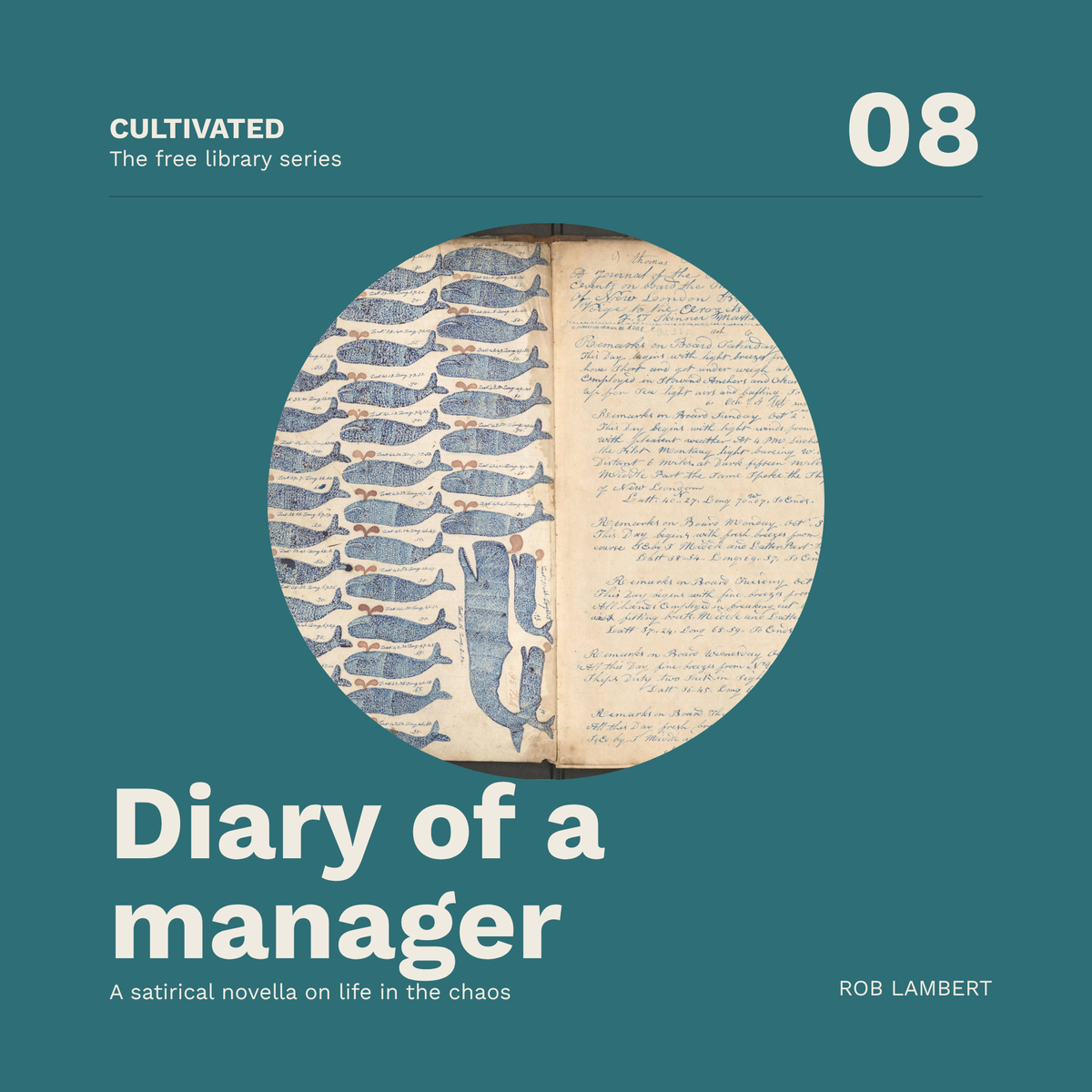
A fifteen-day diary from the hapless scapegoat manager of CBPBOS, a company whose product disaster cost the British software industry £8.7 million and took down part of the banking infrastructure. He was only there a fortnight. He was completely innocent. He says so repeatedly.
Free. Short. Funnier than I thought it would be.
You have probably worked somewhere a bit like this
Twelve tracking systems, none of which talk to each other, owned by teams that have no logical connection to what the system does. A release date that keeps moving forward in service of a marketing campaign that nobody asked for. A product going out the door with several thousand known defects.
Capable engineers whose good ideas get lost in a fog of process. A compliance storage cupboard with a handle that comes off in your hand. A chief executive who is extremely remote from the actual work. A blame culture that somehow always lands the blame on whoever arrived most recently.
And, running beneath all of it, a pervasive sense that the whole organisation is one bad Thursday away from catastrophe.
If any of that feels familiar, you are ready for this book.
What this actually is
A short satirical novella, told as the fifteen-day personal diary of a manager who has just joined CBPBOS — the Can't Believe People Buy Our Software company — shortly before its most famous product release goes catastrophically wrong.
The narrator is earnest, oblivious, and entirely convinced that none of this is his fault. Which, by one reading, is technically correct. By another, he is exactly the kind of person the organisation was always going to use as a sacrifice.
Over the course of the diary you will encounter: a welcome cake so inedible that the family next door's dog falls ill after eating it; an office where someone bleats like a goat whenever the protagonist walks past the water cooler; an eighteen-point list of internal software systems whose names and ownership are genuinely one of the funniest things published about corporate life in recent years; an international sales incident involving the mispronunciation of the word "Ormassical"; a self-declared number one expert on communication; and a full-scale fisticuffs in the development strategy review meeting that ends in an ambulance visit.
It is a silly book. It is also, quietly, about some serious things.
A taste of what you're downloading
What it's actually about
Underneath the comedy is an argument the rest of the Cultivated body of work takes seriously. Companies that pile process on people rather than solving the actual problem. Leaders who are too remote from the work to understand what is happening on the ground.
Blame cultures that protect the people who caused the damage and punish the ones who arrived afterwards. Release deadlines that override every signal telling the organisation the product is not ready. Capable people — Malick the project manager, Marie the enthusiastic developer, Ruth the junior who hears the truth — whose ideas never quite land because the system around them is too dysfunctional to listen.
The narrator never quite sees any of this. That is part of the joke. The reader sees it, and recognises it, and probably laughs a little too ruefully.
The foreword puts it directly: a business should be a force for good in society. A good business embraces diversity, encourages creativity, and relentlessly focuses on providing better service. A good company is not obsessed with scale, nor growth at all costs, nor meeting deadlines over doing the right thing for customers, employees, and the world around it.
The diary is what happens when a company forgets all of that, and then looks around for someone to blame.
Who this is for
Managers who have worked somewhere dysfunctional. You will recognise more of this than you would like. It is unusually cathartic to read.
People who enjoy workplace satire. If The Office, Office Space, or Lucy Kellaway's FT columns sit well with you, this is adjacent territory.
Readers curious about a different side of the writing. Most of the Cultivated library takes organisational dysfunction head-on. This one takes it sideways.
Download the book
A word on silliness
The book took considerably longer to write than I thought it would. The goat on the cover is not random. The protagonist's apparent obliviousness is carefully calibrated. The systems list is doing a specific, sharp piece of work about organisational complexity dressed up as a bureaucratic comedy.
That said, it is also very much a book written to be enjoyed. Read it on a long train journey. Read it over a lunch break. Read it after a particularly bad release. Laugh at it, roll your eyes at it, send the systems list to a colleague who will appreciate it.
It is short. It is free. It is an unusually honest mirror held up at an angle.
Related work
If the comedy works on you and you want the serious version of the argument:
→ The Idea to Value system — the twenty-six principles underneath how ideas move from intention to value in real organisations. The version of this book without the jokes.
→ Tech Portfolio Field Guide — for technology leaders specifically, the diagnostic framework to avoid what happens at places like CBPBOS.