Tech Portfolio Guide — A Clearer Way to See Where Your Portfolio Is Really Going
A value-led portfolio model for technology leaders — proven across organisations of 200 to 16,000 people. The free Library Edition introduces the thinking. The full Studio Edition helps you apply it.
Tech Portfolio Guide
A clearer way to see where your portfolio is really going
Most technology portfolios don't look broken. They look busy.
Hundreds of initiatives. Multiple funding streams. Capable teams. Constant activity.
And yet — it's hard to answer a simple question: what is actually creating value here?
Some initiatives move. Others stall. Priorities shift. Energy spreads thin. The work is happening. But the picture isn't clear.
Most portfolios don't need more process. They need a clearer way to see what's already happening.
Where this comes from
Proven at scale
16,000+
People across organisations where this model has been deployed
6
Connected portfolio lenses — from idea to value realisation
200→
Portfolio size range — from 200-person teams to global operating models
The value first Portfolio System has been proven inside real enterprise technology portfolios before being broadened into a universal framework. It holds up under organisational pressure, competing incentives, regulatory constraints, and large-scale delivery complexity.
This model has been deployed and stress-tested across technology portfolios — from teams of 200 to operating models supporting 16,000 people globally.
It emerged from years inside enterprise engineering leadership, HR, portfolio ownership and large-scale change — watching the same patterns appear regardless of scale, tooling, or methodology.
Hundreds of initiatives competing for funding and attention. Skilled teams stretched thin. Strategy clear on paper but blurred in execution. Coordination costs quietly slowing everything down.
The issue was never delivery. It was clarity.
This guide exists to help technology leaders see that — and respond more deliberately.
What you'll see in the first 10 minutes
This is not a long read you need to get through. Within a short time you'll be able to see your portfolio as a system rather than a list of projects, identify where value is slowing or leaking, recognise why prioritisation feels difficult, and spot patterns that are usually invisible in day-to-day work.
Most leaders say the same thing after reading it:
"This explains what we've been feeling — but couldn't quite articulate."
What this is — and what it isn't
This isn't another framework. It's a way of seeing.
Not agile-at-scale, not tooling, not governance layers — but how ideas actually move, or don't, across a portfolio.
It helps you see where effort is being invested, how initiatives connect to strategy, or don't, why capable teams still feel overwhelmed, and how value quietly dilutes across large portfolios.
So you can intervene with clarity. Not more control.
The six portfolio lenses
The guide is structured around six connected lenses — each one a different angle on the same underlying question: where is value forming, and where is it leaking?
Six connected lenses
From idea to value — a complete view of the portfolio system
Seeing the Portfolio
A holistic view of initiatives, investments, teams, and dependencies — so the system as a whole becomes visible rather than just the parts.
Clarity: From Ideas to Funded Initiatives
How ideas become funded work — and where ambiguity distorts intent before work has even begun.
Alignment: From Funded Ideas to Action
Ensuring teams, funding, and priorities align around outcomes — not just activity. Where strategy meets execution.
Action: Delivery and Value Realisation
How work actually flows — and how value emerges (or doesn't) from the delivery layer.
Measuring Success: Metrics, Risk, and Value
Understanding real progress without drowning in vanity metrics — and knowing which signals actually matter.
Improving the Portfolio: Learning and Feedback
How portfolios evolve through learning, communication, and behaviour — not just process change.
Who this is for
This is for people accountable for outcomes — not just activity.
CTOs, VPs, SVPs and EVPs of Engineering. Portfolio owners and senior technology leaders. Leaders managing multiple initiatives across complex environments. Enterprise change leaders responsible for where investment goes — and what comes back.
If this is your world, this will feel familiar.
Two editions
Library edition
Tech Portfolio Guide
Immediate download — no signup required
- Full introduction to the portfolio lens model
- The six connected lenses explained
- Core theory and portfolio funnel model
- Value-led portfolio thinking
- Immediate PDF download
No signup needed
Full field guide
Tech Portfolio Guide
Available to Studio members
- Everything in the Library edition
- Detailed principles and activation steps
- Portfolio maturity model
- Agile PMO guidance
- Full workbook
- Field notes from enterprise deployments
£10/month or £100/year · Cancel anytime
How leaders use it
- As a reference for understanding portfolio dynamics.
- As a framing tool before investment or change discussions.
- As a shared language in leadership conversations.
- Alongside coaching, workshops, and operating model design.
Not something to read once. Something to return to.
A final thought
Complex portfolios rarely need more control. They benefit from clearer intent, better decisions, fewer competing priorities, and systems that make value easier to see.
Clarity creates alignment.
Alignment creates momentum.
Momentum creates value.
If you need a partner
Need a partner?
For leaders who want to apply this directly to their portfolio
Portfolio optimisation, operating model design, transformation support — this thinking has been applied across organisations of every scale and complexity.
Images of the guide
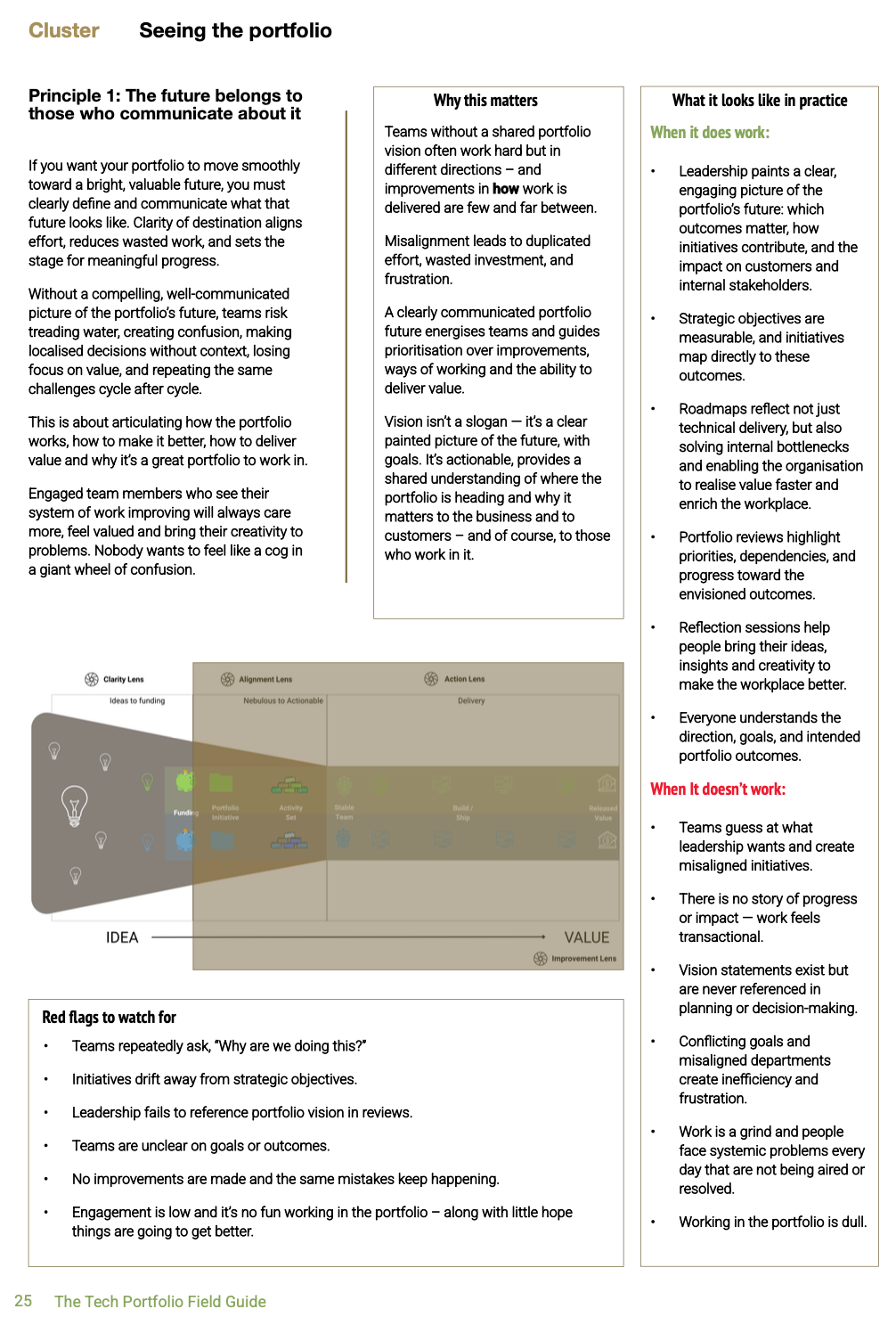
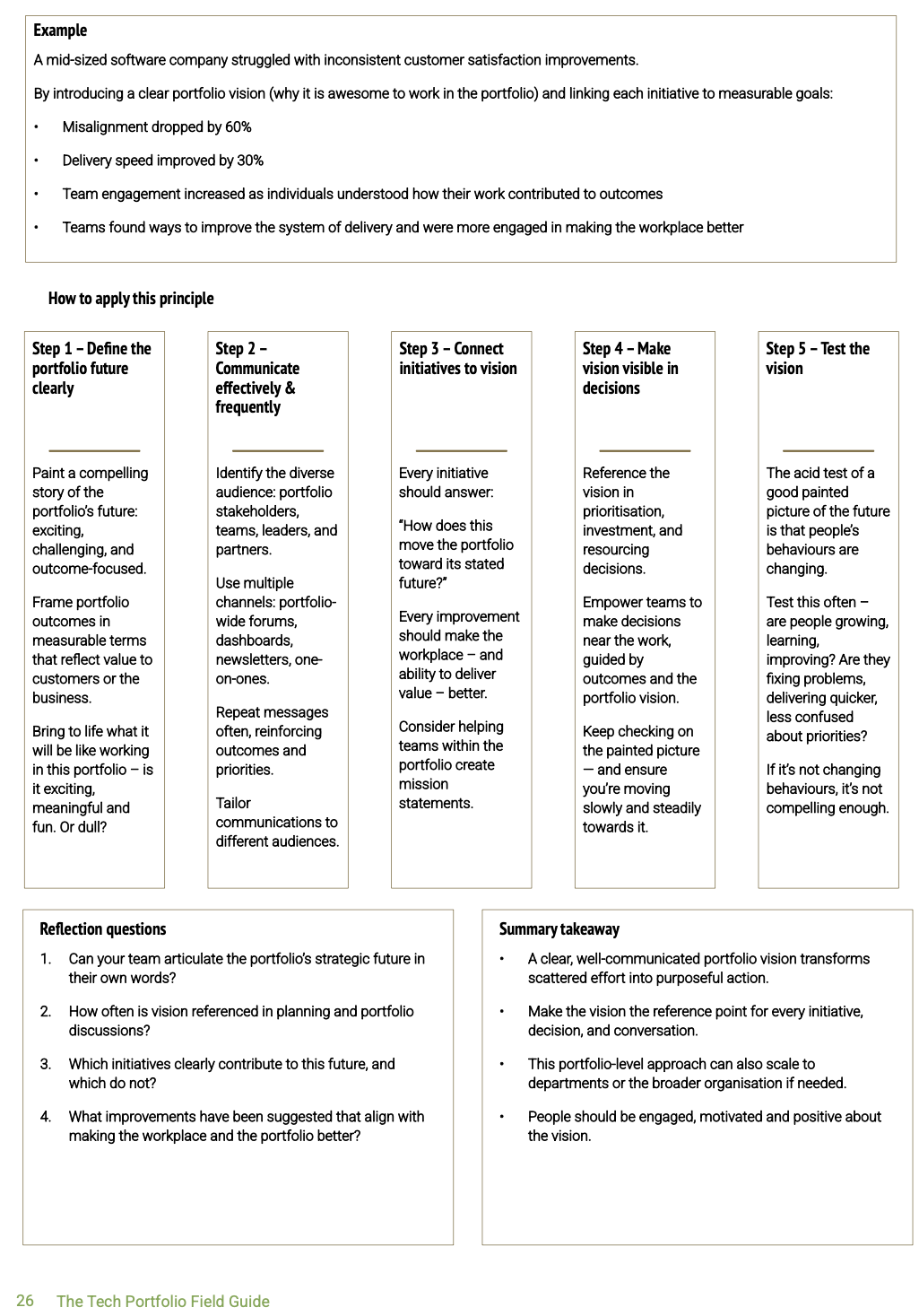
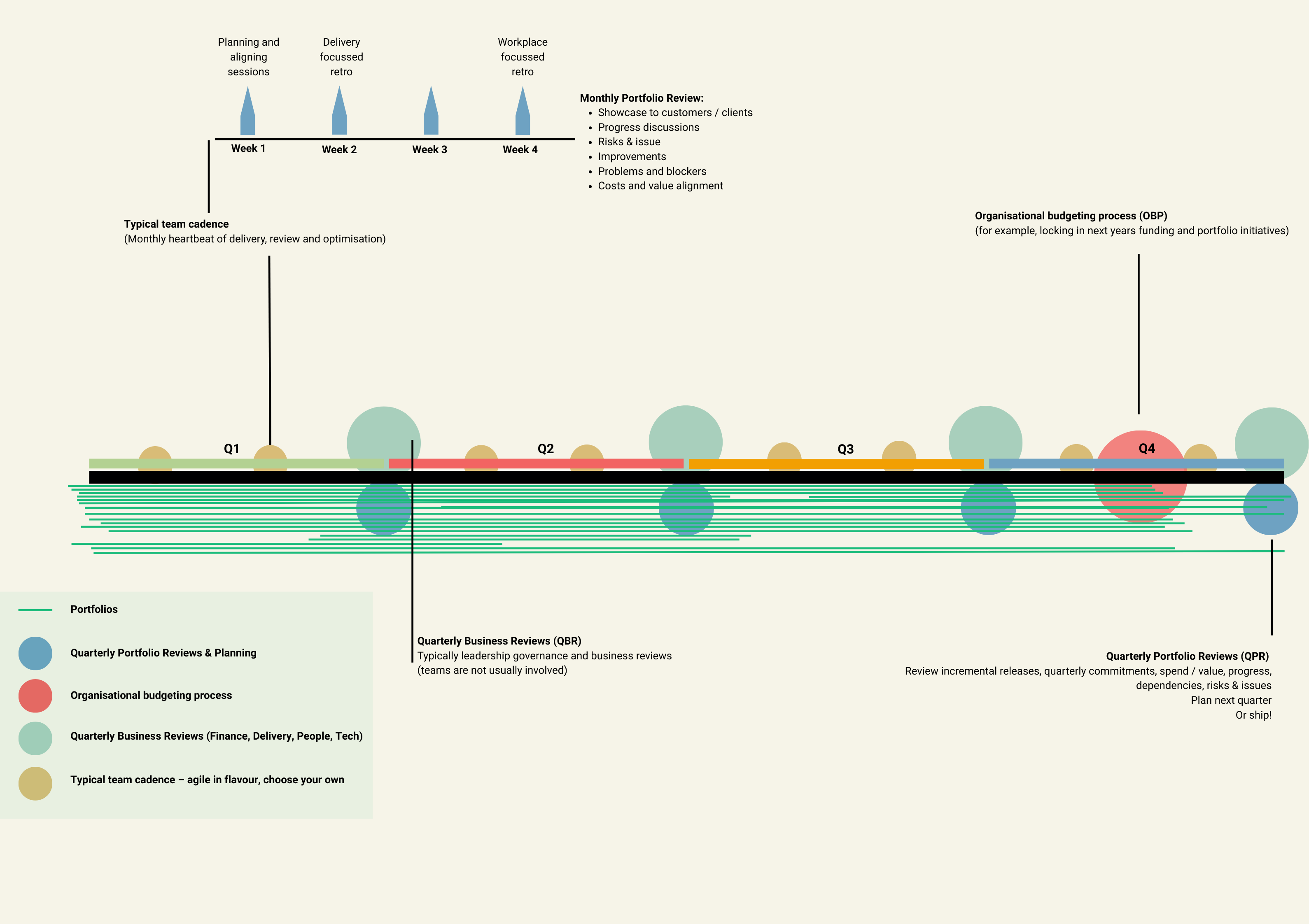
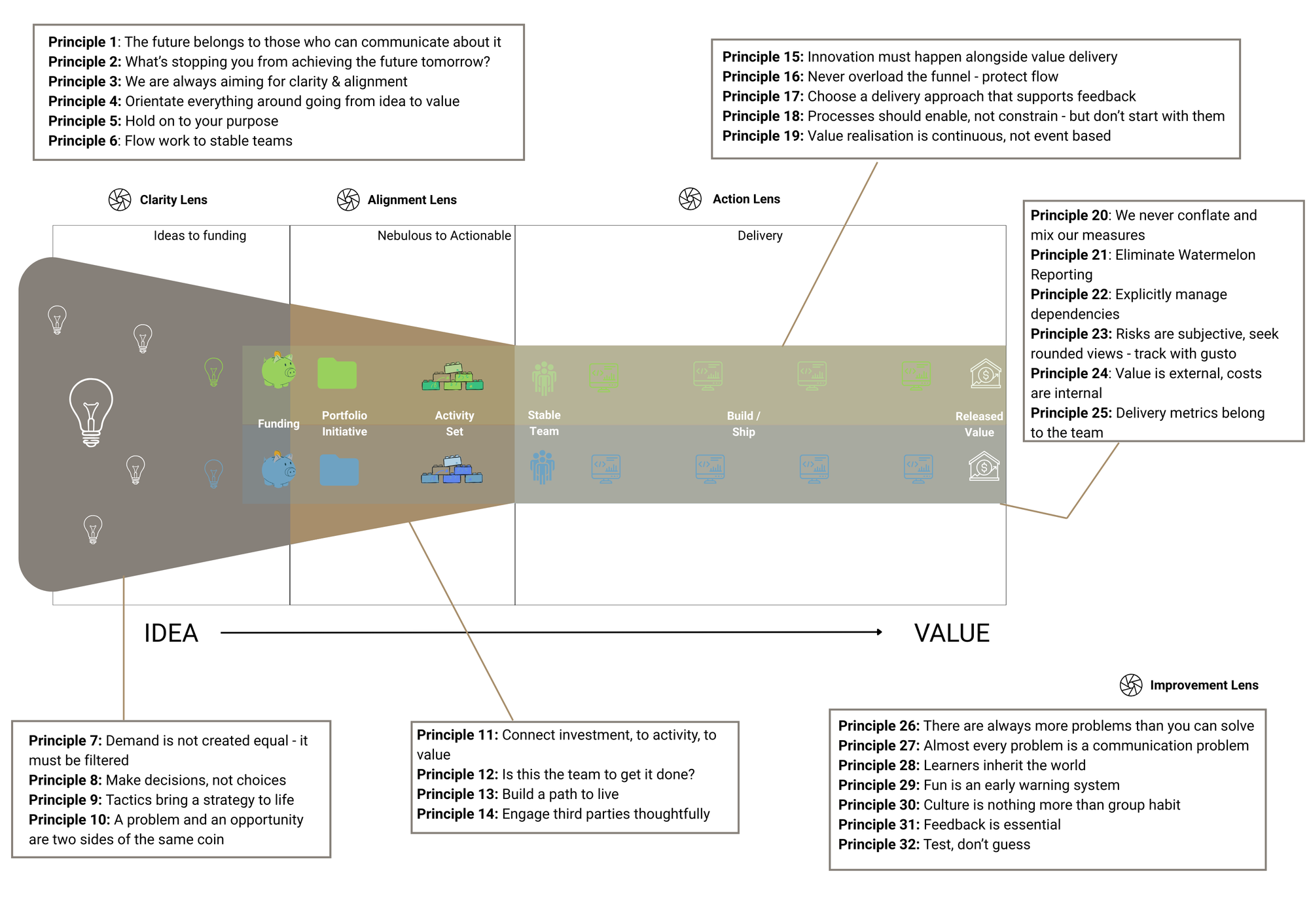
Images from the Tech Portfolio Field guide